

My New 120-inch Setup – NothingProjector Classic CLR & UST Cabinet
My old cabinet had served me perfectly and had hosted a long list of UST projectors over the years. This time, however, I wanted something different: a cleaner 120-inch installation where the projector could completely disappear when not in use.
After searching for a few weeks, I ended up ordering a 120-inch motorized UST cabinet from Nothing Projector, together with their 120-inch Classic CLR screen.
The cabinet cost a little over $2,000 and the screen a little over $1,000, making the complete package quite attractive compared with some of the other solutions I had considered.
So, let’s see what I got for my money.
A completely hidden UST setup
The main idea behind this type of cabinet is simple.
When the projector is off, everything is hidden. The UST projector sits inside the center section, the screen is rolled up and what remains in the room looks like a normal piece of furniture.
Turn the projector on and everything changes.
An electric smart slider moves the projector forward to its preset position, part of the cabinet’s top surface opens to clear the UST light path, and the screen comes up.
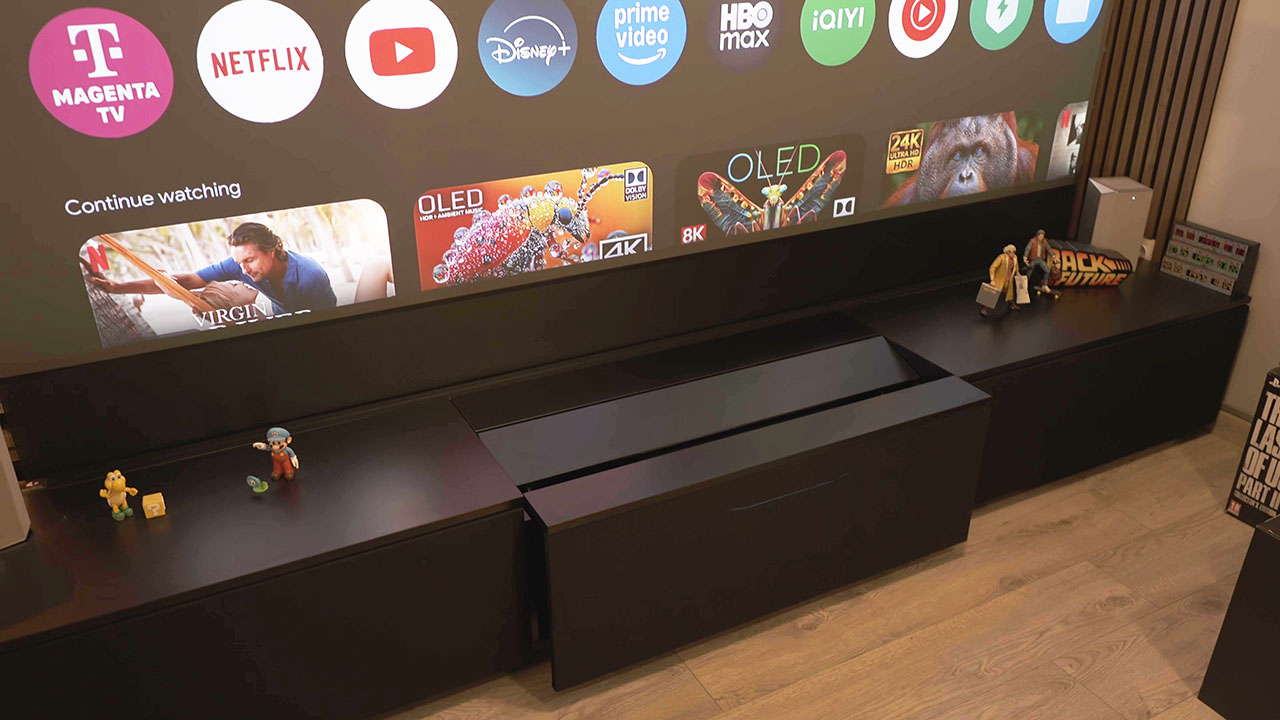
Once correctly adjusted, the entire process is automatic and controlled simply by turning the projector on or off.
For me, this is probably the biggest advantage of the new setup.
I can have a 120-inch projection system in my room without permanently having a projector and screen in front of me.
And yes, watching the complete system appear with the press of a button is still impressive, even after using it many times.
Assembly requires some work
There is one thing you should know before ordering a cabinet like this.
It arrives completely disassembled.
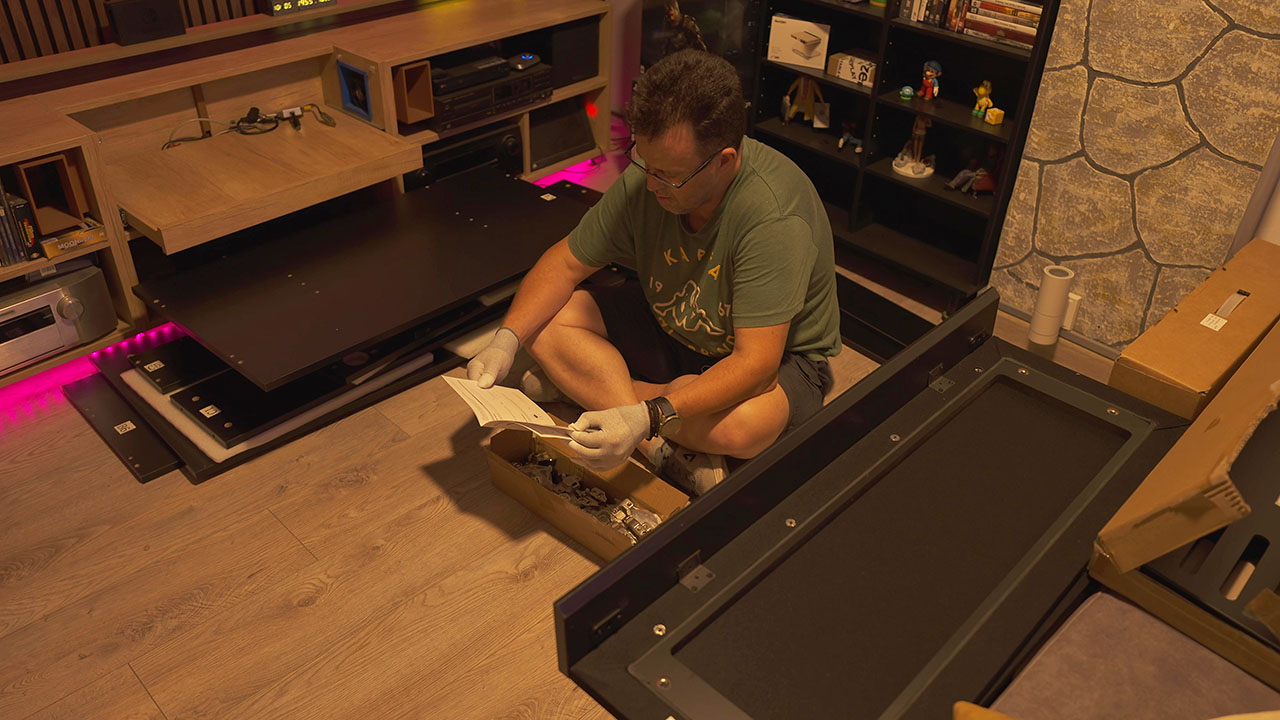
In my case, it came in five large boxes, which makes a lot of sense. Shipping furniture of this size fully assembled would make transportation much more difficult and expensive.
The downside is that you have to build it yourself.
Assembly isn’t particularly simple and definitely requires patience and some technical skills. There are many panels and components, and everything needs to be installed in the correct order.
Fortunately, Nothing Projector provides both a manual and a video assembly guide.
I also made a small modification to my cabinet by extending the original rubber feet. This raised the entire unit a few centimeters and gave me exactly the height I wanted for my installation.
Better quality than I expected
This was probably my first surprise.
The quality of the cabinet is genuinely very good.
The melamine panels are thick and solid, something I discovered in an unfortunate way when I accidentally broke one of them during installation.
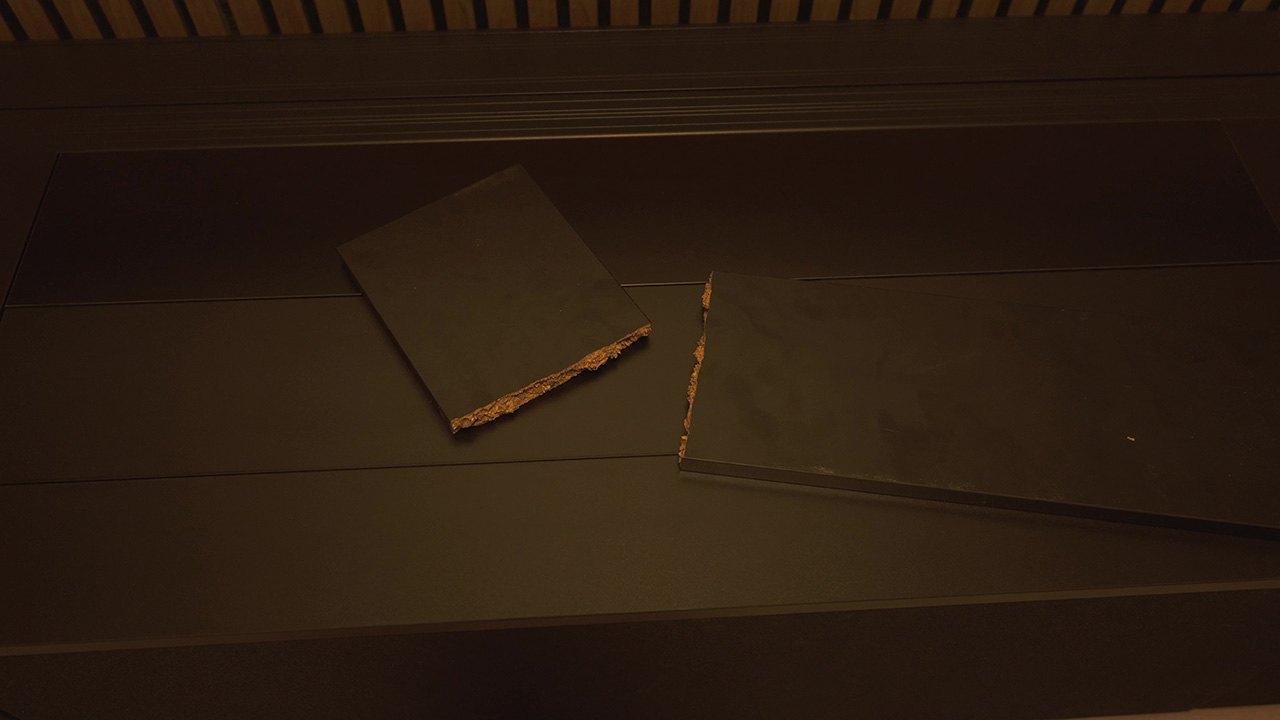
Trying to find a replacement locally made me realize that most of the material I could find was noticeably lower quality than the original panel.
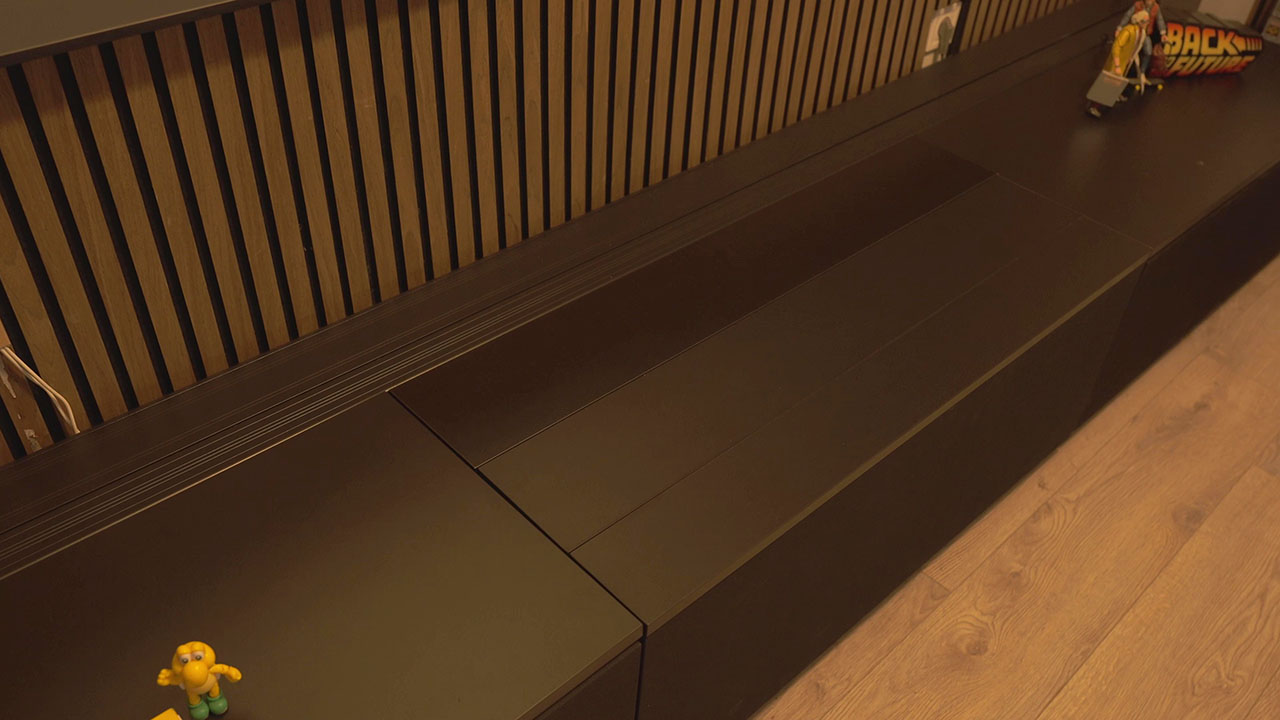
But there are two other details that I particularly like.
First, the dark surface reflects very little light. With a large cabinet positioned directly underneath a projection screen, this is more important than it might sound.
Second, fingerprints are surprisingly difficult to see on the surface. With a large piece of dark furniture that you constantly touch, this is definitely a welcome feature.
There is also plenty of useful storage space inside the two side sections, while the center section can hide power strips, power supplies and most of the cable mess that usually comes with a serious AV setup.
The end result is extremely clean.
The Classic CLR screen
The 120-inch Classic CLR was another pleasant surprise in terms of construction.
The aluminum housing feels very solid, the motor is extremely quiet, and the complete screen looks and feels more expensive than its price suggests.
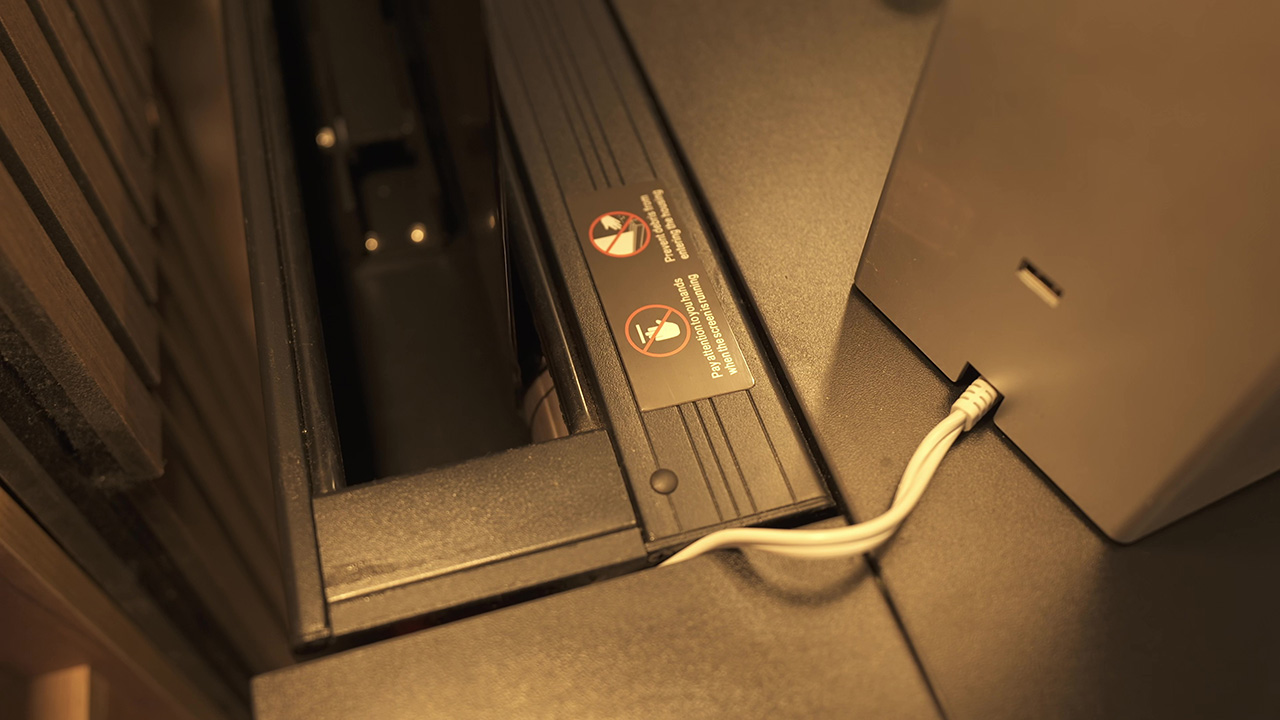
What impressed me immediately after installation was how well it matches the cabinet.
The dimensions are almost perfect. Once everything is installed, it looks like the screen and cabinet are parts of the same product rather than two separate purchases.
There was one small installation issue in my room.
Because of the height difference between the projector and the screen in this particular setup, the screen cannot reach its full programmed height. I have to stop it about 20 centimeters before its maximum extension.
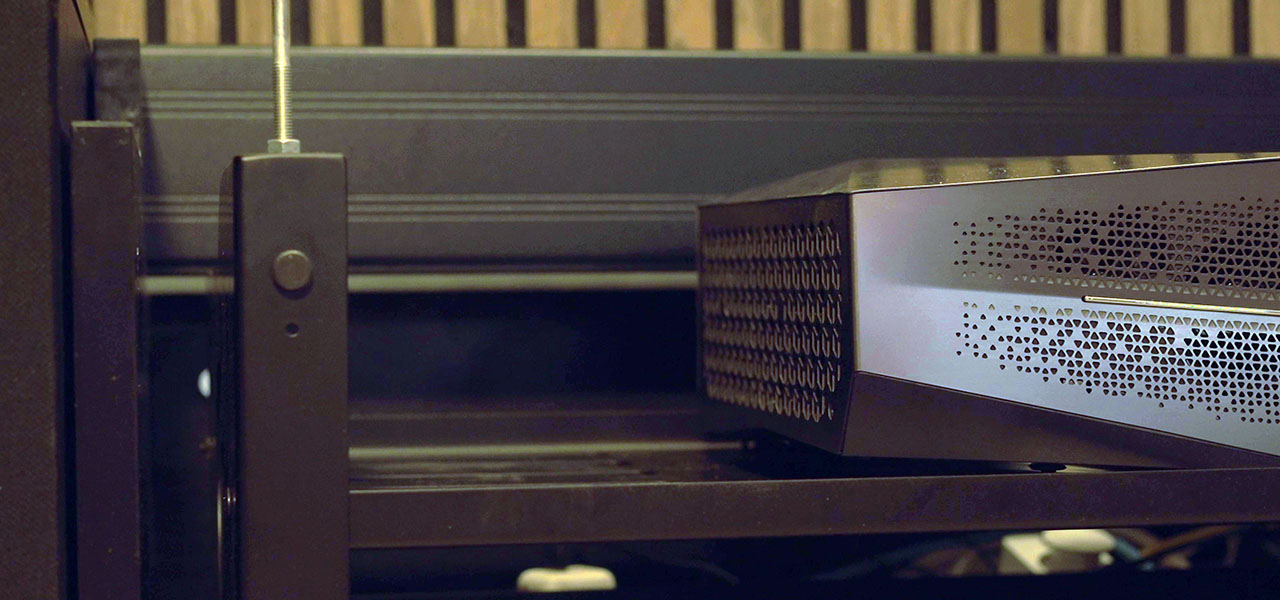
Normally, these small wrinkles appear on the sides while the screen is moving up, and disappear once it reaches its final position and the tensioning system is fully engaged.
Unfortunately, in my setup, since the screen has to stop about 20 centimeters lower, the tensioning system never reaches that final position, so some small wrinkles remain visible on both sides.
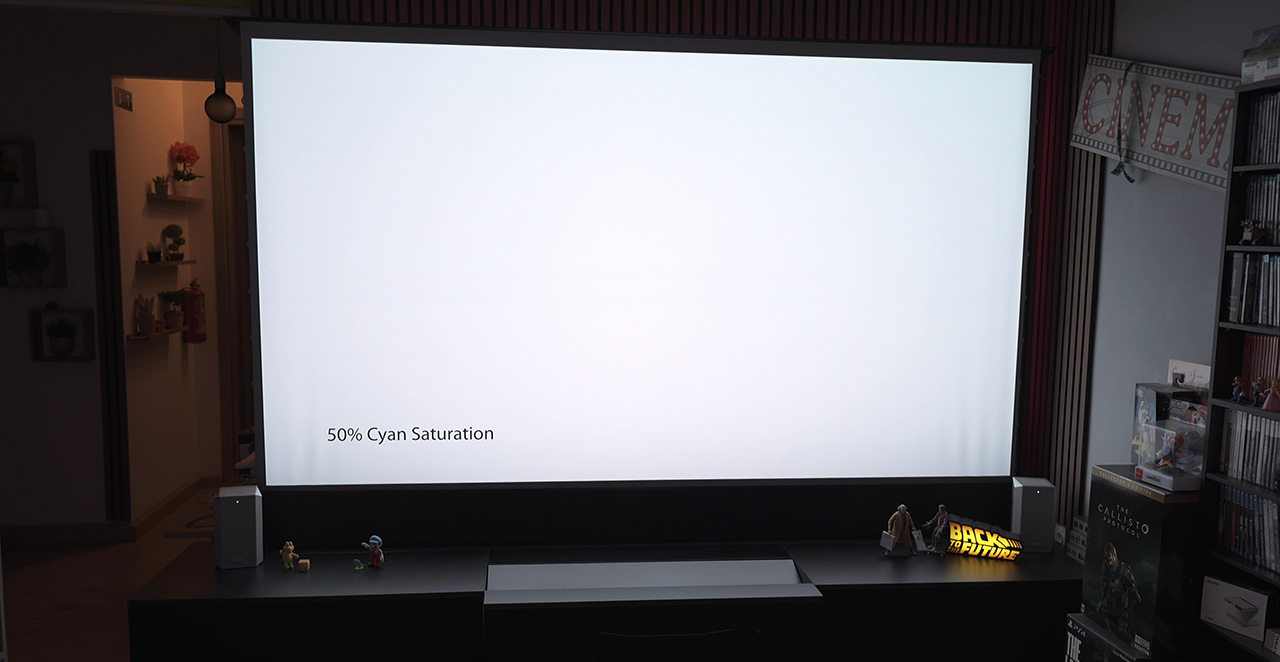
Nothing Projector includes thin carbon-fiber strips specifically for this situation.
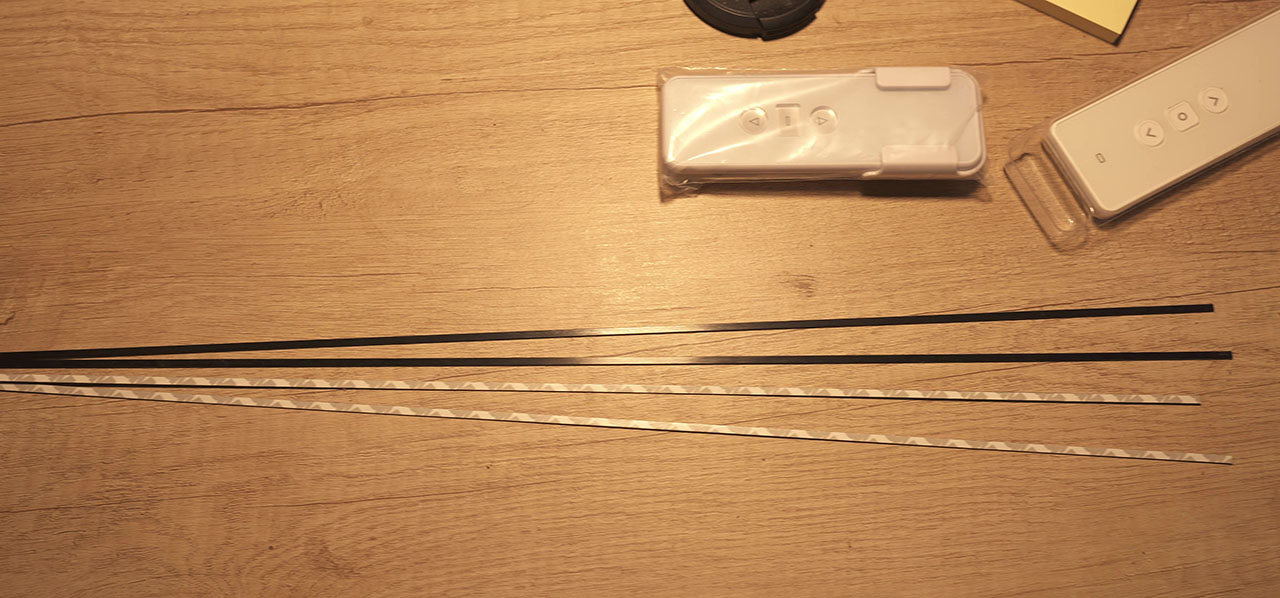
They are installed behind the screen material in the affected areas and, in my case, they completely removed the wrinkles without creating any visible marks on the viewing surface.
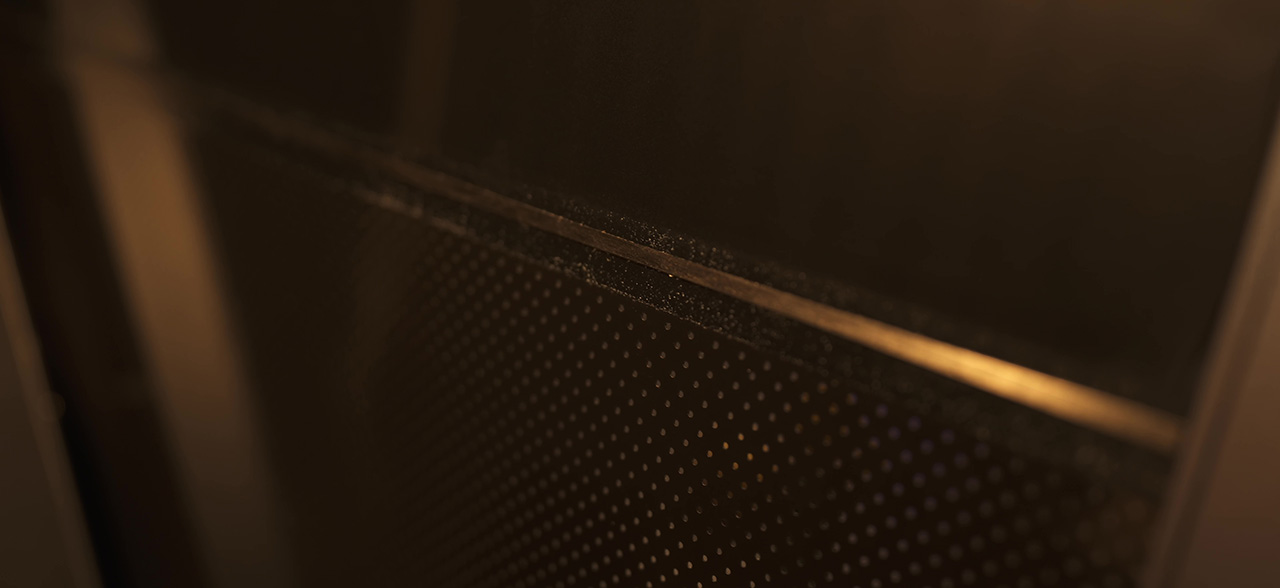
A surprisingly high 0.78 gain
Of course, construction quality is nice, but what really interests me in any projection screen is what it does to the image.
So I measured it.
The Classic CLR gave me a measured gain of approximately 0.78.
This immediately caught my attention.
Most lenticular UST CLR screens I’ve measured over the years have been somewhere around 0.55 to 0.65 gain, so 0.78 is a very good result.
To put this into perspective, I compared the Classic directly with a pure white Gain 1 screen, using the same projector and the same room conditions.
As expected, the white screen was brighter.
But the difference was smaller than you might expect from a CLR screen.
And once ambient light entered the room, the situation changed completely.
This is where CLR makes the difference
With only my ceiling light turned on, the white screen immediately started losing contrast.
The Classic CLR didn’t.
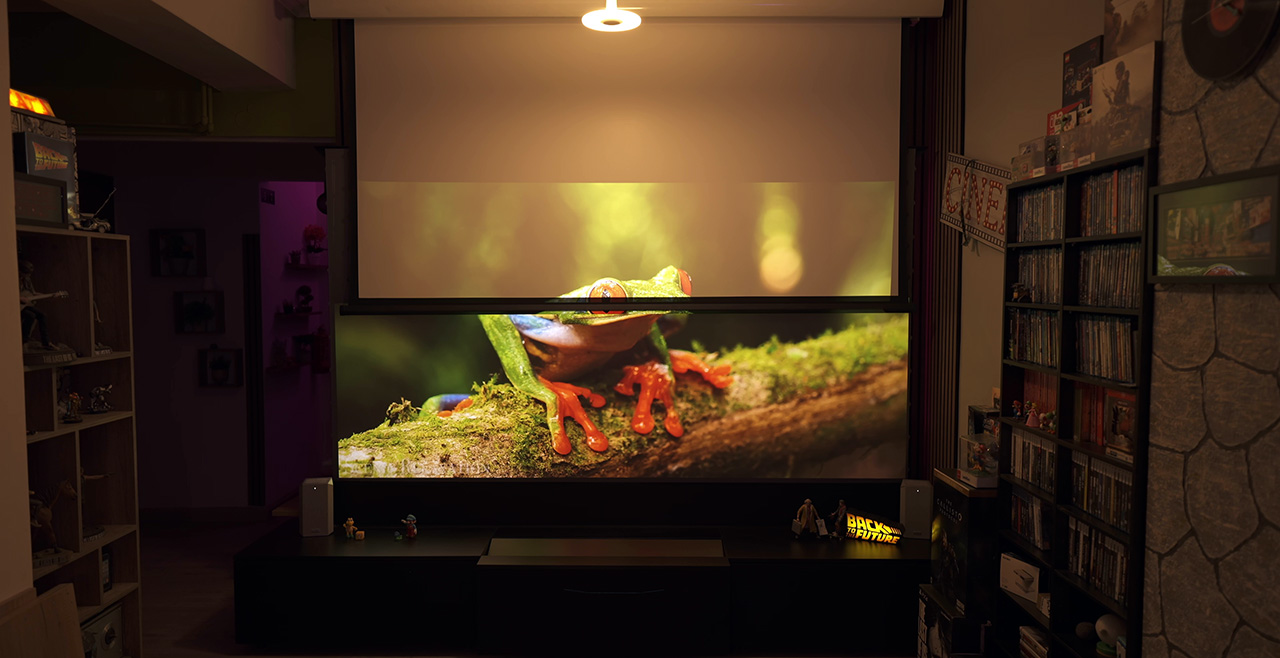
Adding side lighting increased the difference even further.
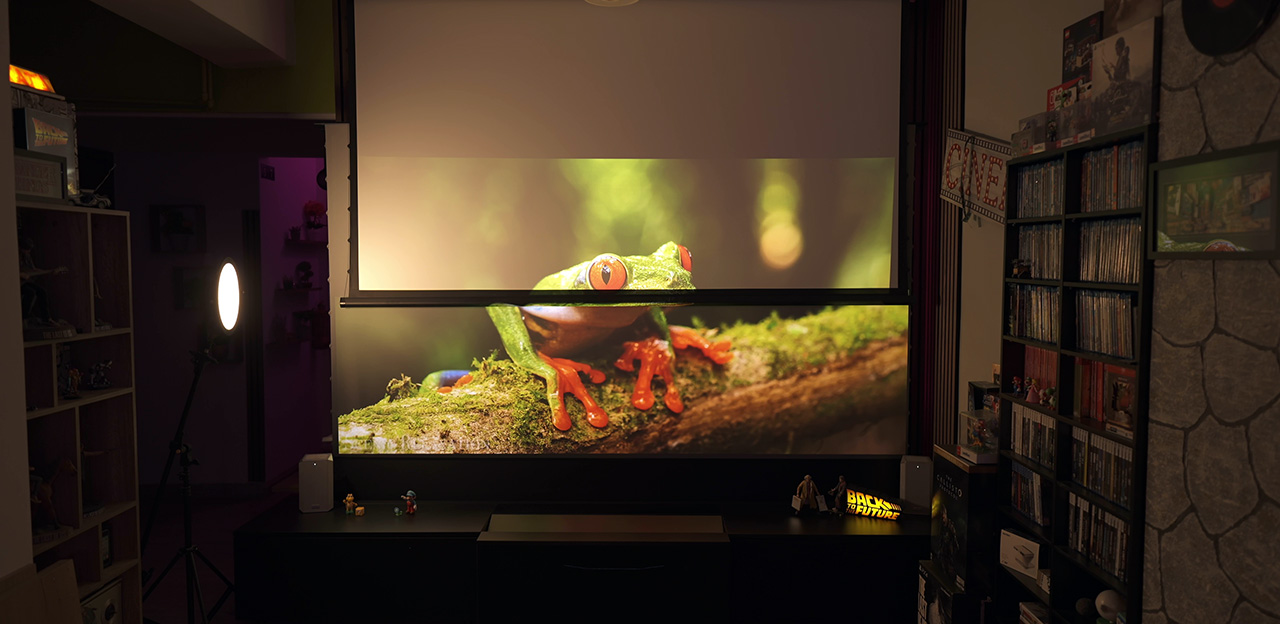
With both ceiling and side lights turned on, the white screen became heavily washed out, while the Classic maintained a strong and perfectly watchable image.
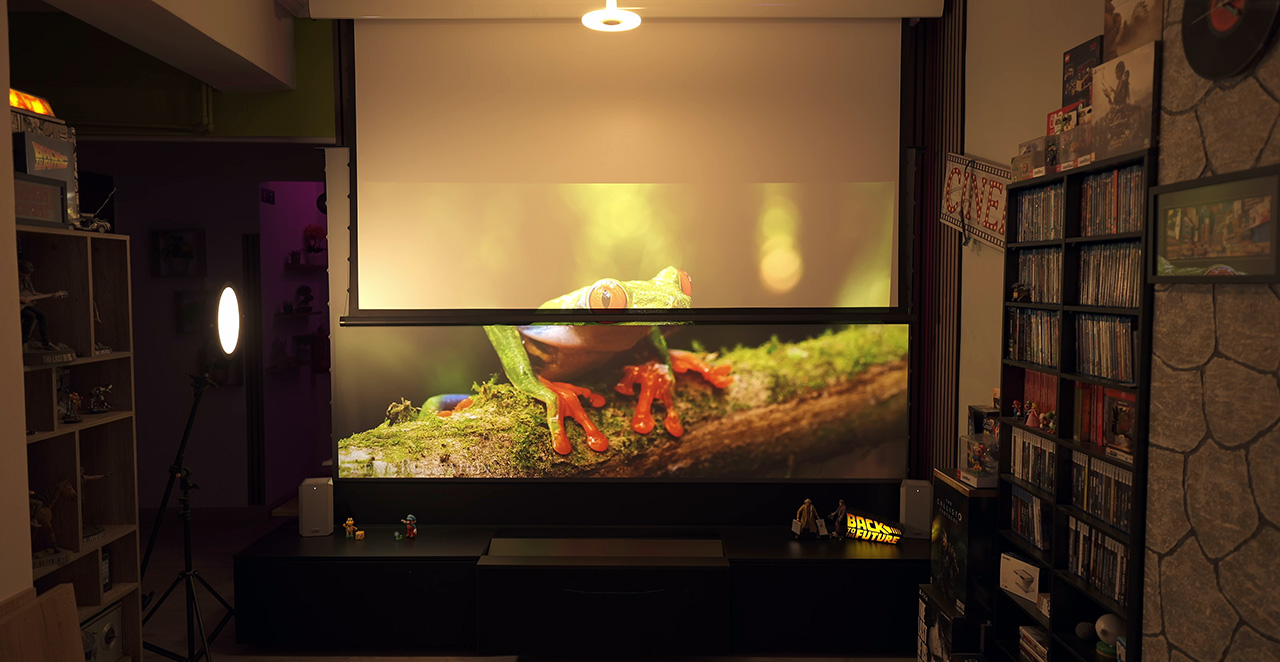
I even placed a strong light source in front of both screens, directly hitting their surfaces.
This is a very difficult situation for any projection screen, but the Classic CLR screen continued to maintain surprisingly good image contrast.
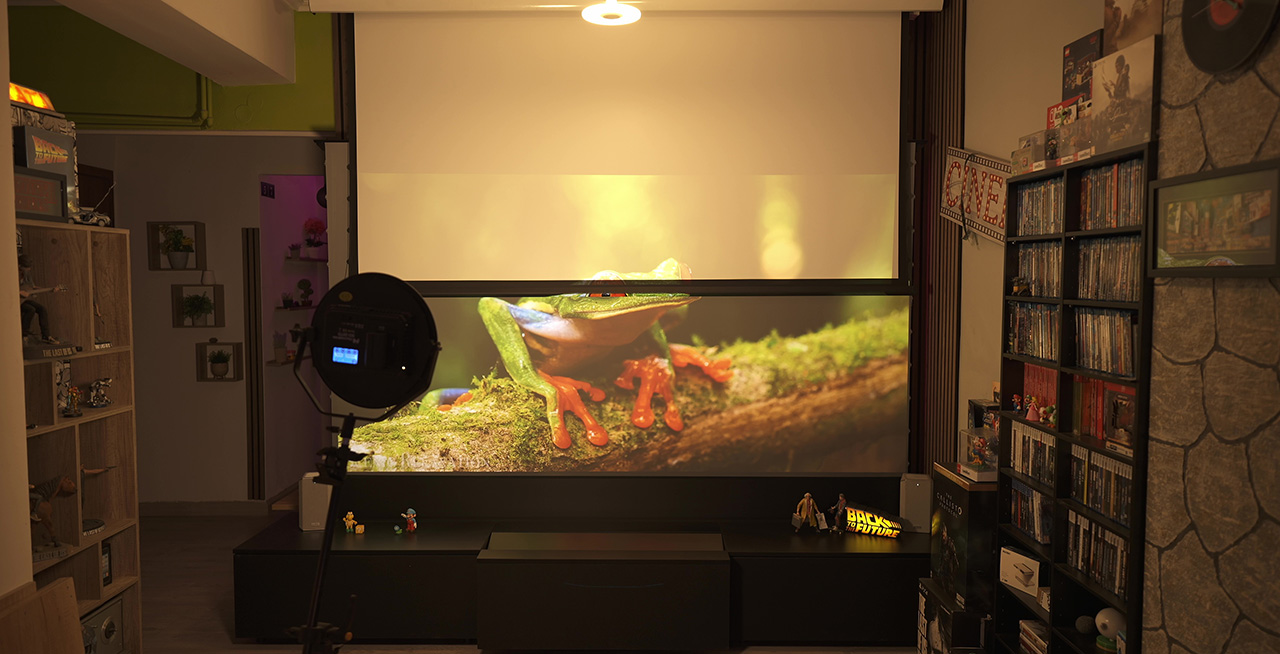
For a living room where complete light control isn’t always possible, the advantage is obvious.
But that wasn’t the result that impressed me the most.
CLR isn’t only for ambient light
There is a common idea that a CLR/ALR screen is useful only when you have lights turned on.
My comparison showed very clearly why this isn’t the whole story.
I turned all the lights off and compared the Classic CLR with the white Gain 1 screen again.
The difference was still clearly visible.
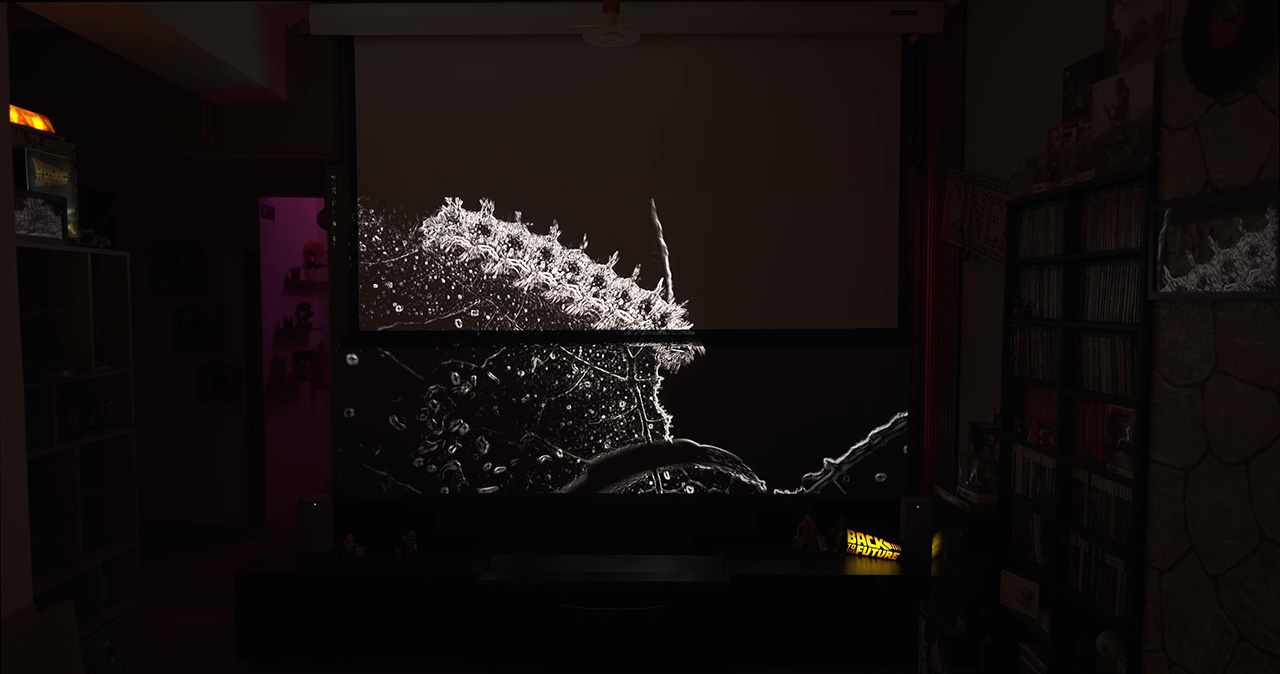
Why?
A white screen reflects a significant amount of that light onto the walls, ceiling and furniture. These surfaces then reflect part of it back onto the screen.
And the biggest problem appears in mixed scenes.
Light from the bright areas of the image returns to the screen and contaminates the darker areas. Black levels rise and in-scene contrast drops.
The Classic CLR material rejects almost 85% of this unwanted reflected light.
As a result, dark areas remain darker while bright areas stay bright, giving the image noticeably better perceived contrast.
In my space, a typical living room, this difference is very easy to see.
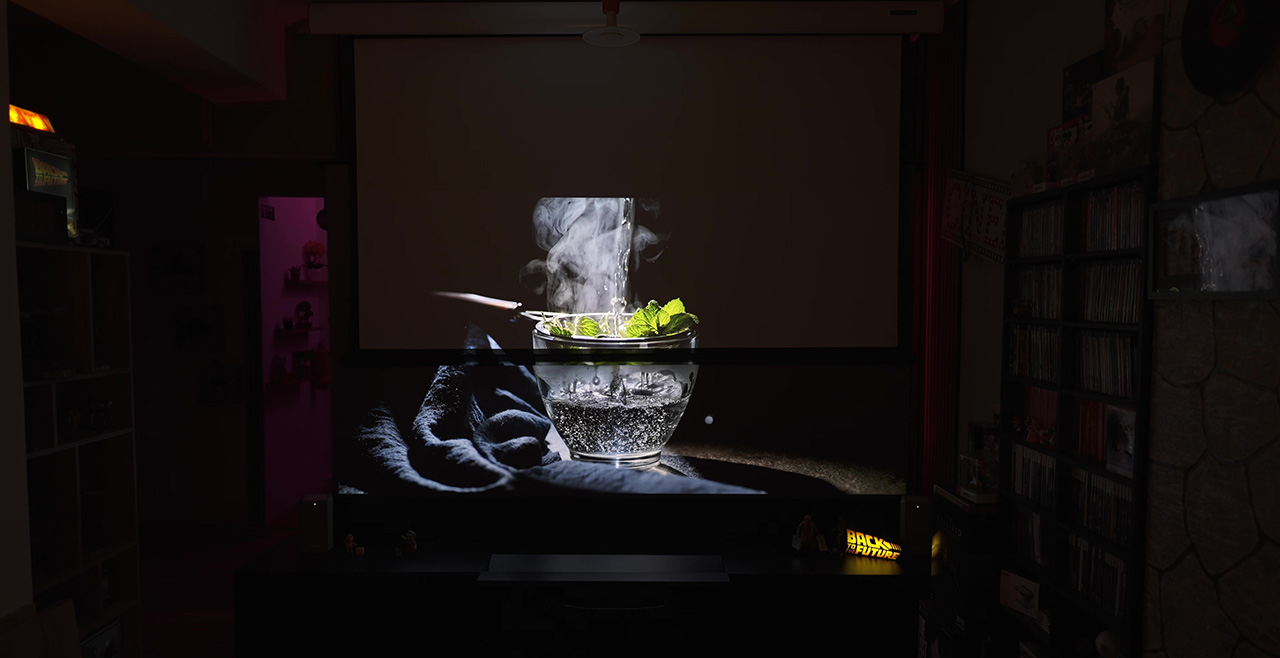
So while the Classic obviously performs extremely well with ambient light, I actually consider its control of room reflections in a dark room to be one of its strongest advantages.
Here is the full video review, so you can see my new setup in action!
Final thoughts
After spending some time with the new setup, I can say that I am really happy with this upgrade.
The cabinet is solid, practical and very well finished. The low-reflection surface works perfectly in a projection environment, fingerprints are difficult to see, and there is enough internal space to hide most of the equipment and cables.
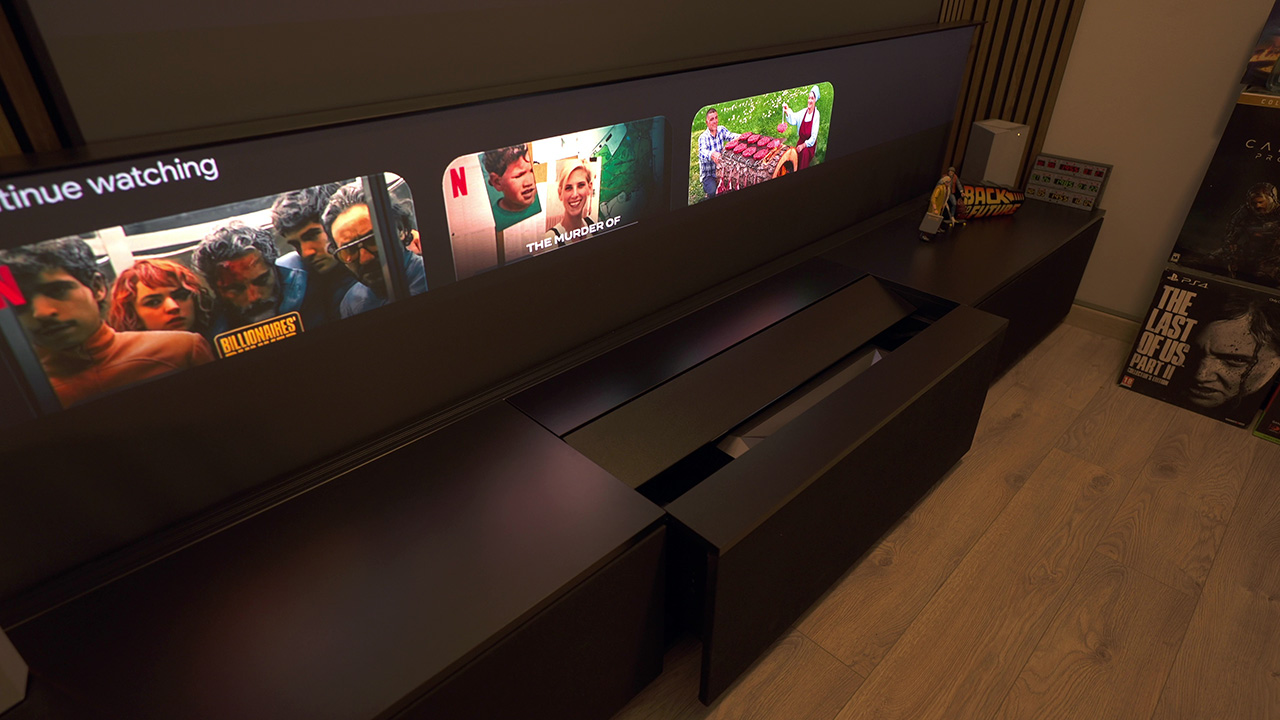
Most importantly, when the system is off, the projector simply disappears.
The Nothing Projector Classic CLR impressed me even more.
Its measured 0.78 gain means that it retains a surprisingly high percentage of the projector’s brightness, while still providing excellent ambient light rejection, deep blacks and high contrast.
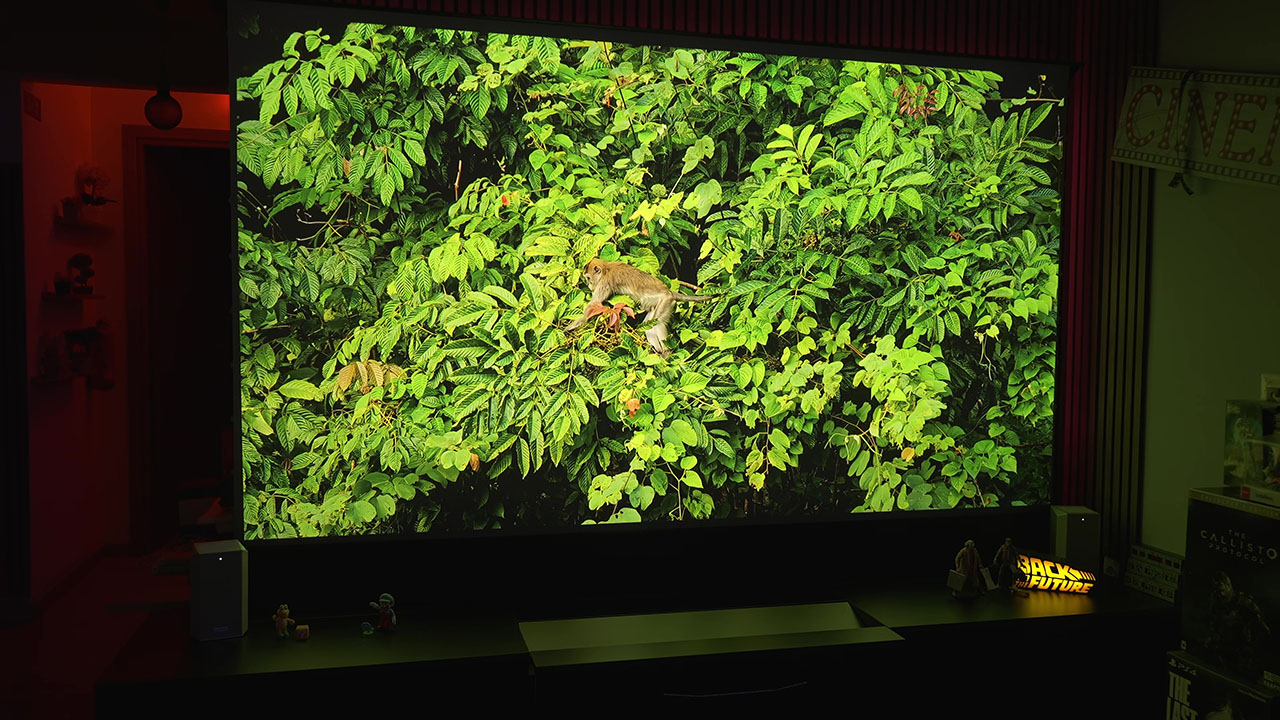
Viewing angles are also very good, the motor is dead silent, and the overall construction quality feels well above what its relatively low price would suggest.
Combined with my AWOL Vision Aetherion MAX, I’m getting a 120-inch image with strong perceived contrast and deep blacks, without sacrificing too much brightness, that is what I call win-win situation.
For my space, that’s exactly the balance I was looking for.
And now the timing couldn’t be better.
This new 120-inch setup will soon host the new XGIMI AURA 3 and the AWOL Vision LuxVision.
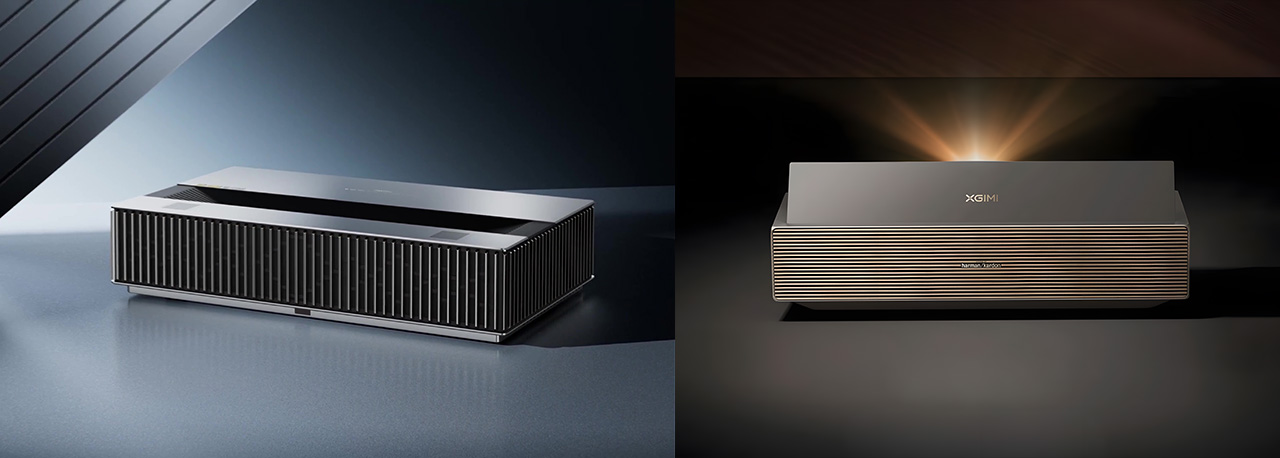
Both are coming to Projectorjunkies for testing, and of course, a direct comparison between these two new flagship UST projectors is also coming.
So, stay tuned.
Nikos Tsolas