

AWOL Vision Aetherion MAXIn‑depth Review
The company was founded by a group of enthusiasts with a passion for technology, and more specifically for the big-screen home cinema experience. The name AWOL comes from the initials of “Another Way Of Living.” Their idea was simple, yet ambitious, to replace the traditional living-room TV with a 100–150 inch cinematic experience, without the usual drawbacks of projection, such as complex installation, the need for complete darkness, or the limited brightness of older home cinema projectors.
And they delivered. With the LTV series in 2022, AWOL Vision introduced pure RGB laser technology, producing colors that many of us had never imagined seeing, not just from a projector, but from any display. The series also supported Dolby Vision via a firmware update, something quite rare at the time, and delivered the brightness needed to make a 150-inch image feel more like a giant, vibrant television than a traditional projection setup.
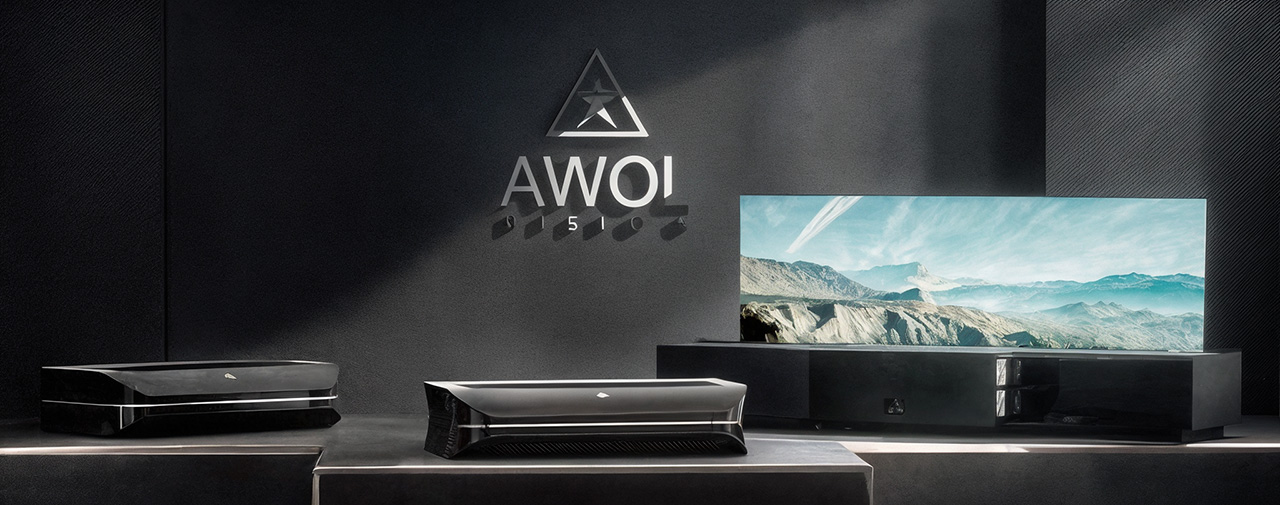
Over time, the company earned the trust of the tech community, not only through the outstanding quality of its products, but also by genuinely listening to users and continuously improving its models through free firmware updates, backed by excellent after-sales support.
Through these updates, AWOL introduced features such as the impressive Black Level Enhancement (EBL) algorithm, addressing the moderate contrast, one of the few concerns early LTV series owners had, along with full 3D playback support and, of course, Dolby Vision.
Now, in 2026, AWOL Vision takes the next step by introducing the successor to the LTV series, the Aetherion. As a Greek, I feel it’s worth explaining the origin of the name. Aetherion derives from the Greek word Aether (Αἰθήρ). In Greek mythology, Aether represents the upper sky, the pure air breathed by the gods, as opposed to the air of the mortal world.
AWOL Vision worked quietly and methodically on the Aetherion for four years. In fact, from the very first day the LTV series launched, their engineers had already begun developing its successor. That alone says a lot about how focused and driven this team really is, but also about their restless mindset.
Now, the time has come, and I believe their effort has paid off.
The Aetherion MAX is here. It’s in my hands, I’ve spent a lot of time with it, and I’m ready to show you exactly what it can do.
So, sit back, grab your favorite drink, and let’s dive into the full review of the Aetherion MAX ☕🎬
Aetherion Max – The Ultimate Spec Beast
Looking at the official spec sheet of the Aetherion Max, one thing becomes clear, AWOL Vision didn’t just set out to build another projector, they aimed to create a high-performance machine that just happens to project a massive image.
There’s some serious hardware packed inside that dark gunmetal chassis, and it’s worth breaking it down.
Picture Quality and Light Engine – Pure RGB Power with 6000:1 Contrast
The Aetherion Max is a 4K UHD DLP projector based on a 0.47-inch DMD chip, combined with the new Texas Instruments DLPC8445 controller. It delivers 3,300 ISO lumens from its Pure Triple Laser RGB light source and a native contrast ratio of 6,000:1. For a 0.47-inch DLP platform, that is a crazy achievement, if it is real, of course.
The Aetherion uses what AWOL calls the Noirscene System II, which combines a 7-step lens iris with the well-known EBL (Enhanced Black Level) algorithm. The iris controls light output and stray light, while EBL adjusts laser power and gamma on a frame-by-frame basis to improve black levels and overall contrast.
According to AWOL, this system can reach a dynamic contrast ratio of up to 60,000:1
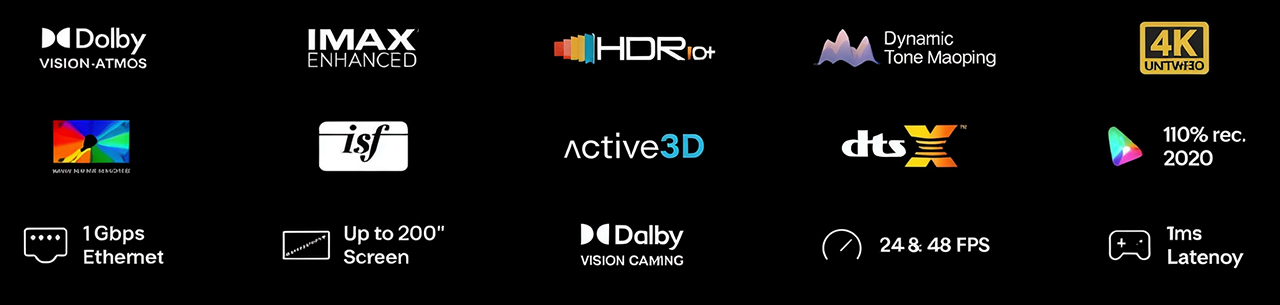
Combine that with 110% Rec.2020 color coverage, along with support for Dolby Vision, HDR10+, and HLG (including Dolby Vision and HDR10+ Gaming), and you start to see what AWOL was aiming for here, a machine built to squeeze every bit of performance out of your content, especially in demanding home cinema setups where contrast, HDR, and wide color gamut really matter.
Gaming and Motion – The 1ms Holy Grail
Now, for the gamers, this is where things start to sound almost unreal. AWOL claims just 1ms input lag at 4K60Hz, along with full Dolby Vision gaming support with internal dynamic tone mapping.
The Aetherion MAX also supports VRR (Variable Refresh Rate) and ALLM (Auto Low Latency Mode), allowing gaming consoles to feel right at home.

On top of that, the projector supports 4K at 120Hz (input) and 1080p at 240Hz, which immediately shows how much processing headroom this platform has.
Behind all this performance is the powerful MediaTek MT9655 platform, paired with 8GB of RAM and 128GB of eMMC storage, giving the projector the kind of computing power you’d expect from a serious multimedia device, handling all types of content with stability and speed.
For cinema purists, there’s also native 24fps and 48fps support, along with four levels of MEMC for those who enjoy the soap opera effect… or let’s just call it smooth motion 🙂
And something very important here, the patented Valerion–AWOL Vision Anti-RBE technology is now active on the Aetherion not only in 2D but also in 3D, making the 3D experience much more comfortable, especially for viewers sensitive to the rainbow effect, but even for those who normally don’t notice it.
Connectivity and Hardware
At the back of the projector, we find three HDMI 2.1a (48Gbps) ports and a DisplayPort (DP 1.4a) connection, something quite rare for a projector. The Aetherion also includes two USB ports: one USB 3.2 Gen 1 (5Gbps) and one USB 2.0.

Wireless connectivity is also top tier, with WiFi 7 and Bluetooth 5.4, alongside a 1000Mbps Ethernet port for anyone who prefers stable and super-fast wired streaming.
The projector runs the latest Google TV 14 platform, giving users access to the newest interface, app compatibility, and system improvements from Google.
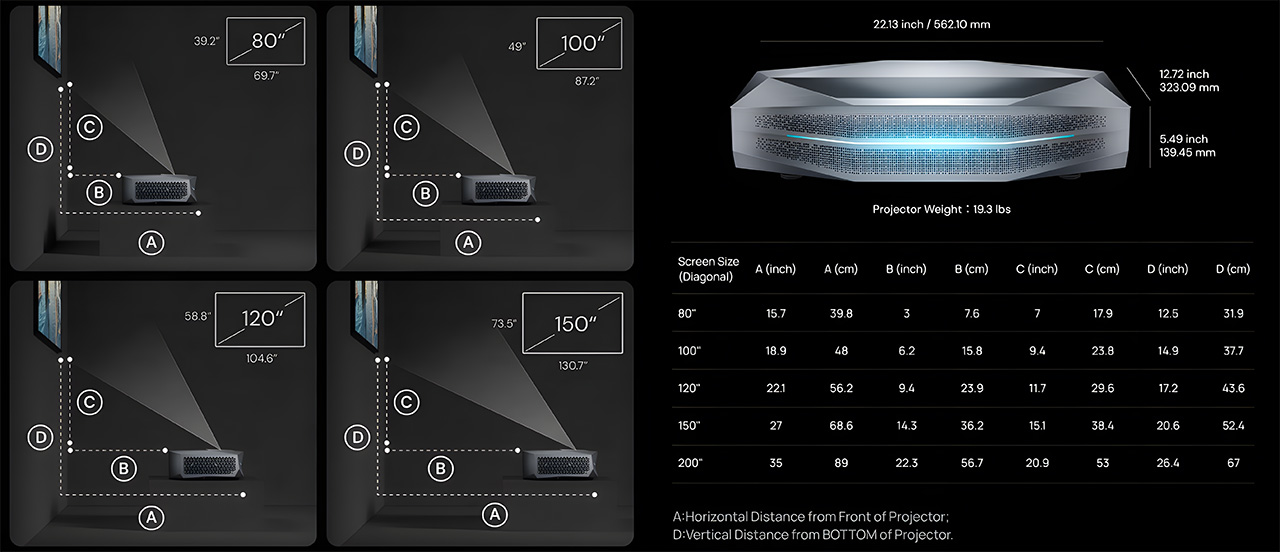
Physically, the Aetherion Max is quite compact in size. It measures 22.13 x 12.72 x 5.49 inches (562 x 323 x 139.5 mm) and weighs 19.3 lbs (8.75 kg).
Installation Flexibility – From 80 to 200 Inches
The ultra-aggressive 0.20:1 throw ratio is truly a game changer, making very large screen sizes possible without turning installation into a nightmare. According to AWOL:
A 100-inch screen requires distance only 6.2 inches (15.8 cm) from the wall.
A 150-inch screen requires only 14.3 inches (36.2 cm).
And a massive 200-inch screen can be achieved from just 22.3 inches (56.7 cm).
Add the motorized lens cover and the Zero-Light Leakage Lens design, and the Aetherion Max starts to look like one of the most installation-friendly and high-performance UST projectors out there, at least on paper.
And of course, the real question is simple.
How much of this impressive spec sheet actually translates into real-world image performance?
That’s exactly what we’re about to find out in the next part of this review, but first, let’s take a closer look on…
The Technology Behind the Machine
1) DMD Engine – Why TRP and not SST?
At the heart of the Aetherion is a DLP optical engine built around a 0.47-inch Digital Micromirror Device (DMD) from Texas Instruments, controlled by the latest generation DLPC8445 processor.
In a DLP projector, the image is formed by millions of microscopic mirrors on the DMD chip. Each mirror represents a single pixel and tilts extremely fast, directing light either toward or away from the lens.
In this particular case, the micromirror pitch is just 5.4 micrometers, which means millions of these tiny mirrors are packed into an area smaller than a postage stamp.
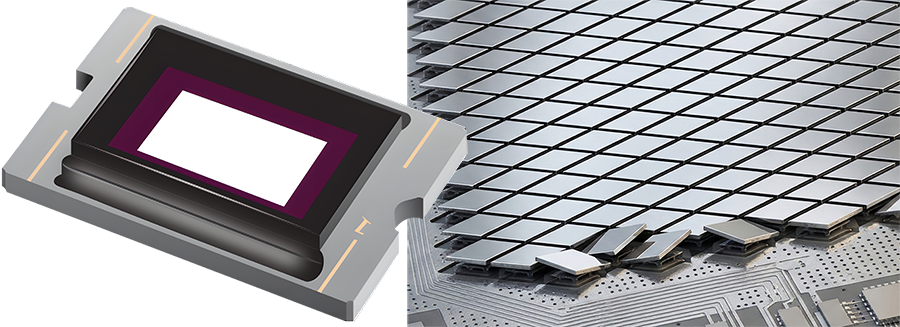
For the Aetherion Max, AWOL Vision went with the well-known TRP architecture (Tilt-and-Roll Pixel), specifically the DLP472TP chip. Each micromirror sits on a torsion hinge, allowing it to tilt in two directions with high precision, operating at ±17 degrees.
More recently, Texas Instruments introduced the SST architecture (Single-Spring Top). While SST chips can handle higher brightness levels, up to around 7,000 lumens, they operate with a smaller tilt angle of about ±14.5 degrees.
In optical terms, that difference is more important than it might seem. A smaller tilt angle makes it easier for unwanted light to leak into the projection path, raising the black floor and reducing native contrast. With TRP offering a larger tilt range, the separation between the ON and OFF light paths is better controlled, which is critical if your goal is to achieve the best overall contrast, both on/off and ANSI.
For a home cinema UST projector where contrast is a top priority, choosing TRP over SST was, in my opinion, the right decision by AWOL Vision’s engineers.
2) DLPC8445 and the Rolling Buffer Architecture
The Aetherion uses the DLPC8445 controller, which handles micromirror switching, 4K pixel shifting, and overall video signal synchronization. It’s the same controller I previously covered and analyzed in my review of the XGIMI Horizon 20 MAX.
The most interesting new feature here is the rolling buffer architecture. Older controllers relied on a full frame buffer, meaning the entire frame had to be received and stored before the DMD could generate the image. That alone introduced at least one frame of delay, around 16.7ms at 60Hz.
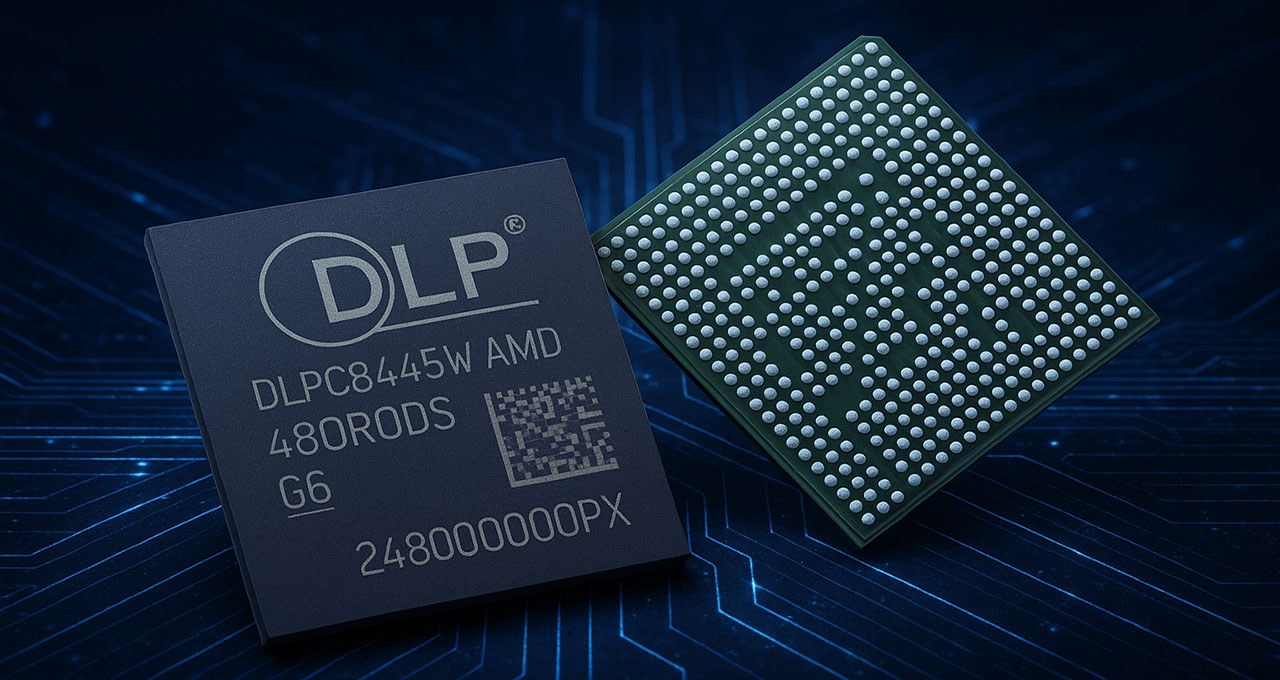
A rolling buffer controller processes the image line by line as it arrives. This allows the projector to start generating the image before the full frame is received, reducing input lag to extremely low levels.
3) The Lens System – A Masterpiece of High-Tech Engineering
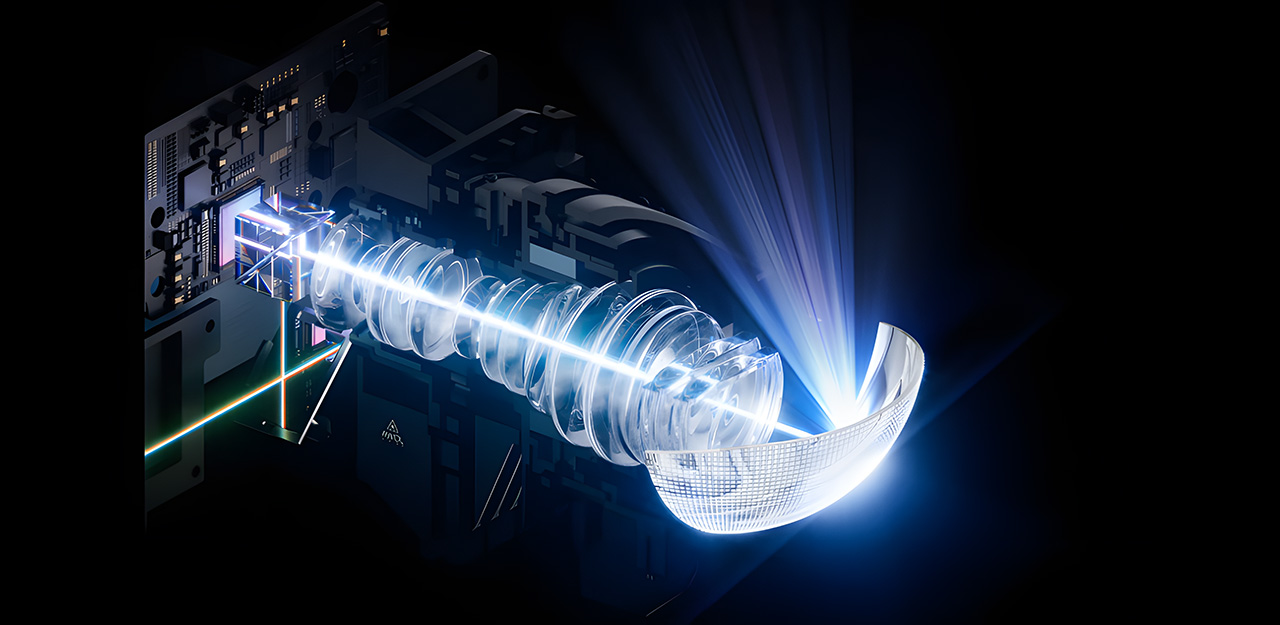
In any Ultra Short Throw projector, the lens is by far the most challenging part to design. Because the light hits the screen at extremely steep angles, even the smallest flaw in the glass or the lens assembly can quickly become a serious issue.
With the Aetherion, AWOL Vision clearly went all in on the optical design. This is a lens system that feels closer to something from the James Webb Telescope than a typical projector.

Sapphire-Series Elements & Titanium Thermal Mesh:
Sapphire is significantly harder than standard optical glass, but its real strength is thermal stability. To push this further, AWOL has integrated a Titanium Thermal Mesh between the reflective elements, acting as a precision heat shield that stabilizes the optics and prevents focus drift.
Standard glass can expand slightly, which can cause the image to lose focus after 30–40 minutes of use, or introduce additional stray light due to internal reflections. This combination of sapphire and titanium keeps the optics stable, maintaining sharp focus while also ensuring the long-term durability of the entire optical system.
Planetary Coating Process:
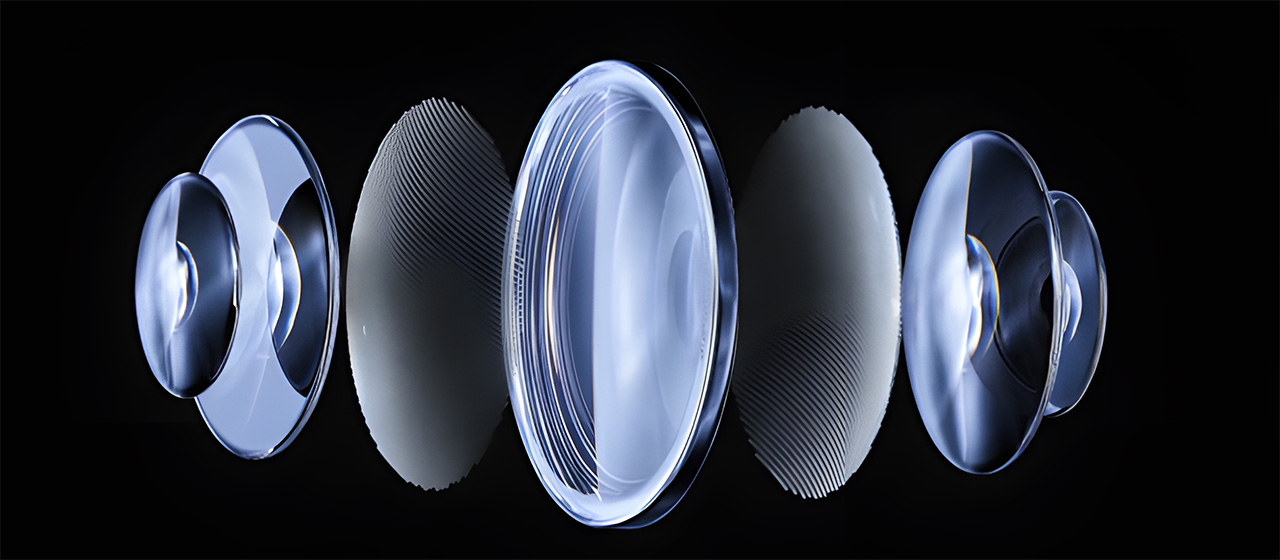
This is where things start to feel like something out of a sci-fi lab. Typically used in aerospace optics and high-end satellite equipment, the planetary coating process is how you apply optical coatings with absolute perfection. Inside a vacuum chamber, each lens element is mounted on a carrier that rotates around a central axis, while each lens also rotates around its own axis, just like planets orbiting a sun.
This orbital motion ensures that the coating is applied with complete uniformity across the entire surface. In an RGB laser projector, where three different wavelengths pass through the lens elements, that level of uniformity is essential to prevent internal reflections and wavelength scattering.
Diamond-Like Carbon (DLC) Coatings:
To push things even further, the lens elements are treated with Diamond-Like Carbon (DLC) coatings. These ultra-thin carbon layers offer extreme hardness and, more importantly, a significant boost in light transmission.
Every glass surface reflects a small amount of light back, creating stray light, or veiling glare, which washes out your blacks. AWOL’s DLC coating claims up to 99.7% light transmission, reducing parasitic reflections by around 30%.
PixelLock Optical Alignment:
At 150 or even 200 inches, every small mechanical imperfection gets magnified, especially on a UST projector, where the projection angle changes dramatically across different parts of the image.
AWOL developed a proprietary system called PixelLock, which combines optical calibration with mechanical alignment to eliminate chromatic aberration, or color fringing, across the frame. In RGB laser UST projectors, different colors can focus at slightly different points. PixelLock keeps red, green, and blue perfectly aligned at the same point across the entire screen, maintaining sharpness from corner to corner, even at the edges of a massive 200-inch image.

As for the Aetherion’s lens, I have to say this is the most advanced optical system we’ve ever seen in a commercial projector, regardless of price or category. Keep that in mind.
4) Noirscene System II – Iris and EBL
The Aetherion introduces Noirscene System II, which is essentially a dual-layered approach in order for the projector to achieve deeper blacks and better contrast.

7-Step Iris: This is the mechanical side. It’s an adjustable gate inside the lens. By closing the iris, you block off-axis stray light that has no business being on your screen. This drops the black level and boosts both on/off and ANSI contrast significantly.
EBL (Enhanced Black Level) Algorithm: This is the software brain. EBL analyzes the image frame by frame and calculates the minimum laser power needed to achieve the best possible blacks, while using gamma correction to keep highlights bright.
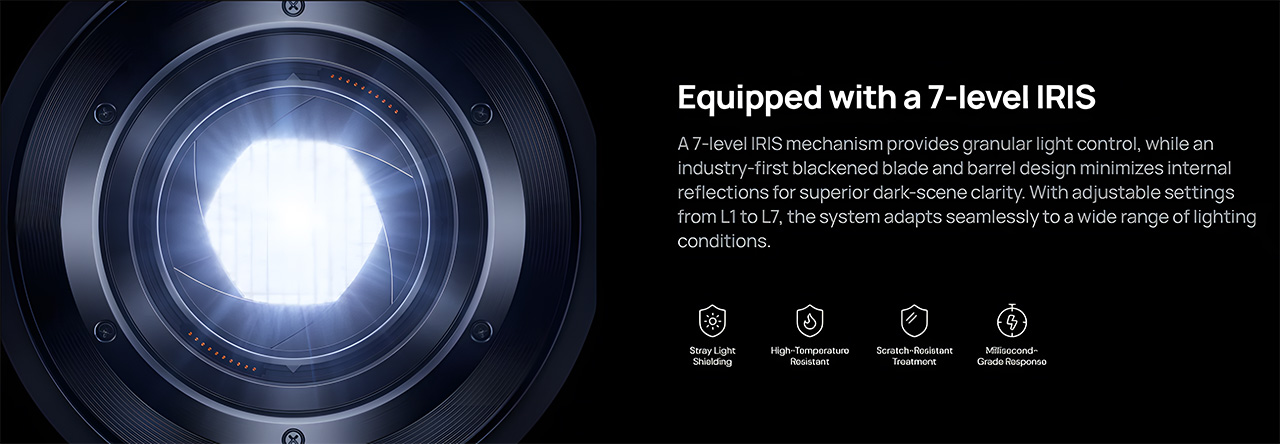
When you combine the iris with the smart dimming algorithm of the EBL, the contrast performance of the Aetherion hits a level that is uncommon for a single-chip DLP projector.
5) MediaTek Pentonic 800 (MT9655) – Τhe Βeast
At the heart of the processing, the Aetherion MAX uses the flagship MediaTek MT9655 SoC, also known as the Pentonic 800 platform, which is essentially a high-end cinema and gaming engine integrated directly into the projector.
In terms of architecture, it features a quad-core Arm Cortex-A73 CPU paired with an Arm Mali-G57 MC1 GPU, providing the horsepower needed for fast frame rendering, smooth UI performance, and overall system responsiveness. And then AWOL went completely overkill, in the best possible way, pairing this platform with 8GB of RAM and 128GB of eMMC storage.
The idea here is simple, Google TV should run like a flagship smartphone, not like the slow and laggy smart systems we often see on projectors or TVs.
On the decoding side, the system supports AV1, HEVC (H.265), VP9, and even VVC (H.266) at the hardware level, making it one of the most future-ready media engines currently available in a projector.
AI Engine & Image Enhancement
Aetherion with the power of the Pentonic 800 platform, integrates a sophisticated AI processing engine that goes far beyond simple enhancements. This suite includes:
- AI-Super Resolution 3.0: Featuring improved upscaling (AI-SR) and a dedicated Gaming optimized AI-SR for ultra-sharp interactive content.
- AI Noise Reduction (AI-NR): Effectively cleaning the image while preserving essential textures.
- AI-Contrast 2.0 & AI SDR-to-HDR: Expanding dynamic range and contrast levels for a more immersive depth.
- AI-Picture Quality Scene Recognition 2.0+: Utilizing scene-based MEMC and greater global PQ controls to adapt the image perfectly to the content being watched.
- AI-Picture Quality Object Recognition 2.5+: Using advanced AI-object detection to improve overall PQ performance by recognizing faces, landscapes, and textures in real time, applying localized processing to enhance detail and preserve texture even with lower quality sources.
6) Anti-RBE Technology – Comfort and 3D
Finally, let’s talk about the Rainbow Effect (RBE). For the first time on a UST projector, AWOL has implemented Anti-RBE Technology. We first saw a similar approach on the Valerion VisionMaster Max, where it proved to be a real game-changer, and now AWOL brings this concept into the Ultra Short Throw category.
The RBE reduction system works by adjusting the duty cycle of the RGB laser pulses and increasing the color sequencing frequency. This makes it much harder for the human eye to separate the individual colors, effectively minimizing, and in many cases eliminating, the rainbow effect.
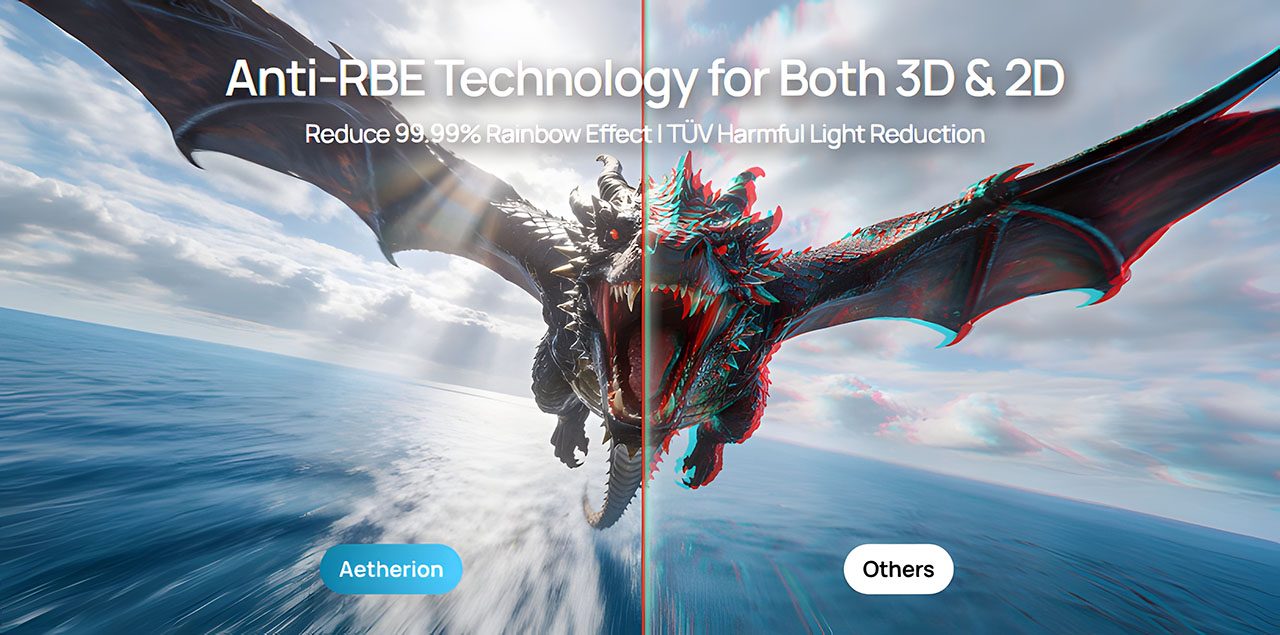
Why this matters for 3D: Rainbow artifacts are usually more distracting and fatiguing when using active shutter 3D glasses. In 3D mode, the projector alternates frames for the left and right eye using DLP-Link synchronization. This complex chain of frame alternation and shutter syncing is already somewhat demanding for both the eyes and the brain during a full movie, and the RBE only makes things worse.
By multiplying the RGB duty cycles and precisely aligning them with the DLP-Link synchronization flashes, AWOL has created a 3D experience that feels much more natural and comfortable. This is the first time a DLP projector offers 3D playback with RGB reduction, and in the following sections, you’ll understand exactly what that means in practice.
Meet the Aetherion MAX
I’m dedicating an entire section to talk about the design and build quality of the Aetherion Max, because I truly believe it deserves it. The Aetherion doesn’t look like any other UST projector, and it draws attention like a magnet.
Design-wise, it feels like it came straight from the future, reminding you of a stealth spacecraft straight out of a sci-fi movie. Believe me, this is a projector you admire just as much when it’s projecting as when it’s sitting powered off in its place. There’s no way you can walk past it without it catching your eye.

From its gunmetal finish, which shifts depending on the angle of the light, to its sharp angles that resemble an F-22 Raptor, everything about it stands out. The final touch to this futuristic look is the RGB LED strip on the front, which is adjustable through the menu, letting you choose the color combinations that set the mood every time you use it.

I would describe Aetherion as a statement piece, a projector that truly transforms the space where it is placed. Its surface resembles brushed, aged industrial metal, shifting color depending on the angle of the light. A truly unique design.

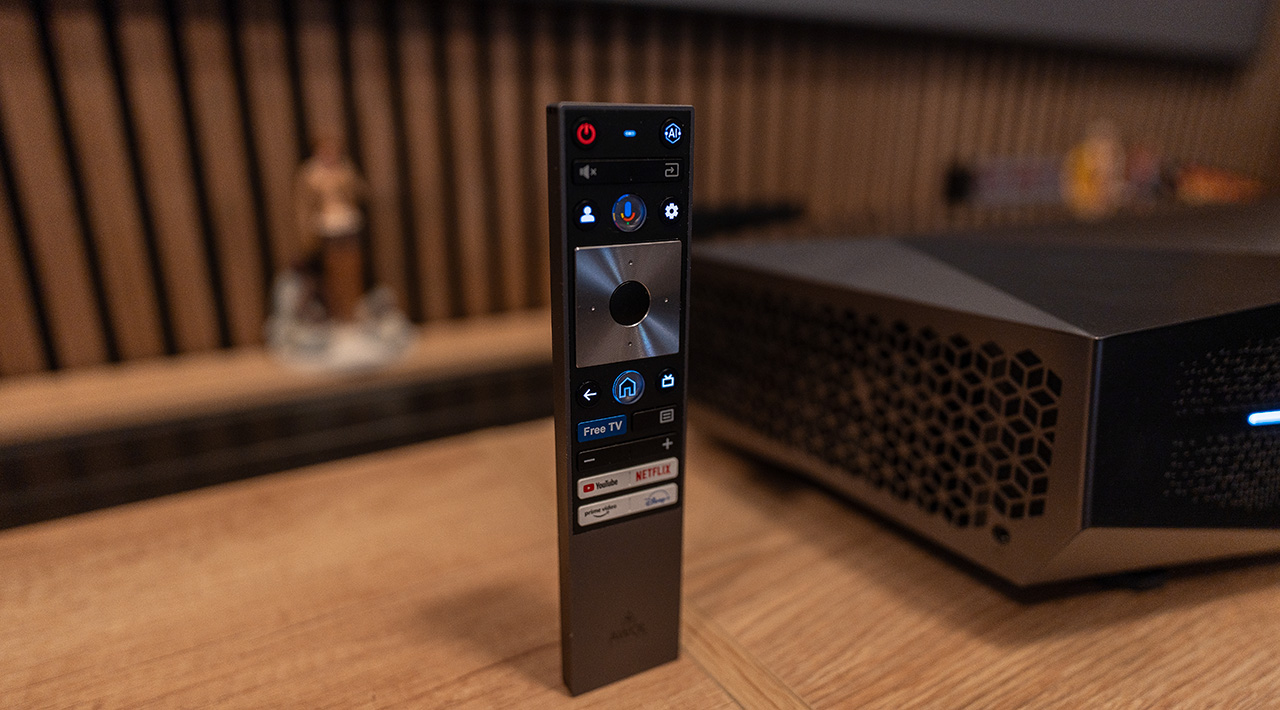
The remote control follows the same design, with that grey metallic finish. It feels heavy in the hand, is backlit, and the overall build quality is excellent.
In terms of build quality, Αetherion feels like an armored tank. It is very solid and heavy, and when you hold it in your hands, it gives you the impression that it contains 9 kilos of solid metal inside.
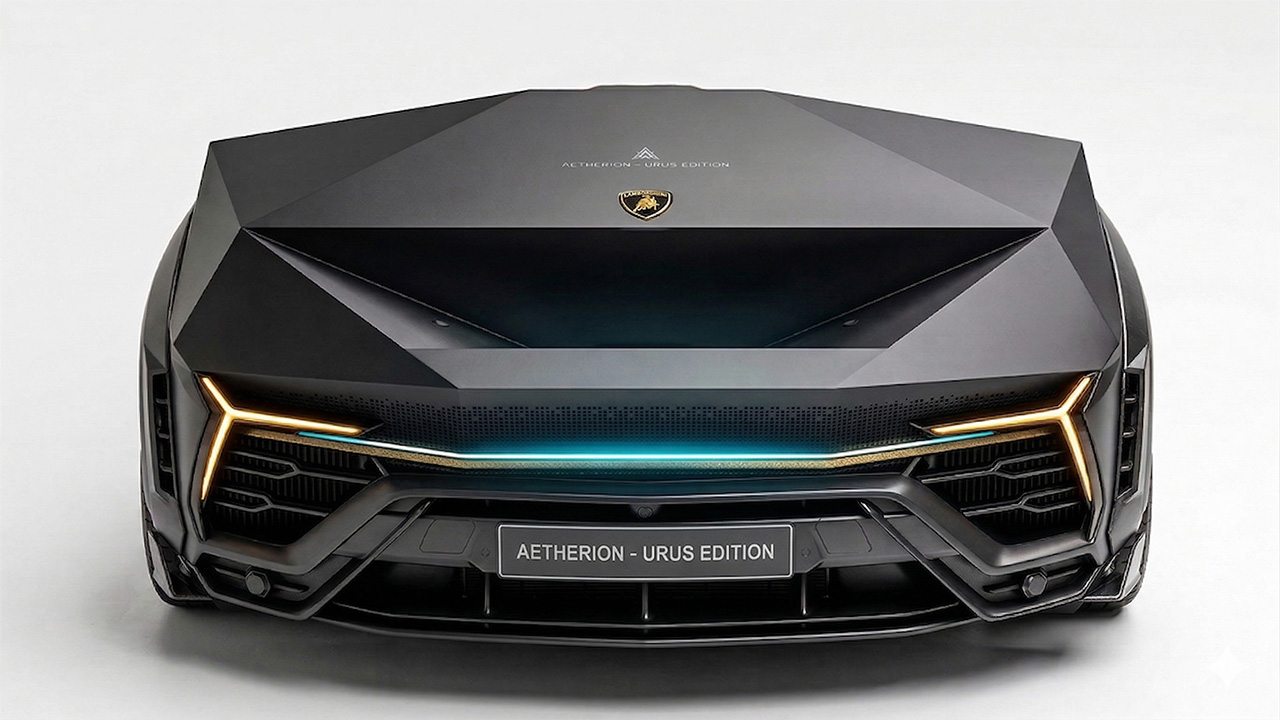
We also have some exclusive content that you won’t find anywhere else. We got access to the initial design concept of a special edition of the Aetherion that was ultimately never released, and of course, we’re presenting it exclusively here on ProjectorJunkies. Please do not share this confidential information 😊
🔥 Click to Reveal Exclusive Content
Google TV Interface – Menu
The Aetherion comes with Google TV 14 pre-installed, with official licenses for all major streaming apps and, of course, the official Play Store so you can install anything you want. The menu is split into two main sections, a quick menu that appears at the bottom of the screen, and the standard menu we are used to from Google TV projectors, which is accessed through a different button. This is the fast menu.

In the fast menu, by holding the select button for 2 seconds, you can rearrange the different sub-menus and place them in the order that suits you.

Inside the laser settings, one of the most important menus, you will find the focus and keystone correction adjustments, the menus for 3D playback, and further down you will find the control for the Aetherion’s stepped iris.

This is the iris menu, and we have three main options. Cinema 1 and Cinema 2, where, in addition to changing the iris position, with Cinema 2 being the more aggressive setting, there are also changes to white balance and gamma. Then we have the manual setting, where you can adjust the iris yourself to the position you prefer.

And there are 7 positions, with the 7th being the most closed iris setting, which also delivers the maximum native contrast.

Now, in the main menu of Google TV, the sub-menu of greatest interest is of course the picture menu, where you will find all the image settings.

Inside the laser luminance menu, in addition to adjusting the laser across 10 levels, you can enable the well-known EBL, as well as fine-tune other critical parameters such as gamma, black level, and white level.
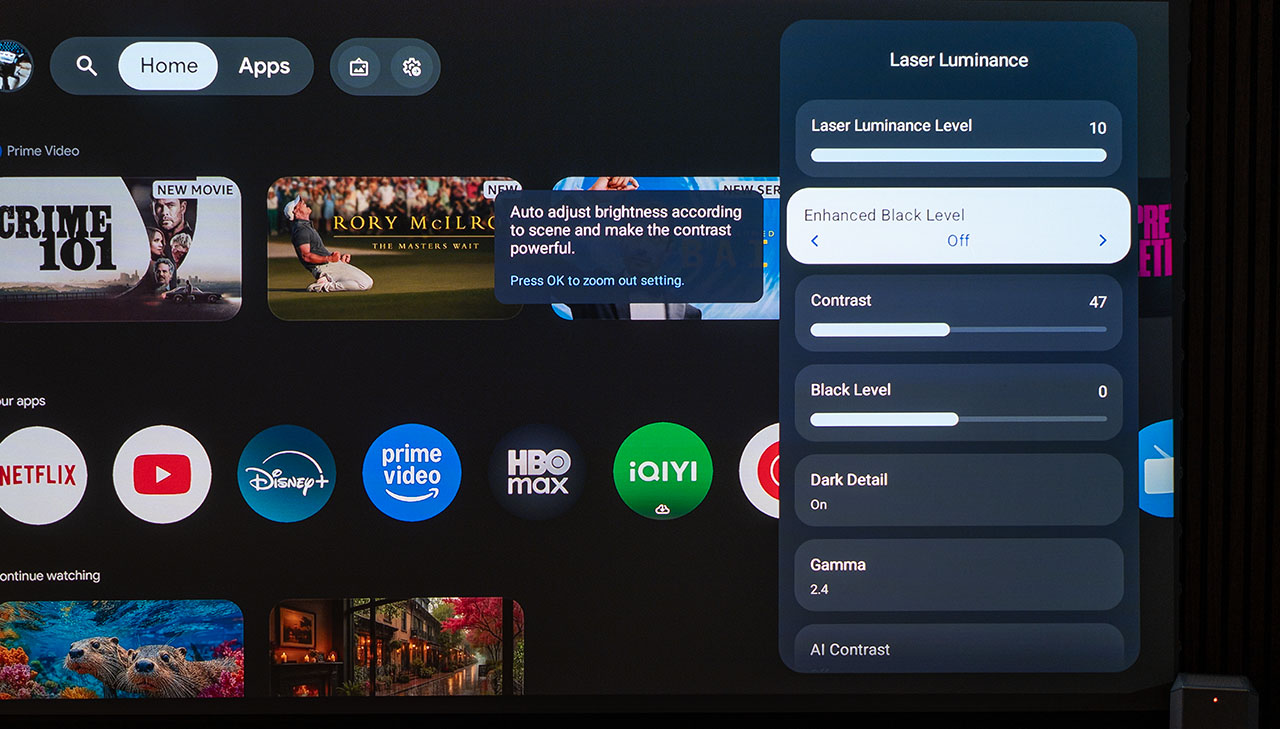
Inside the color menu, you can change the white balance modes (Standard, Warm 1, Warm 2, Cool), as well as select the color gamut between Rec.709, DCI-P3, and BT.2020.

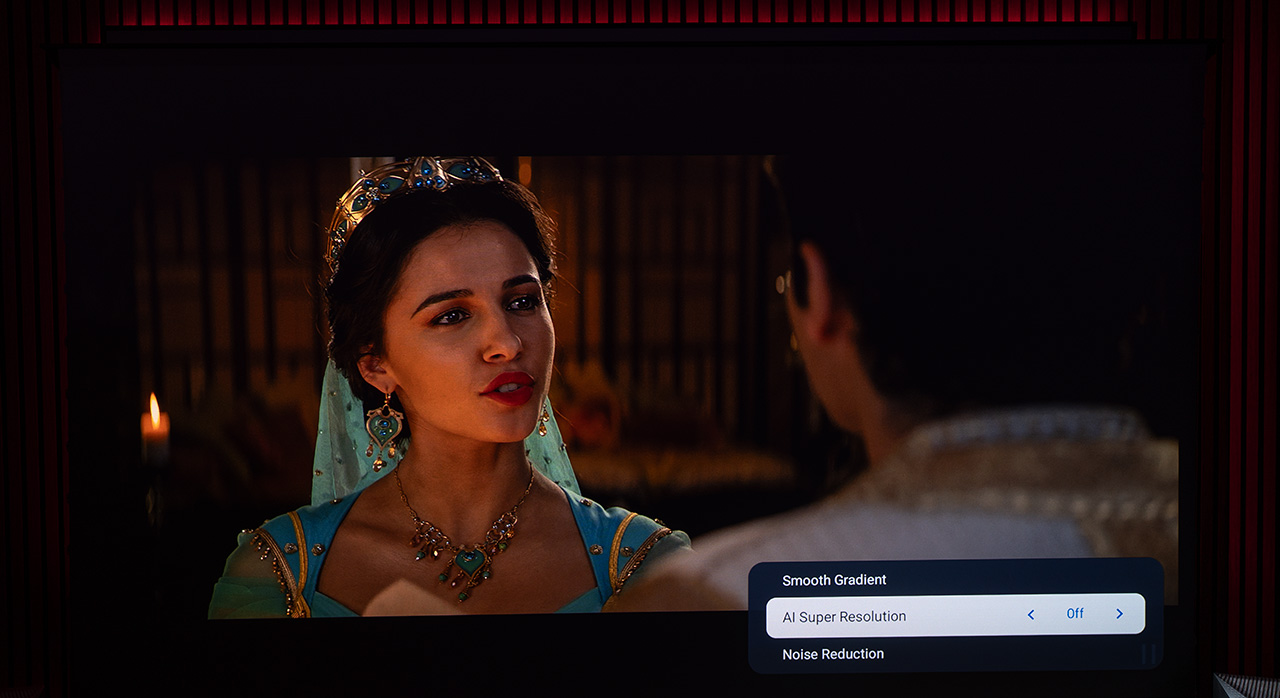
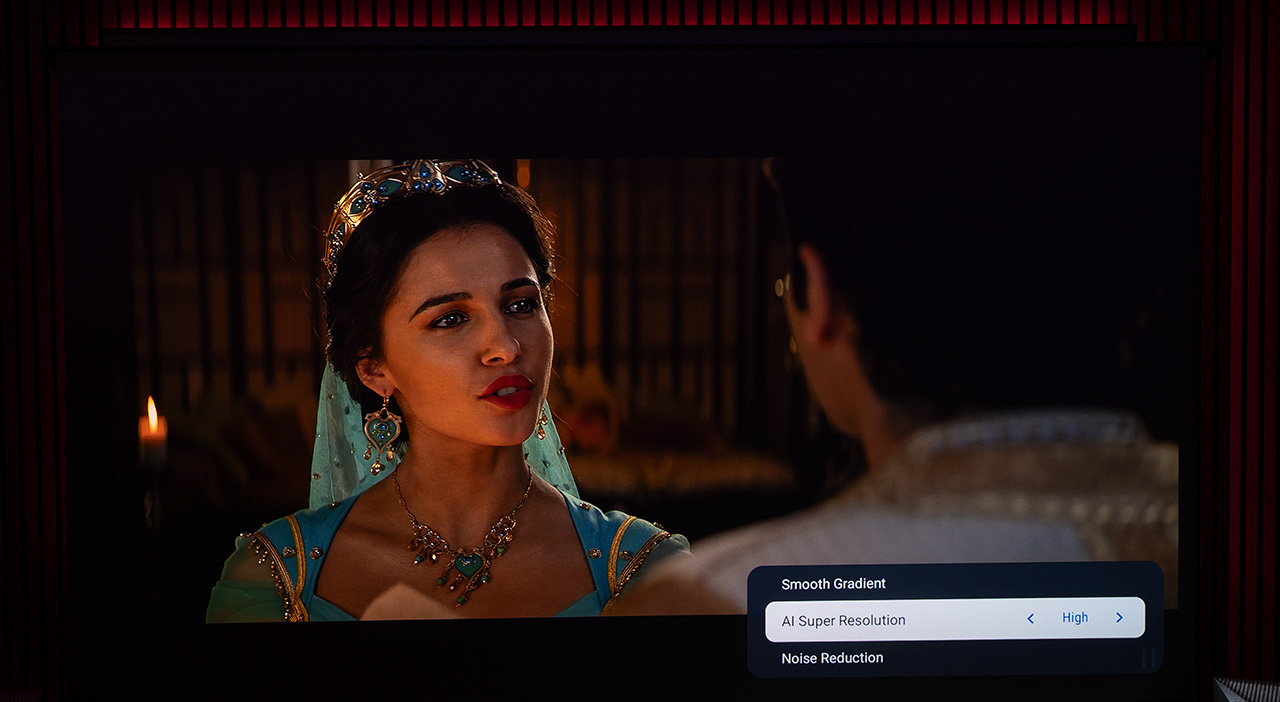
In the clarity menu, you will find several digital processing options such as Smooth Gradient and the very important AI Super Resolution. However, the most important one is probably Motion Enhancement, where you will find the Film setting to play 24p content natively without pulldown, as well as four additional modes (Custom, Clear, Standard, and Smooth), with custom allows you to manually adjust the level of judder reduction to your preference.

Finally, we have the calibration menu, where you can adjust both primary and secondary colors through a full CMS, as well as fine-tune the white balance with both 2-point and 20-point controls.

I would like to focus on a few very important features that the Aetherion offers, and which I would recommend owners to try.
Dark Detail: Dark Detail slightly raises the gamma in the mid and dark areas of the image, making them more visible to the eye. In HDR, it is almost essential to have it enabled, as it significantly improves the EOTF curve. In other words, the image gets closer to what the director intended us to see.
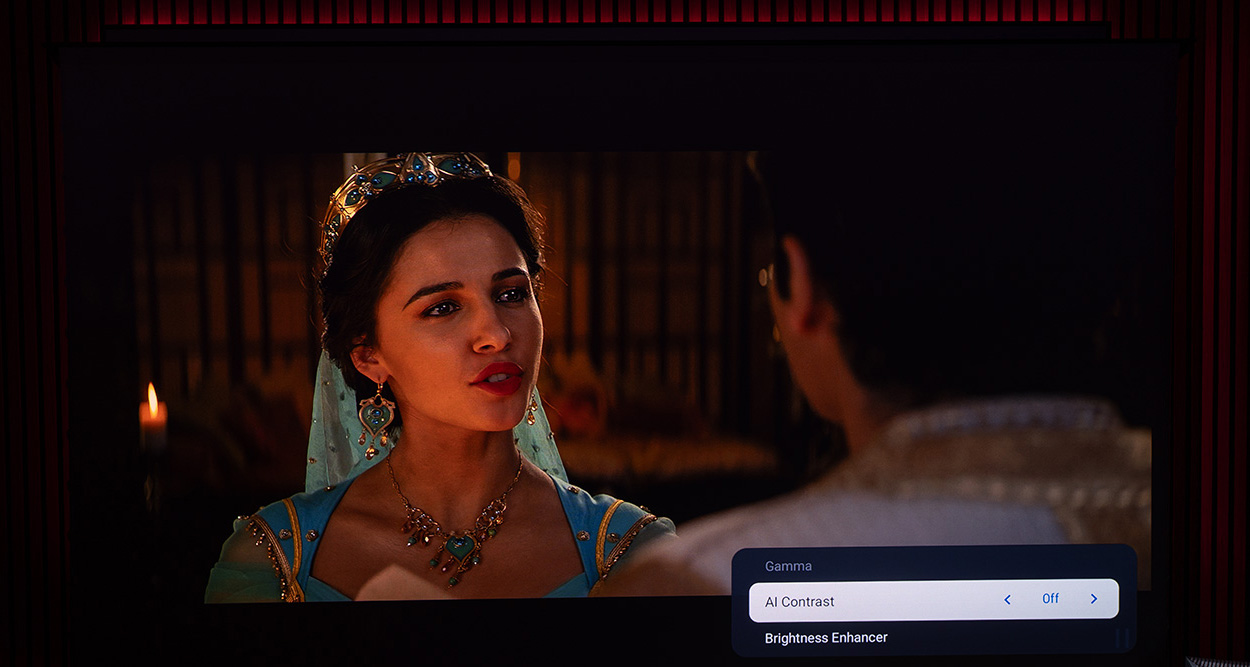
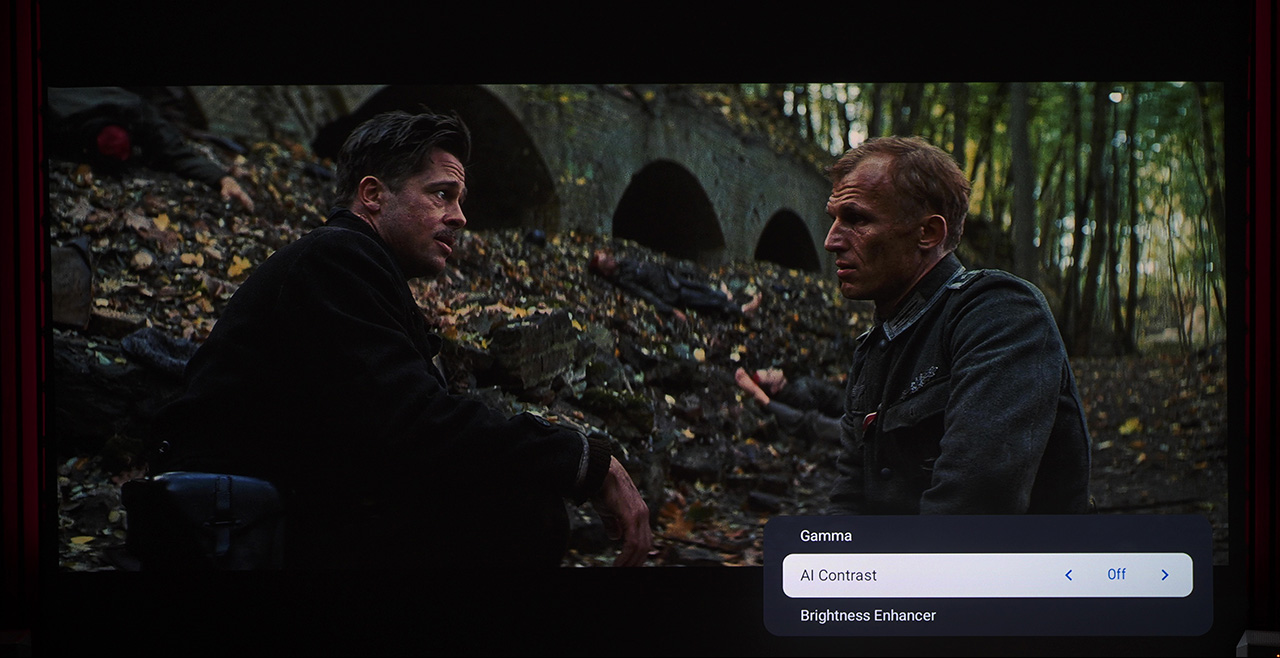
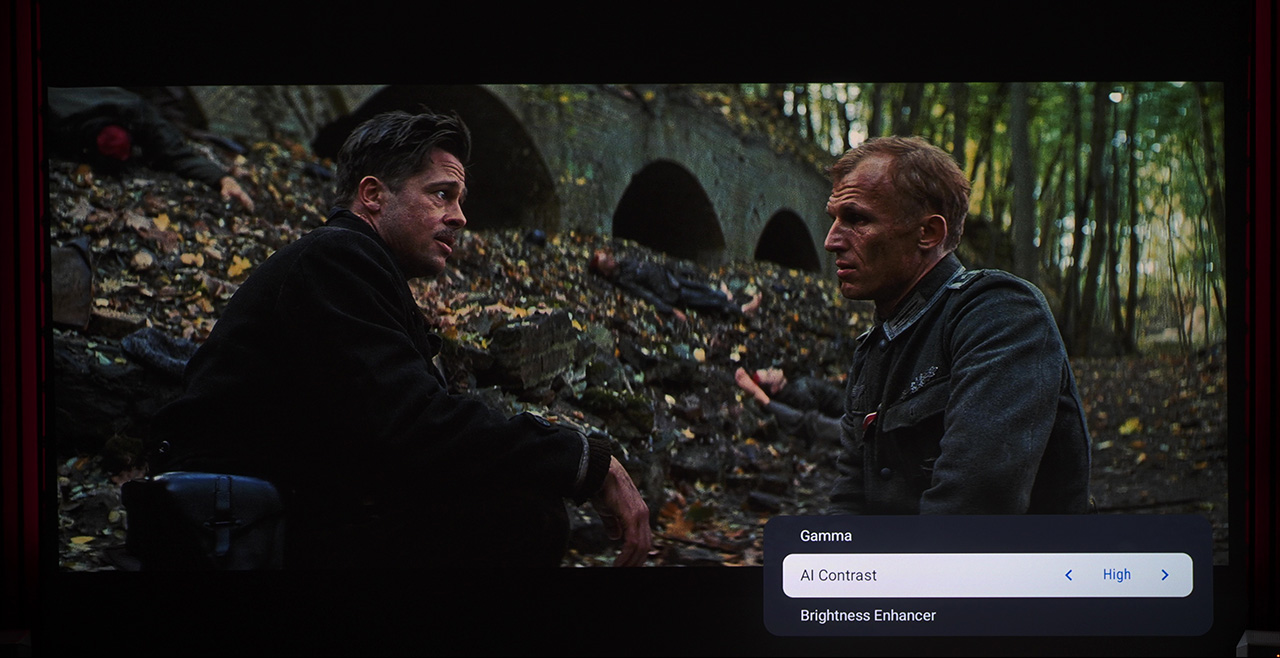
AI Contrast: Here we have an AI algorithm that works frame by frame, adjusting different areas of the image by increasing brightness and gamma in many parts, with the goal of boosting overall contrast. And it does this incredibly well. It is not very linear, meaning that the difference between Low and Medium/High is quite noticeable, while in SDR content it behaves somewhat differently. Just take a look at how effectively it enhances dark scenes, increasing contrast and helping reveal details much more clearly.
Dark Scene
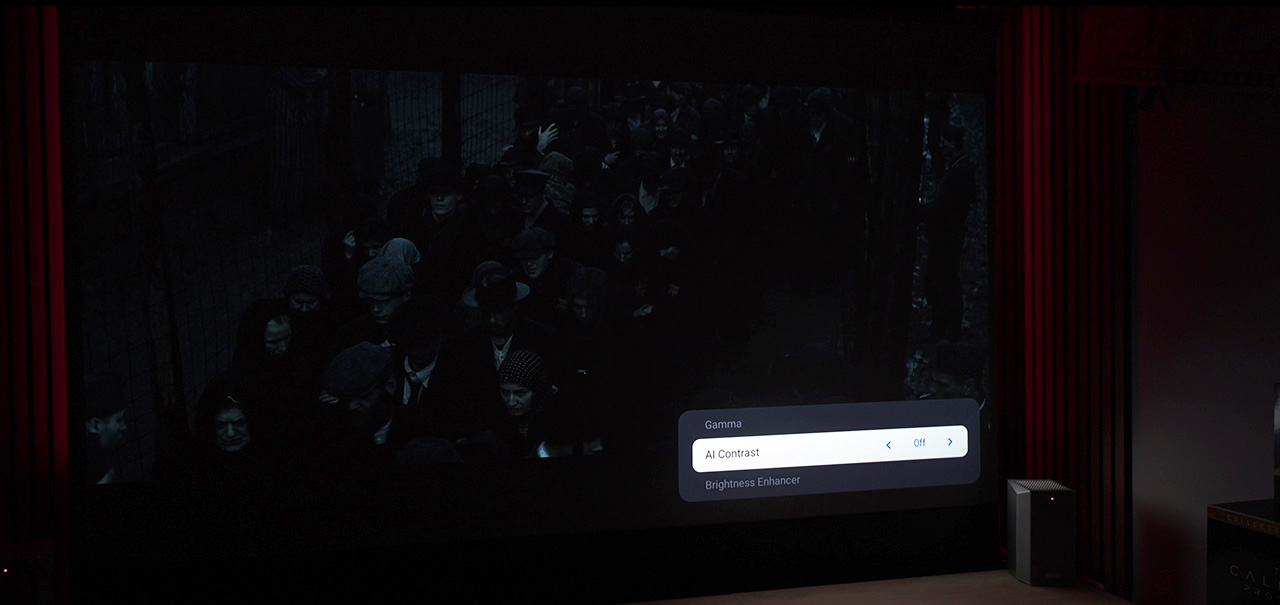
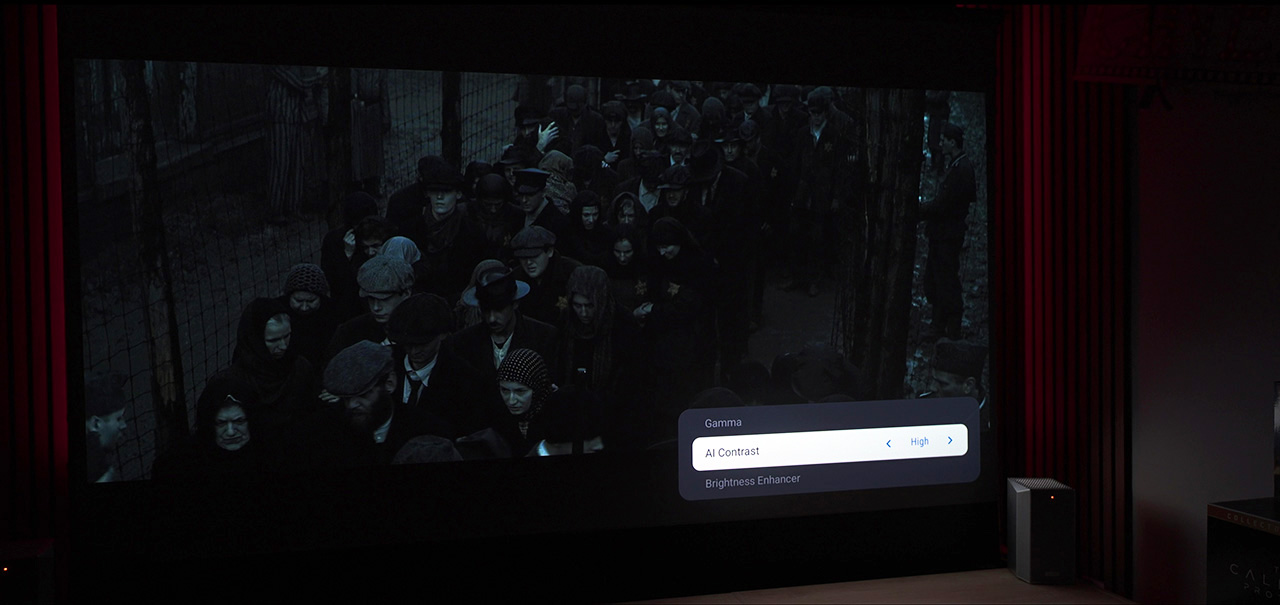
Semi-Dark Scene
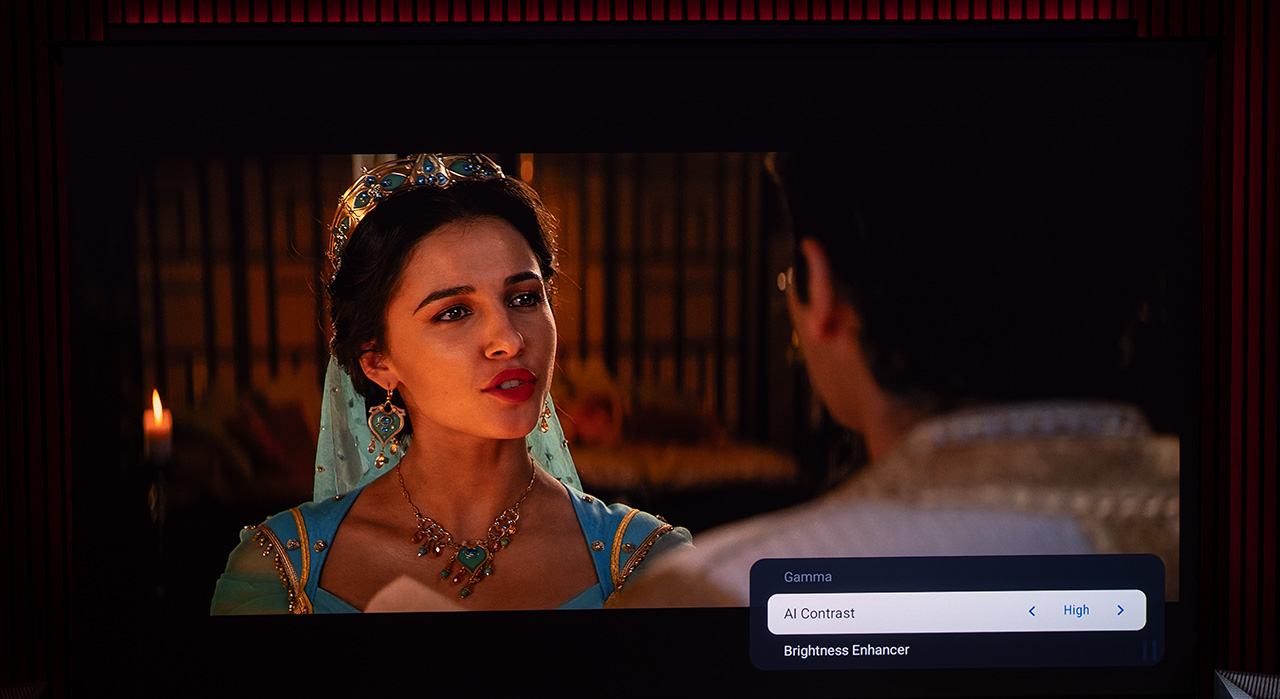
Color Temperature Adaptation: This is an algorithm that keeps the white balance stable based on your settings, regardless of any laser throttling due to high temperatures or any other reason. I was not able to properly test it, as the Aetherion’s white balance remained extremely stable even after many hours of testing. Note: it does not work if the iris is enabled, but it does work when EBL is active.
AI Super Resolution: An algorithm that works very subtly, targeting only specific key areas of the image, applying a type of sharpness that feels more like an increase in resolution rather than traditional sharpening.
Measurements
Brightness & Contrast
It’s time to look at the real capabilities of the Aetherion, both in terms of brightness and contrast. The measurements you are about to read were taken with particular care at the lens of the projector (20 cm from the lens), not on the screen, using multiple lux meters and reference instruments such as a NIST-calibrated AEMC CA813 and a Minolta T10MA, and they represent the actual performance of the Aetherion.

Here at ProjectorJunkies we truly test projectors and do not rely only on out-of-the-box measurements. So I spent a considerable amount of time performing calibration in every WB mode and at every iris position, and measuring the real brightness of the Aetherion with its grayscale fully neutral at 6500K. Here are the results

The Aetherion delivered a maximum brightness of 3,268 ANSI lumens, without using any brightness boost feature, so we are talking about real brightness that you will see in the content you watch, measured in the standard white balance setting. The lowest brightness I measured, with the iris fully closed at position 7 and the white balance set to Warm2, is 1,439 ANSI lumens.
For the record, the uncalibrated maximum brightness was measured at 3,390 ANSI lumens (and more than 4000 ANSI lumens with brightness enhancer on).
The white balance can be adjusted in four positions, Warm1, Warm2, Standard, and Cool, but we will not deal with Cool at all, as it has nothing different to offer, so you should also ignore it completely.
And now we come to perhaps the most interesting measurement of this review, and of course, I’m referring to contrast. Believe me, I was even more eager than you for this one, and the measurements you are about to read were repeated multiple times with all my instruments and are fully verified.

The confirmation of the specs announced by AWOL Vision for the Aetherion, backed by actual measurements, and especially with the projector fully calibrated, says a lot about the integrity of this company. AWOL may refer to ISO lumens, while I measure in ANSI lumens, but the values are very close.
One interesting observation I made is in the measurements with the iris at position 1. As you will see, in Warm2 and Standard white balance, there is a slight drop in contrast instead of an increase, while in Warm1, contrast actually increases.
The overall conclusion from these contrast measurements is that the Aetherion currently outperforms the Valerion Max, both in terms of brightness and native contrast, which I would consider the reference projector for the DLP category. It also reaches the level of the impressive Nebula X1 and X1 Pro, which are the DLP projectors with the highest native contrast I have ever measured. Not bad at all, I would say.
It is also interesting to look at the power consumption of the Aetherion depending on the selected laser level.

With a power consumption of just 173W for a real brightness of 3,268 ANSI lumens, Aetherion MAX delivers a brightness efficiency of 18.9 lumens per watt, which is an excellent value, above average for an RGB laser projector and significantly higher than lamp-based projectors.
Colors
All color and white balance measurements were conducted multiple times, with the projector operating for over 30 minutes on a 100′ inch CLR screen. The instruments used included a Portrait Displays G1 pattern generator, an X-Rite i1 Display Pro and a C6 HDR5000, while a high-resolution JETI 1511 spectroradiometer was used as the reference instrument. The software used is the latest 5.17.2.4 Calman Studio.
I measured the color gamut coverage of the Aetherion across both color standards. According to CIE1976, which is now the most representative in terms of how our eyes perceive color accuracy on an RGB laser projector, the Aetherion truly covers 97.41% of BT.2020, 99.72% of DCI-P3, and 169% of BT.709.
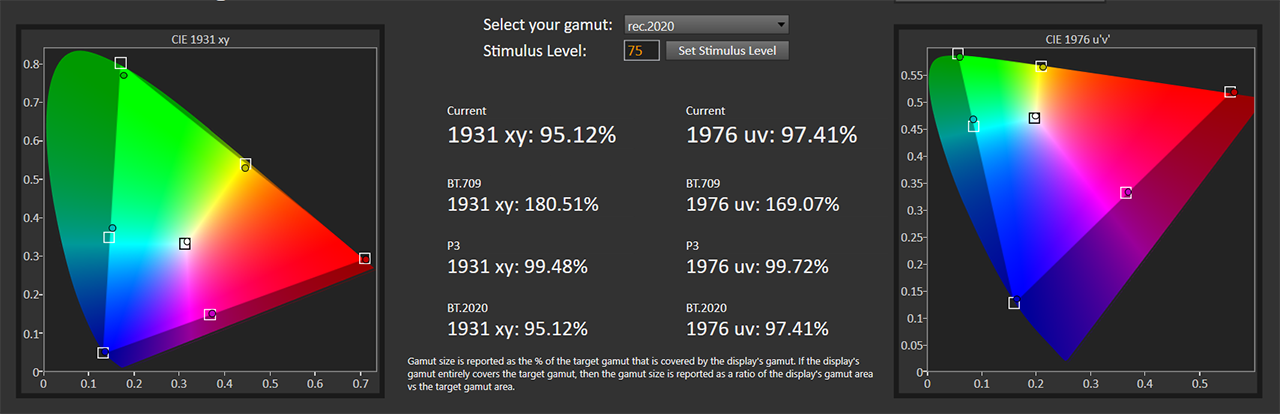
As for color accuracy in the BT.2020 color space, this is, quite simply, one of the best out-of-the-box measurements I’ve ever seen from a projector, regardless of category or technology. DeltaE 2000 is below 2, and yes, this is without any calibration. See for yourselves.
All measurements were taken at a 75% stimulus level, to better reflect real-world performance and the colors you actually see in movies.
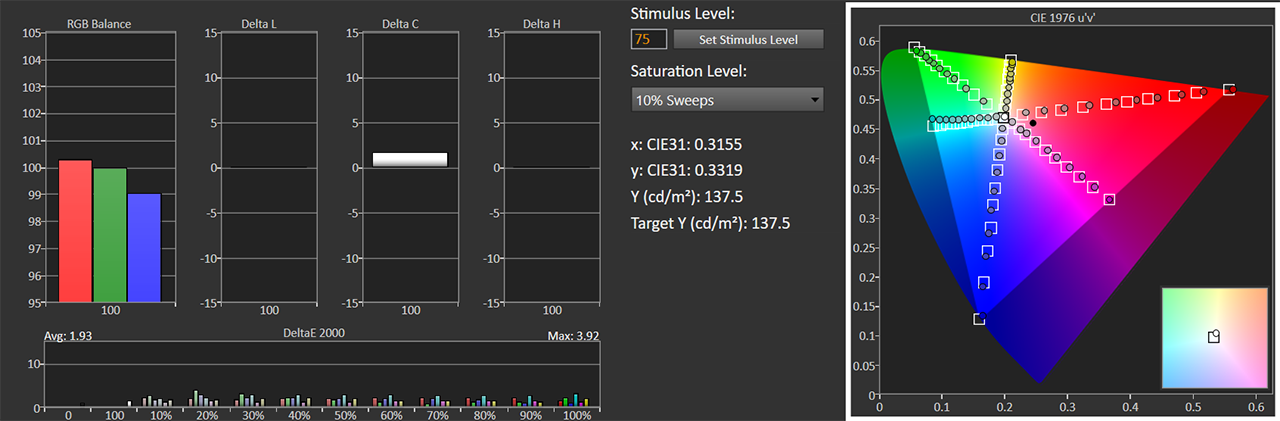
White Balance
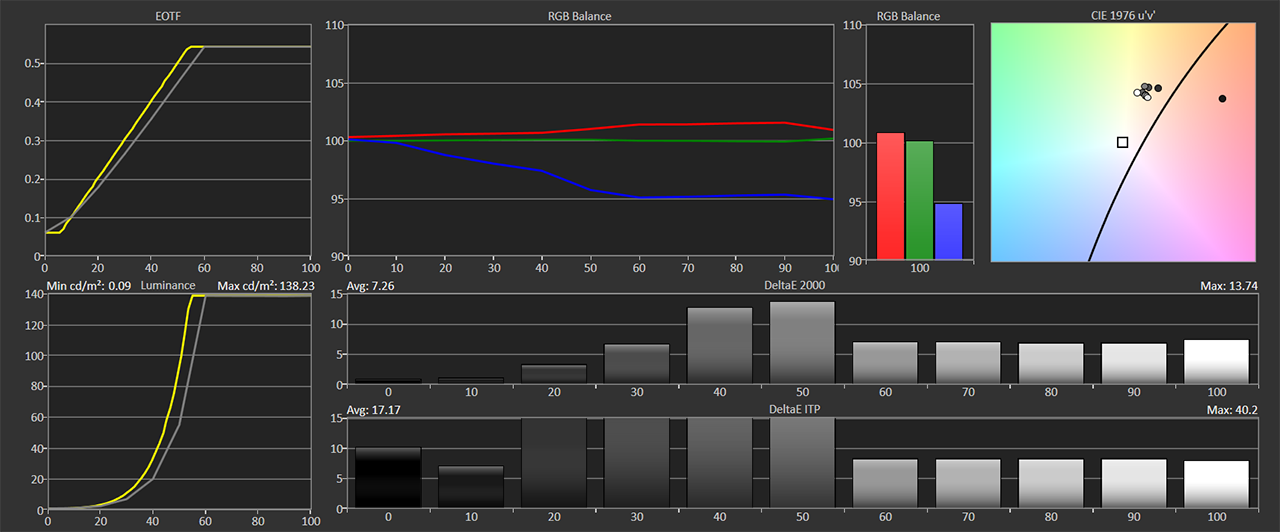
I’m only going to show the HDR measurements here, so we don’t get buried in endless charts. The reason is simple, the Aetherion is clearly built for HDR. You’ll see what I mean as we go through the review.
These are the results with the Standard white balance setting.

This is the Warm 1 factory white balance measurement. Just to remind you, Warm 1 is where the Aetherion’s RBE reduction system is automatically activated, giving us the most accurate color reproduction.
As we can see from the measurements, the image leans heavily toward red and green, with blue dropping quite noticeably, down to around 95%.
This is Warm 1 after calibration. As you can see, the RGB balance is much more even, but now we’re dealing with a slight deviation in the EOTF and the luminance curve.

And this is where the Aetherion’s HDR dynamic tone mapping starts to show what it’s really doing, even in the measurements.
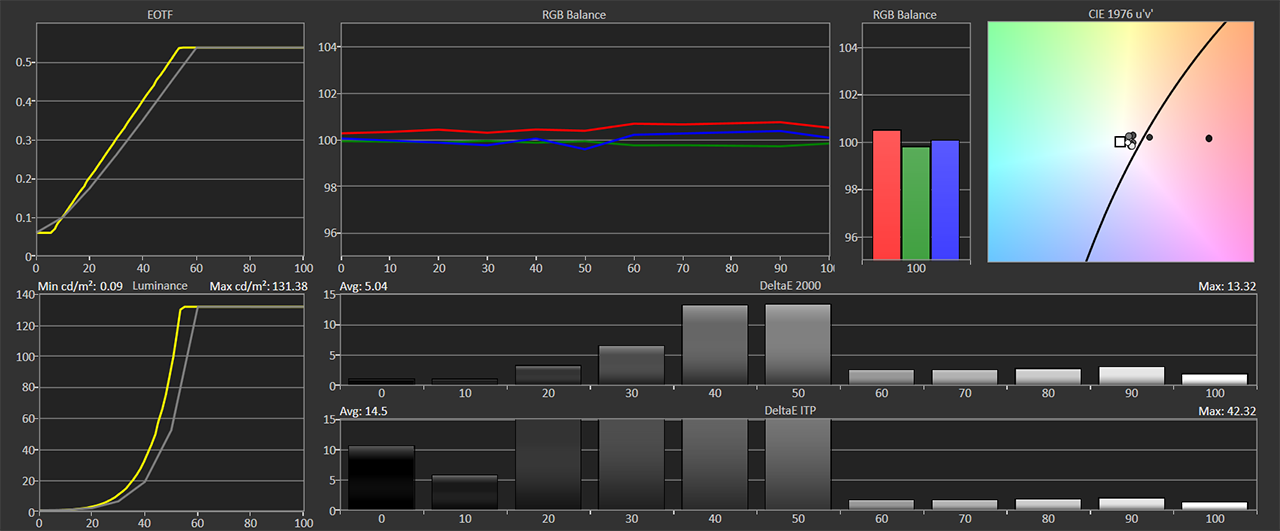
And if you also enable Black Detail, the result becomes even better, something that’s clearly visible not just in the measurements, but during actual viewing as well.

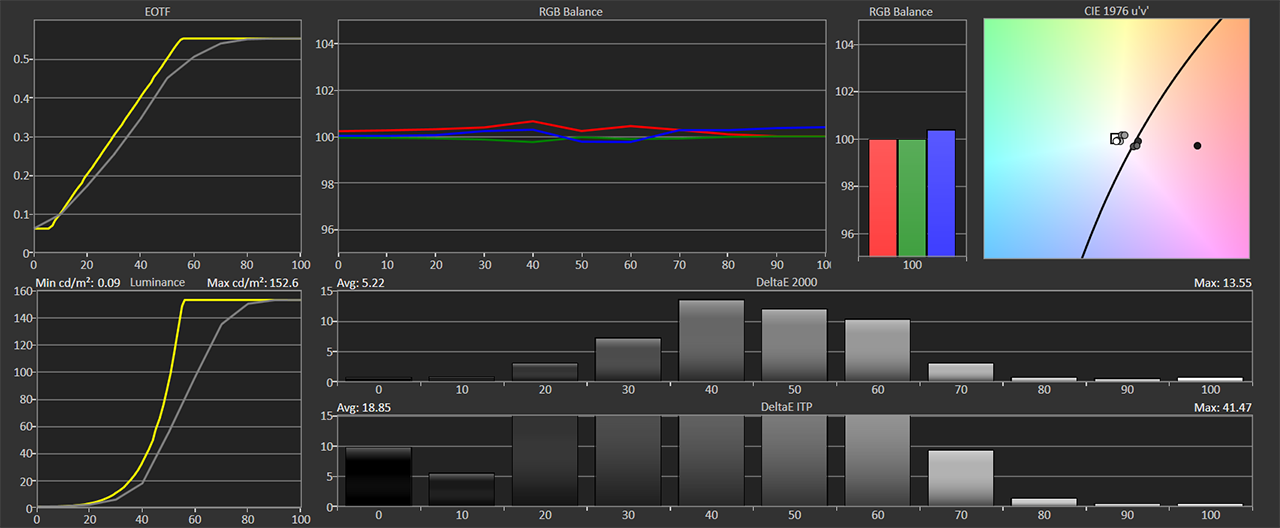
These are the measurements for the Warm 2 white balance setting. Here we can see a drop in green, as blue and red are being pushed, but not in a balanced way. Up to around 50 IRE, red dominates, and then suddenly blue rises quite sharply.
This is a typical behavior for RGB laser projectors in HDR measurements.
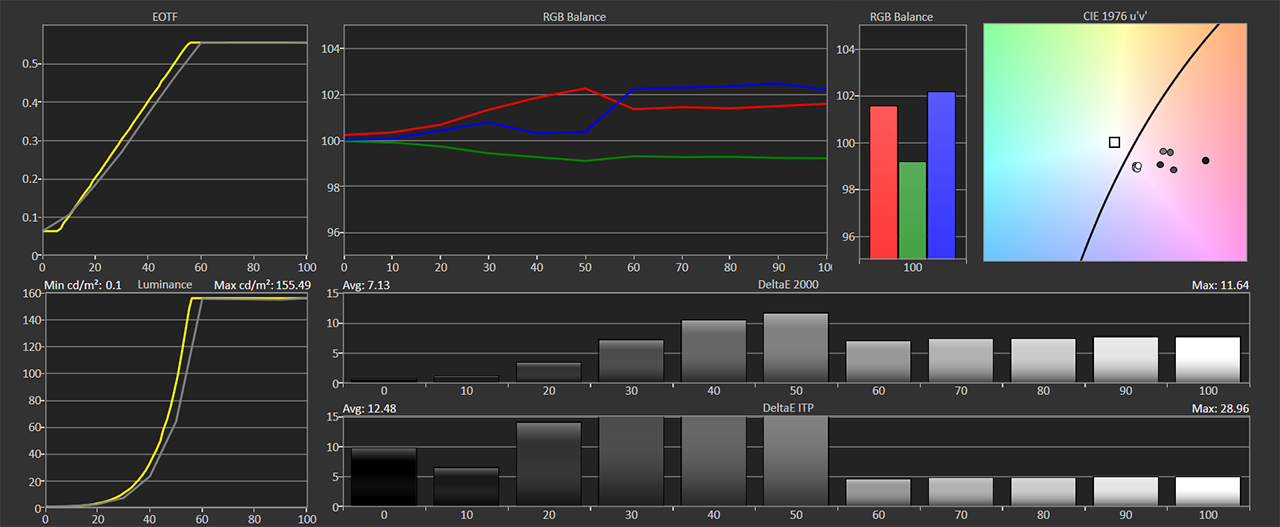
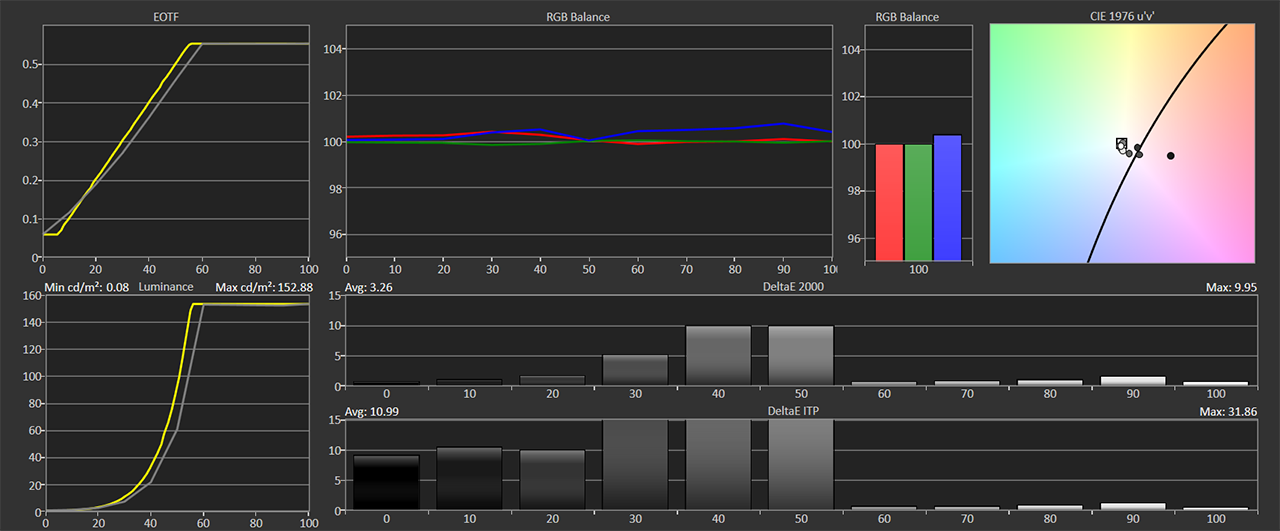
Here we can see the measurement after calibrating the Warm 2 setting.
And here, after enabling Dynamic Tone Mapping and Black Detail.
It’s also interesting to look at the measurements with the different iris positions, Cinema 1 and Cinema 2, using the calibrated Warm 1 white balance as our reference.
In Cinema 1, we can see a drop in blue, while green starts to dominate.

In the Cinema 2 iris position, we see the opposite behavior, with red dropping and blue increasing.
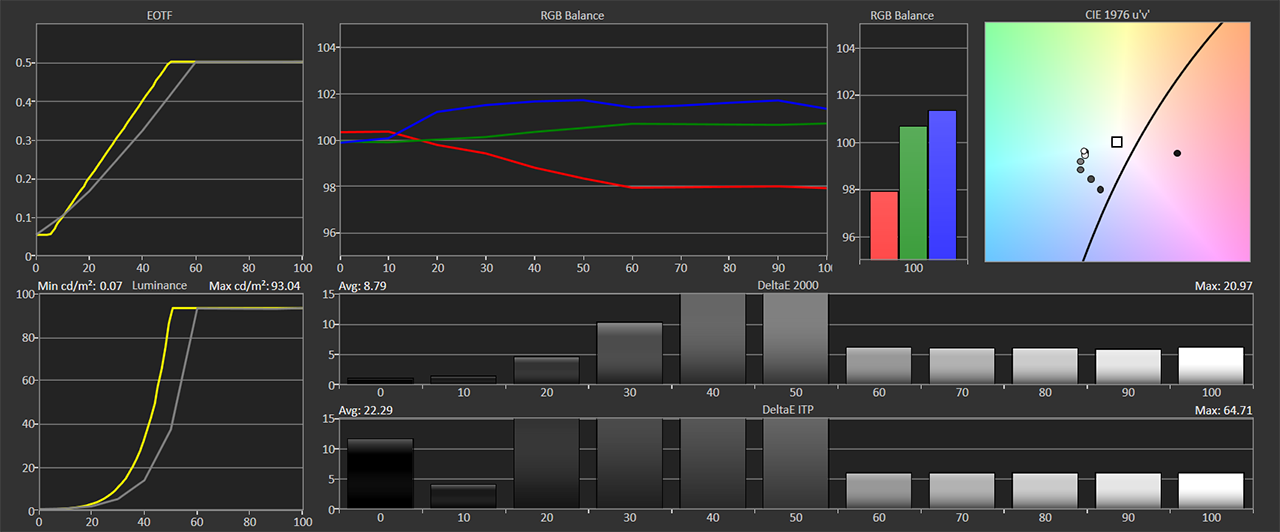
The positive here is that, despite the deviations we see across the different white balance and iris modes, everything can be calibrated and the final result can be spot on.
But let’s take a look at one last thing regarding the iris and how it affects the Aetherion’s white balance overall.
If we take a closer look at the grayscale measurements across the different iris positions, a clear pattern starts to appear. As you close the iris on the Aetherion, the red channel gradually drops. This is directly related to the different wavelengths of the RGB laser light sources.

In simple terms, closing the iris improves contrast, but at the same time it slightly shifts the image toward a cooler tone, reducing red intensity.
The good news is that, as you’ll see in the final chart, this can be corrected through white balance adjustment menu. The downside is that it needs to be done separately for each iris step, which, honestly, is a bit of a hassle.
Overall, I would say that in terms of color performance, whether we’re talking about Rec.709, BT.2020, or DCI-P3, the Aetherion delivers an excellent result and doesn’t really need any adjustment.
When it comes to white balance, things are different. Since there are multiple modes, each with different laser duty cycles, and with the iris affecting each RGB wavelength differently depending on its position, the user needs to adjust the grayscale through the 2-point white balance menu, depending on the WB mode or iris position they are using.
At this point, I should say that the 21-point white balance menu needs attention, and I would not recommend using it. Not only can you achieve an excellent result with the 2-point setting, but this control is not very linear and can create more problems than it solves.
For example, if you adjust 15% perfectly, you will see with the proper patterns that 17% is completely off. If you are adjusting the projector yourself, I would suggest not enabling the 21-point white balance at all.
If, on the other hand, you pay for a professional calibrator, then he already knows, it’s not something that concerns you.
Let’s move on now…
Thermal, Noise and Airflow Measurements
To measure the operating noise of the Aetherion’s cooling system, I set up a full laboratory environment using dedicated instruments for noise and airflow measurement. I also used two additional UST projectors as reference points, the Nexigo Aurora Pro 2 and the Samsung LSP9, which is considered one of the quietest UST projectors out there.
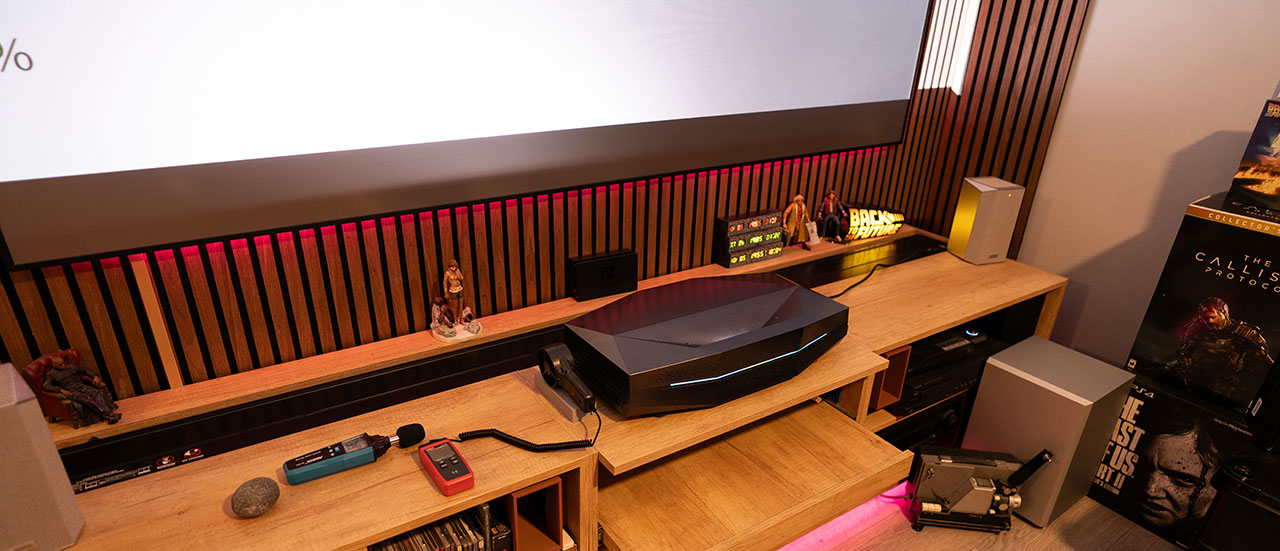
The measurements were conducted after allowing the projectors to run for 30 minutes, with laser power set to 100% while projecting a full white pattern.
All three projectors perform relatively close in terms of noise levels. The Aetherion is the noisiest at 38.1 dB, while the Samsung is the quietest at 36.2 dB, which translates to roughly 40% lower perceived noise compared to the Aetherion. The Nexigo sits in between, measuring 37.2 dB of operating noise.
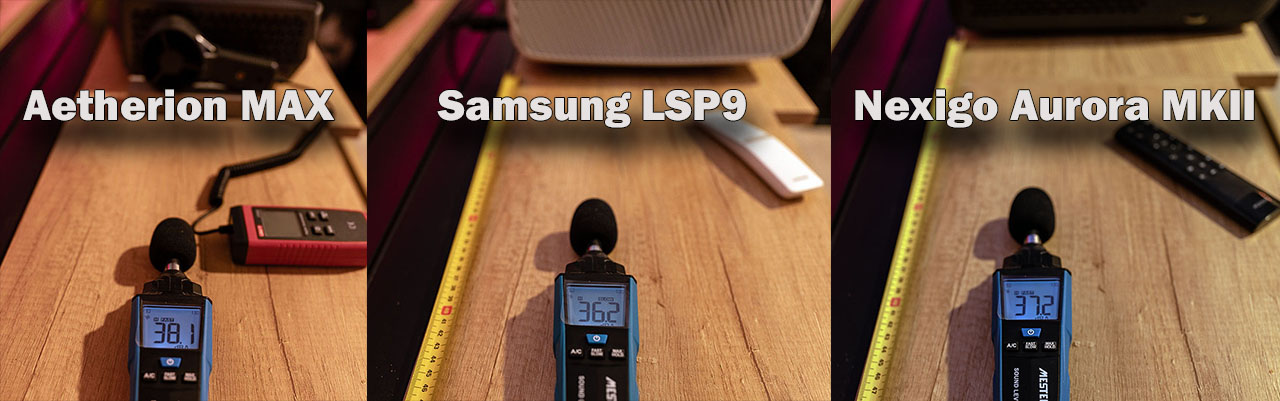
In practice, differences of 1–2 dB are not easily perceptible to the human ear in a typical room environment, unless you move very close to the projector and the space is completely silent.
It is also interesting to look at the airflow measurement I conducted, in order to evaluate how much hot air the Aetherion’s cooling system expels.

It turned out that the Aetherion expels the highest airflow from its cooling system, measuring 1.91 m/s, while the Samsung has what I would describe as the most “lazy” cooling system, at just 1.38 m/s.
Based on the dimensions of the Aetherion’s cooling system, this translates to an airflow of approximately 60 CFM (cubic feet per minute), which in general can be considered relatively light rather than aggressive, but for a projector it is actually quite aggressive.
Air temperatures are very similar across all three projectors, averaging around 33°C. Measurements were taken at a distance of 5 cm from the cooling system exhaust.

However, if you look at the chassis temperatures and hot spots through a thermal camera, you start to get a much clearer picture.
The Samsung spreads heat across the entire chassis, which likely means there are heat dissipation elements in multiple areas, not just near the exhaust.
The Nexigo shows the highest temperature overall, but only in a specific spot, while the Aetherion is clearly the coolest of the three across the whole chassis.

Here you can clearly see how the Samsung spreads heat across a much larger area compared to the other two. The small spike on the right side of the Aetherion 3D diagram is just the USB stick I had plugged into the side port 😄

It’s also interesting to look at the temperatures around the cooling exhaust. The Nexigo once again shows the highest temperatures, while the Aetherion remains impressively cool, especially considering it delivers nearly twice the brightness of the Nexigo and significantly more than the Samsung.

Here are the temperature readings I recorded for all three projectors, organized in a table so you can draw your own conclusions more easily.

A very interesting new blog just popped up from an AVS member. As you probably imagine, we also read other reviews, and since our only goal here at ProjectorJunkies is to keep you properly and objectively informed about the projection world, whenever we find something worth your time, we’ll share it. We need reviewers and testers, not more influencers. This one includes some really nice measurements and conclusions that in my opinion, are worth checking out https://www.fshometheater.com/aetherion-max-early-review/
Calibration Settings
I’ve decided that in every new review, since I’m already spending an insane amount of time measuring and fine-tuning every mode on each projector, I’ll be sharing my core settings so you can start from a solid baseline on your own unit.
The settings I’m presenting here noticeably improve the performance of the Aetherion and are based not only on measurements, but also on real-world viewing, as it should always be with any RGB laser projector. Note: all the settings you will read about apply to viewing on a CLR screen only (the Aetherion is tested on a CLR screen with a gain of 0.52).
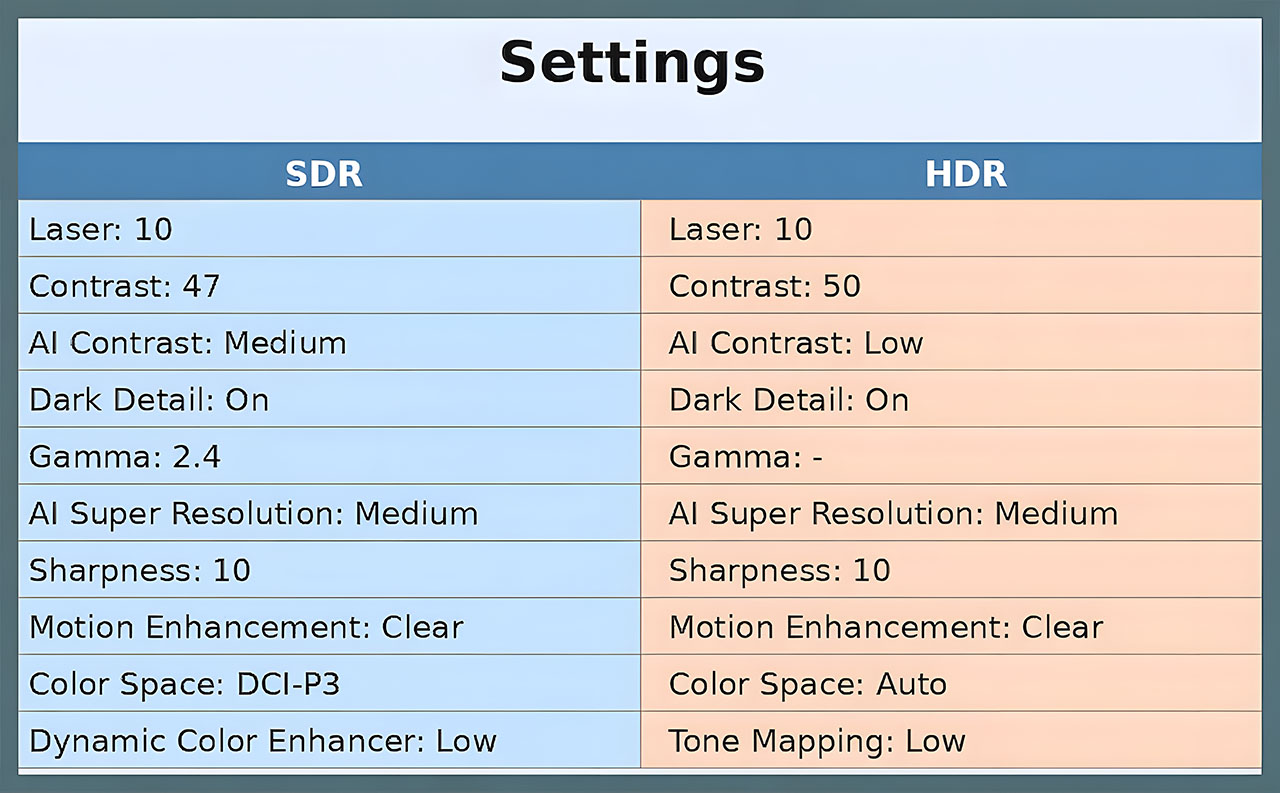
I’ve split the white balance settings into two categories, one for SDR content and one for HDR content. Here are the RGB gain white balance settings I recommend for the three WB modes (Warm 1, Warm 2, and Standard), combined with the three iris positions (Off, Cinema 1, and Cinema 2), for SDR content.
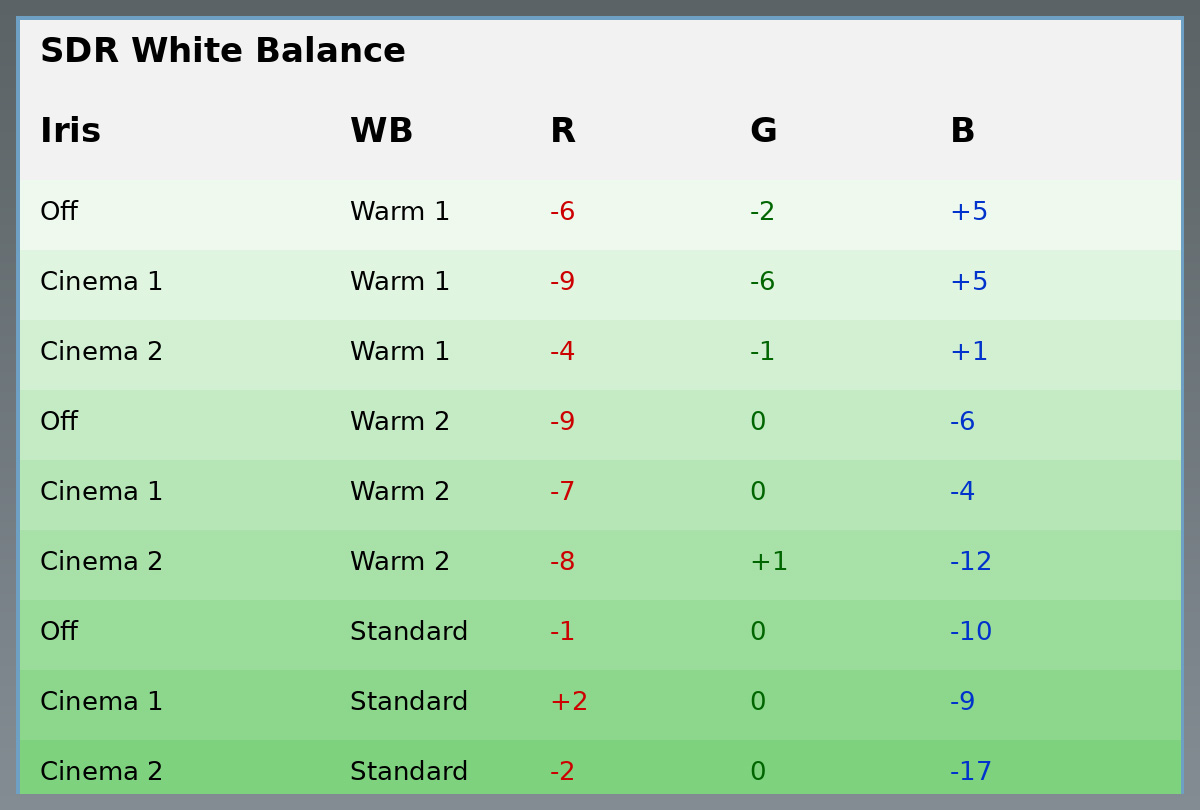
And here are the settings for HDR content.

All the settings I gave you should be seen as a good starting point to bring the projector closer to your own preferences. Without question, each of you will need to adjust them, a little or a lot, depending on how you personally feel about the final image in your own space. The reason why the measurements and settings I share do not work perfectly for everyone goes much deeper than it may seem, and I am going to explain it. I will not leave you in the dark.
Why RGB Laser Broke Traditional Calibration
With a traditional light source, calibration behaves predictably, what you measure is pretty much what you see. With RGB laser though, this connection starts to fall apart.
You can have a projector that measures perfectly, everything exactly where it should be, and still the image doesn’t look quite right, especially the white point and the grayscale at SMPTE standards.
So you end up in a situation where the calibration numbers look spot on, but visually something feels way off. This applies even if you use high-res spectroradiometers (Basically, it is totally irrelevant which measurement instruments you use, since this phenomenon is related only to the human brain).
And now we come down to metamerism.
Our eyes are not identical, each person has slightly different spectral sensitivity, and under normal conditions the brain compensates for that without us even realizing it.
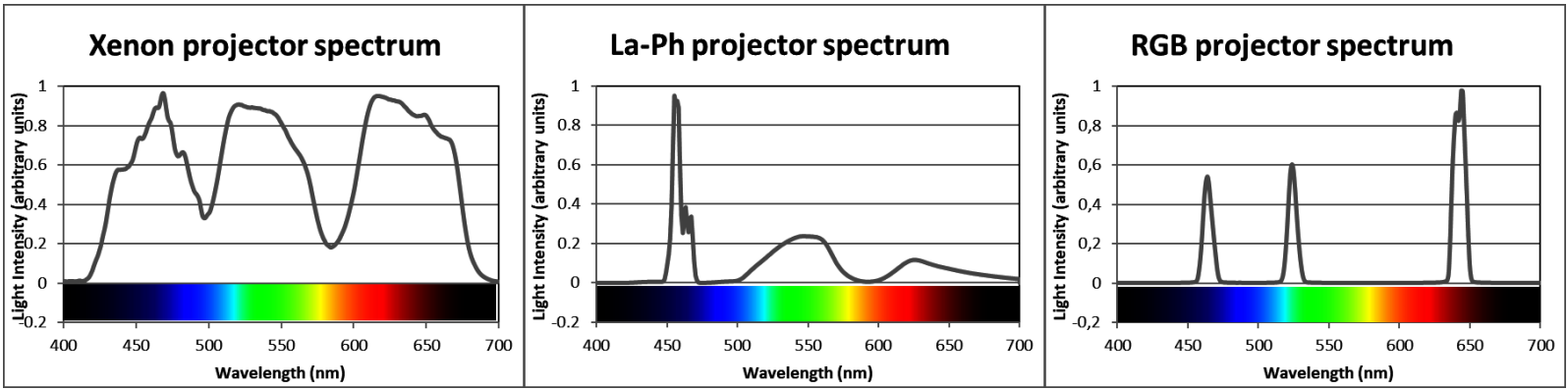
But this “system” has evolved with continuous spectrum light. RGB laser is totally different, it is extremely narrow, and instead of smooth overlaps with our eye sensitivity, you get very sharp interaction points. That makes those small differences between people more pronounced, and our brain doesn’t fully compensate in the same way.
So, two people can look at the exact same calibrated image and not see the same thing, but something completely different in terms of white balance and colors, even if the projector is technically perfectly calibrated, due to the narrow spectral output of RGB lasers.
There is also another factor that makes things even more complicated. The lens in our eyes changes over time, starting clear when we are young and gradually becoming more yellow or even brown as we age.
In normal conditions we don’t notice this, because our brain slowly adapts and corrects it for us. But again, this compensation relies on a normal continuous light spectrum.
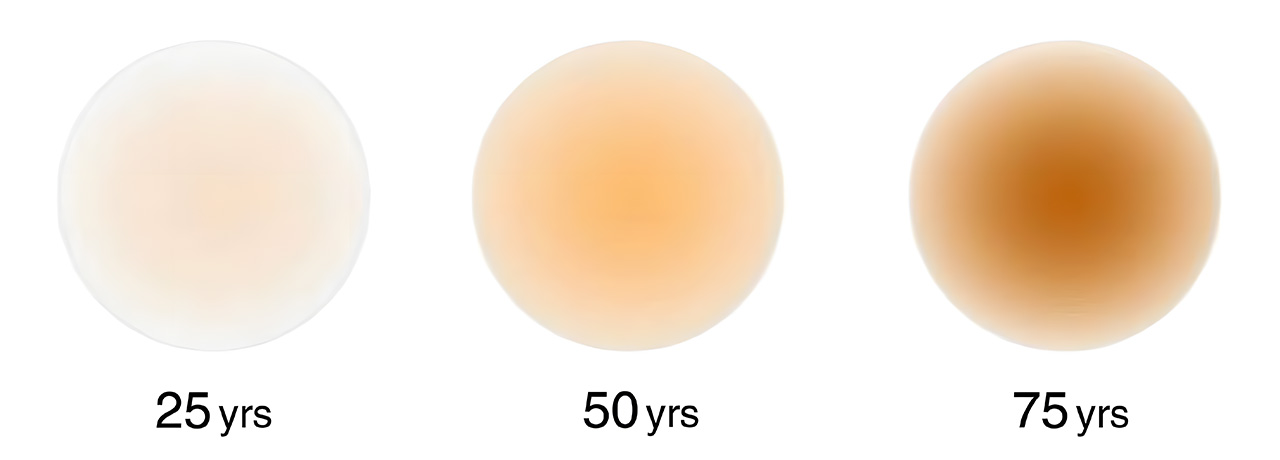
With RGB laser light, that reference point is totally missing, so our brain has a harder time separating the actual image from the color shift caused by the eye itself. This means age adds an extra layer to the metamerism effect mentioned above, and can lead to even greater deviation between what we see and what our extremely expensive measurement equipment reports.
If we add one more factor, which is the dynamic tone mapping of each RGB projector and how it handles the metadata from each HDR content, as well as the dynamic contrast algorithms that adjust the RGB laser engine waveforms on the fly as we watch a movie, then we can easily say that modern pure RGB laser projectors have destroyed calibration, at least as we knew it.
Everything I describe here has been known in the cinema industry for many years, and the first people who discovered and talked about this phenomenon with RGB laser projectors were professionals from the cinema industry.
Now you know it too.
If someone calibrates your RGB laser projector using only measurement instruments and tells you that now you will see correctly, there are two possibilities, either they have absolutely no idea about RGB laser technology, or they are simply not professionals.
I see people posting perfect measurement charts from RGB laser projectors on the internet, combined with claims about how excellent their image now is, and honestly, it makes me laugh.
Very good sources to fully understand this issue and even go deeper are the lecture of Kommer Kleijn at the International Federation of Cinematographers conference in 2024, which I would describe as the “father” of digital projection. You can find his talk here: http://www.kommer.com/2024-03-08-Kleijn-RGB_Laser_Light_in_Cinema.pdf
Also, a very good source is an article from the official organization of cinematographers in Belgium. You can read it here: https://www.sbcine.be/?p=14115
As well as the well-known old study of the researcher in color perception, Yuta Asano, which you can find here:
https://library.imaging.org/cic/articles/22/1/art00001
Now it’s time to talk about the performance of the Aetherion, don’t you think?
Aetherion RBE Reduction – The Technology Behind It
The relationship between an RGB laser light engine and the Digital Light Processing (DLP) technology is not as straightforward as it sounds, mainly because this is not a typical light source feeding the DMD chip, it is a system that operates entirely in the time domain. RGB lasers are not emitting continuously, they are constantly switching ON and OFF, while at the same time the DMD chip from Texas Instruments is doing its own modulation through the mirrors. So what you actually get at pixel level is not “intensity control”, but time control, how long the laser is on, and how long the mirror is directing that light to the lens.

That interaction is what defines the final image. Brightness, gamma, colors, even contrast behavior are all tied to how these two layers of modulation line up over time. In single DMD chip designs, things get even more interesting, because the RGB lasers are usually driven sequentially. There is no color wheel anymore, but the principle is still there, just executed electronically and at much much higher speed. The image you see is the result of that timing, not a continuous light output.
Aetherion brings the latest-generation ultra-fast PWM drivers on the laser side, combined with the latest-generation rolling buffer DMD controller from Texas Instruments. The key here is how tightly these two parts are synchronized. This combined DMD and laser pulsing happens so fast that color separation is no longer something your brain can catch, even in difficult scenes.
The Aetherion does not rely on a classic anti-RBE approach of just speeding up the RGB sequence. Instead, it uses advanced laser driving with multiple ultra fast duty cycles per color. We are talking about thousands of pulses (kHz) per frame. Crazy, right?
This is the first time we see this approach implemented in a UST projector at this level. Let me show you with images exactly how Aetherion creates its colors, and more generally the image it projects.
This is the clean RGB sequence of the Warm 1 white balance setting.

And this is the standard white balance mode that adds secondary colors in order to boost brightness.

And to better understand how different brightness levels are created through the RGB cycles, in the image below you can see the difference in duty cycles between 80 and 40 IRE.

It is also very interesting to see how the different colors we see on an RGB laser projector are actually created in practice. Take a look at the screenshot below.

The AWOL Vision Aetherion reduces rainbow effect very effectively, even compared to the “master” of this category, the Valerion VisionMaster Max. Even if both projectors run at a similar RGB sequence speed, or even if the Valerion MAX has even much higher RGB sequence, that alone doesn’t tell the full story when it comes to rainbow effect reduction. In a more traditional double buffer design like the one used in the Valerion MAX, each color is shown in full-frame steps, so you get clear, separate R, G, and B subframes. During eye movement, the brain can more easily split those whole color subframes apart.
The Aetherion, on the other hand, behaves totally differently. With the rolling buffer approach, the RGB pulses are spread across the frame instead of being stacked into clean subframes. The result is that the colors overlap more in time and space, so your eyes don’t catch distinct color flashes so easily, and the brain does not have a clear subframe to chromatically analyze so easily.
In practice, the rolling buffer color sequence feels more like continuous light rather than fast color switching, and that’s why RBE is noticeably reduced, even without relying purely on higher sequence speed. Simply put, the Aetherion’s RBE reduction system tricks your brain more effectively than the one used in the Valerion, and this is not just about how fast the RGB colors pulses are on screen.
Aetherion Performance
User Experience
I will rate the user experience of the Aetherion a solid 10 out of 10. The Android interface is incredibly fast, all apps run smoothly and quickly, and navigating through the settings is also a great experience, both because of the speed and the well-designed menu structure.
The HDMI ports lock instantly with every device I connected, and the remote control has excellent ergonomics and a very good feel in the hand. This is one of those projectors you enjoy using and adjusting all day, with the remote in your hand, without ever feeling frustrated or tired.
Sharpness – Focus
I will start with the sharpness of the Aetherion, which, for a UST projector with just a 0.20 throw ratio and a curved optical element in front of the lens reflecting the light onto the screen, truly exceeds all expectations.
Focus is excellent from edge to edge, to the point where pixels become visible if you move close to the screen.
It is, by far, the best lens ever used in a UST projector in my opinion, and it comes very close to those found in high-quality long throw models such as the Valerion MAX and the Horizon 20 MAX.
Congratulations to the engineers at AWOL Vision, who, in my view, have solved what is perhaps the only real disadvantage of UST projectors compared to traditional long throw designs, the reduced sharpness caused by the complexity and nature of the lens system.
Color fringing, which has affected all RGB laser projectors since their introduction, is also very well controlled on the Aetherion. It is present, but there is no chance it will become distracting, even if you sit at 2 meters from a 150-inch screen.
For me, this lens is a 10 out of 10, and I don’t even have to think twice about it.

SDR
In SDR content, the Aetherion shows why it stands out. Color performance in Rec.709 is excellent, and it looks very detailed with 1080p material, helped a lot by the sharpness of the lens.
The AI Contrast works very differently here compared to HDR, and it actually becomes a really useful tool. I would keep it on for SDR viewing. Just look at how subtly and smooth it boosts the overall scene contrast.
Another setting I would recommend, especially if you watch a lot of SDR content, is to use the DCI-P3 color gamut instead of Rec.709. The Aetherion handles the colors very well, without pushing them too much, and the result is a more colorful image without looking unnatural.
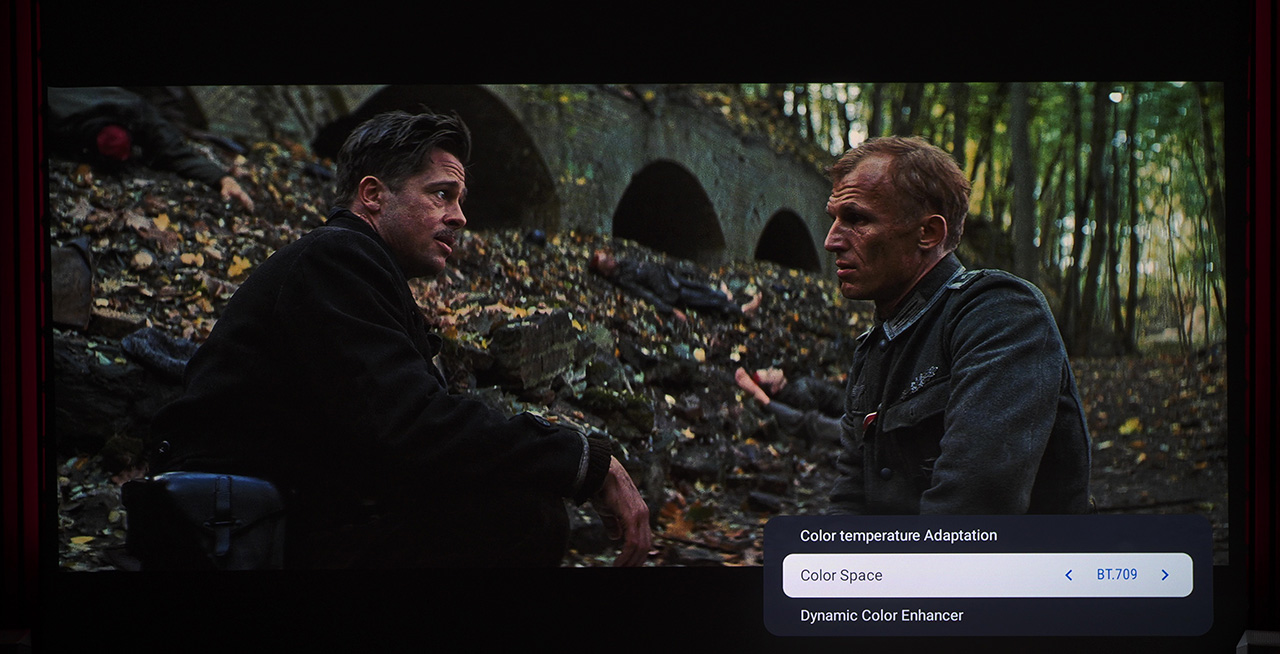
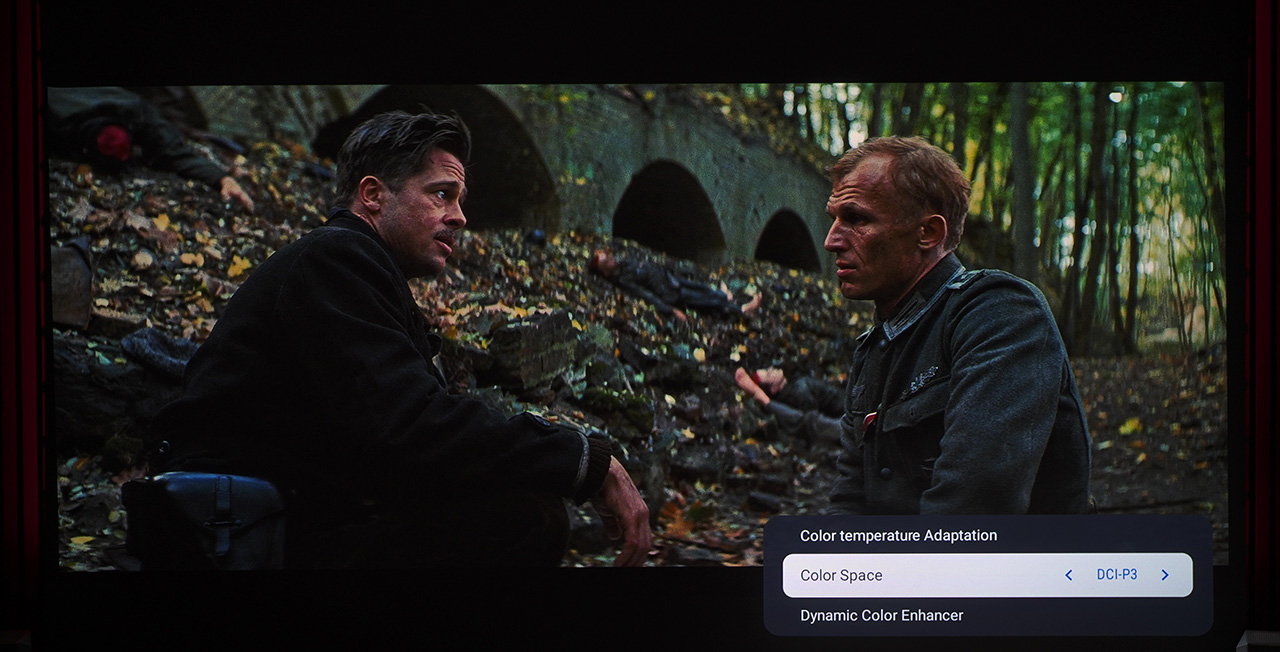
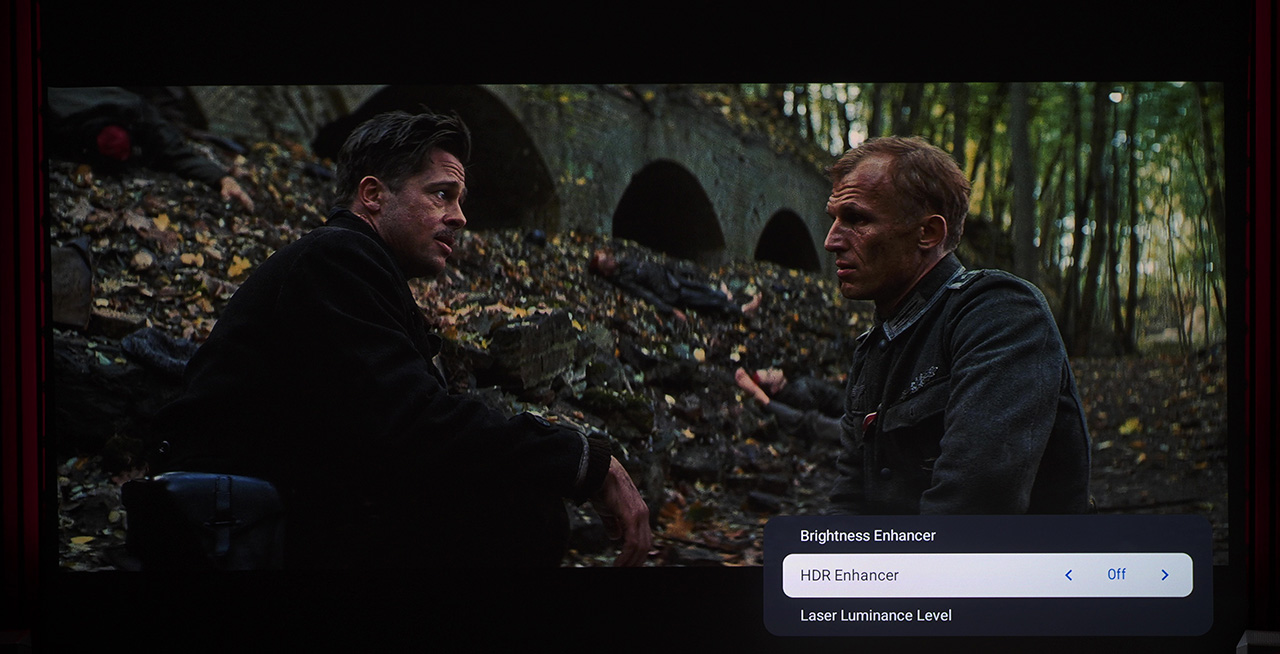
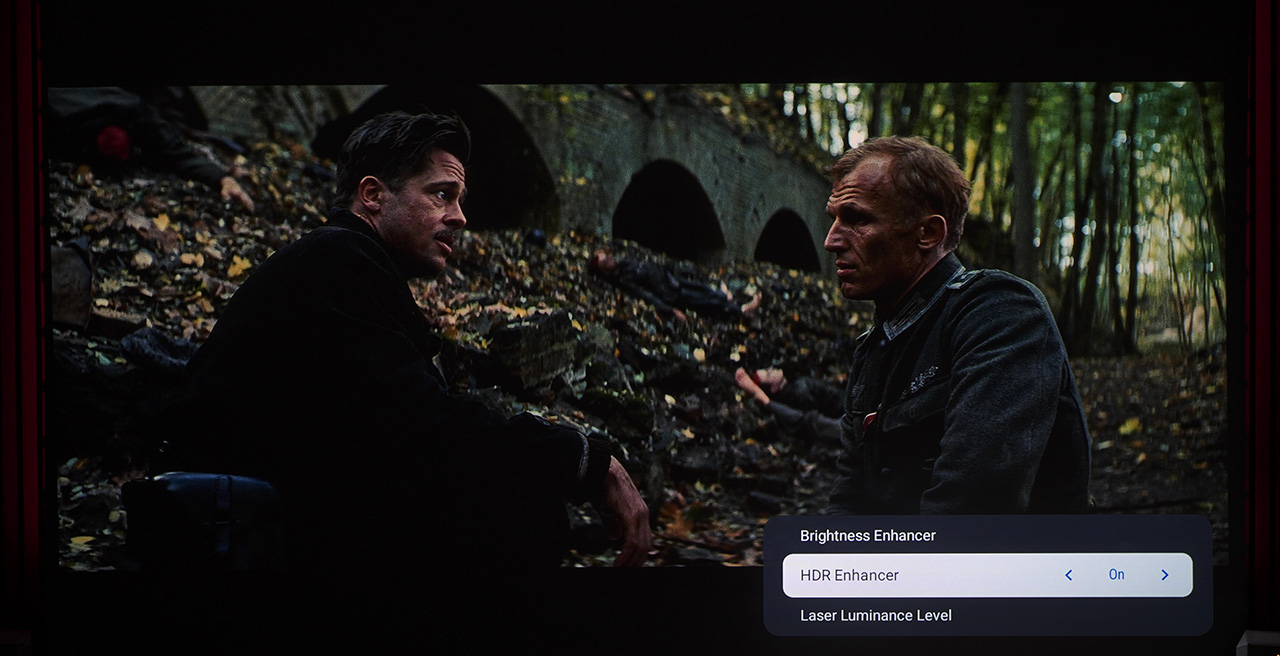
Finally, there is an extra feature called HDR Enhancer, which tries to give the image some of the punch of high dynamic range. In many cases it looks impressive, but after testing it for many hours, I would say it often pushes things too far, crushing dark details in order to boost the dynamic range.
When it is enabled, AI Contrast becomes unavailable, so keep that in mind. In general, I would not recommend it for everyday use, only in specific cases, mostly with TV content or sports.
HDR – Dolby Vision
The Aetherion delivers one of the best dynamic tone mapping implementations currently available in any DLP projector. This projector is clearly designed with HDR and Dolby Vision content in mind.
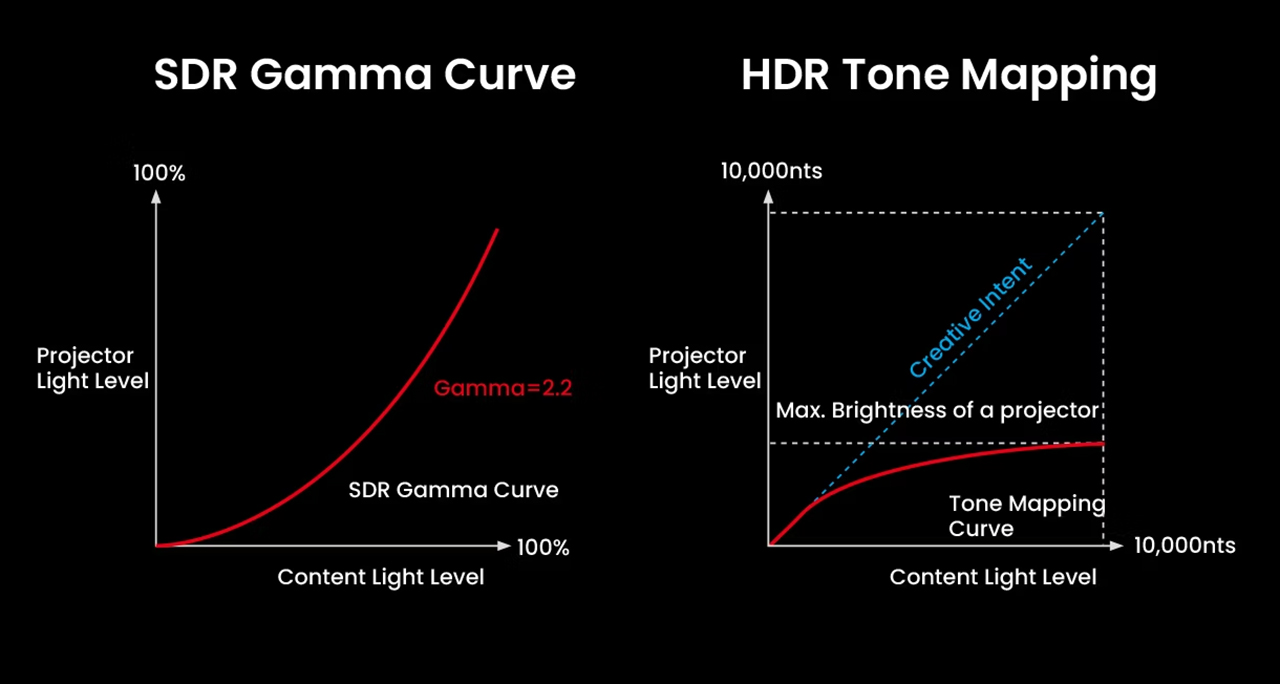
To help you understand what I actually mean when I talk about tone mapping, I will explain it in a very simple way by referring once again to a measurement graph of the Aetherion.
That completely flat horizontal line you see may not be immediately obvious to everyone, but this is exactly where the whole story lies. It determines whether you will truly enjoy an HDR movie or end up with a flat, incorrect, and uncomfortable image.
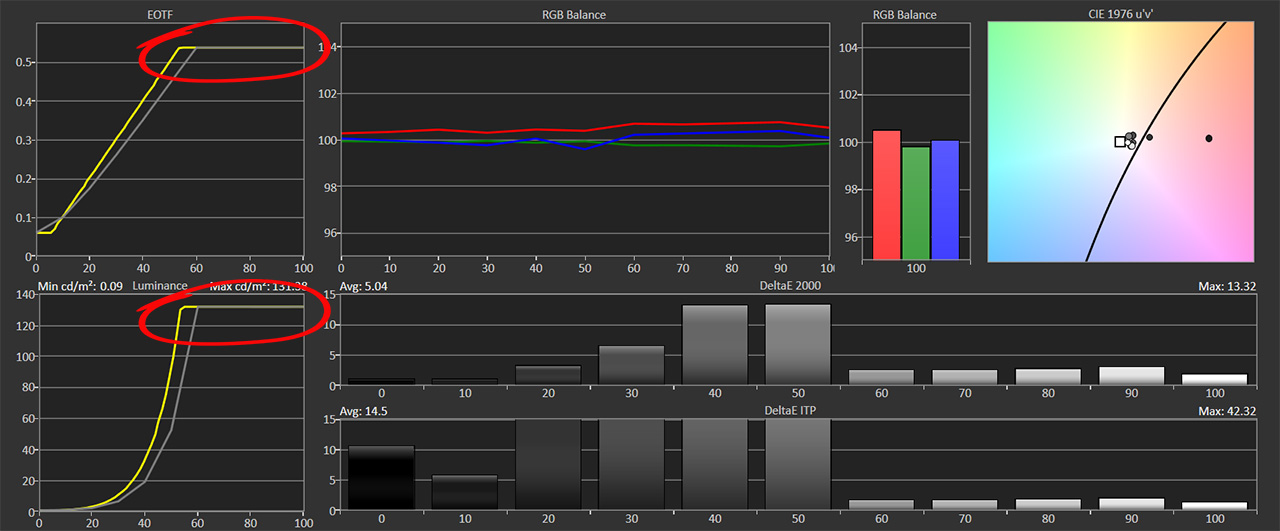
An HDR title mastered for a display with a peak brightness of 1000 nits must somehow be adapted to play on a device with much lower brightness capability. As shown in the measurement graph, from around 50 IRE and above, the projector has already reached its maximum output. From that point onward, you see a straight horizontal line, which means that hundreds of nits of brightness information simply cannot be reproduced.
If you play a 1000-nit HDR content without any form of tone mapping, the entire dynamic range will be compressed linearly to fit within the projector’s capabilities, based on its peak brightness and black level.
This linear compression results in a very flat image, with underexposed midtones and shadows, and highlights that look weak and lifeless. In some cases, depending on the content, you may instead get clipped highlights and dark scenes with no shadow detail at all.
Take a closer look at the building and the road in the following screenshots.
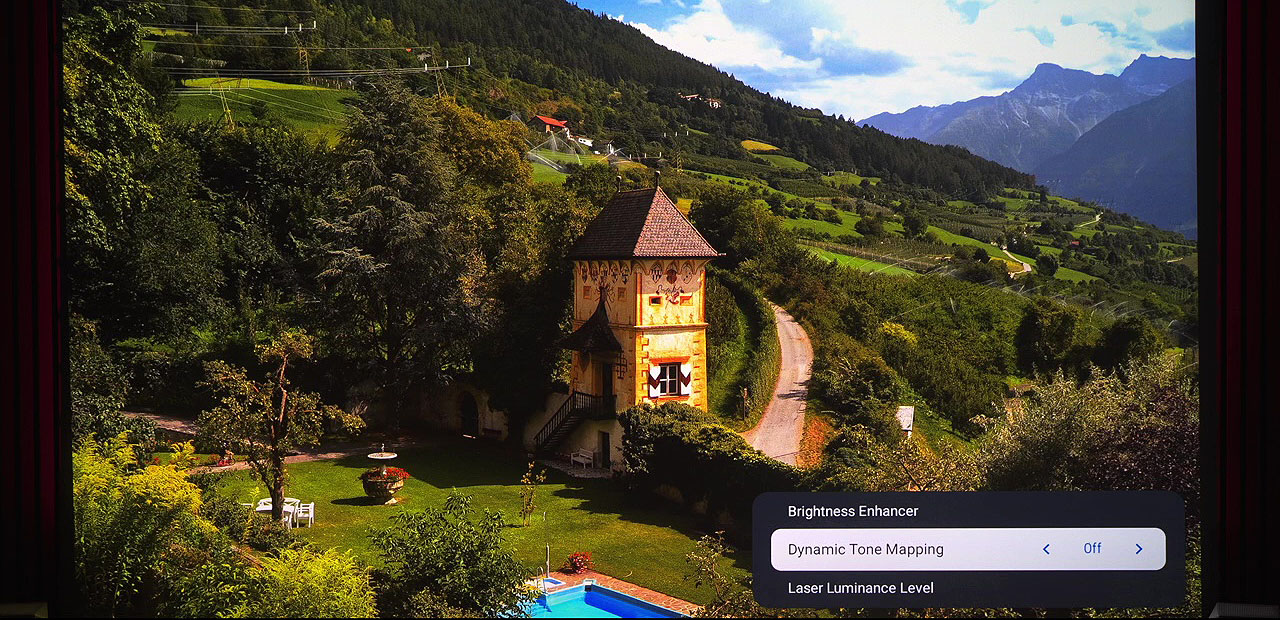
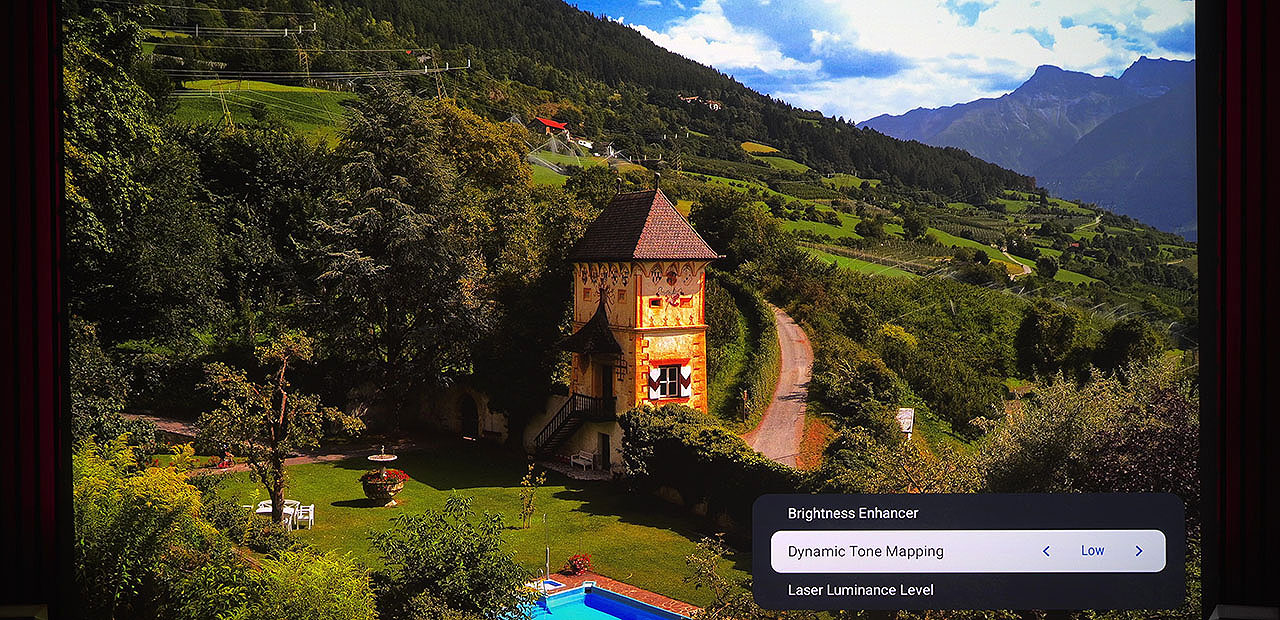
In HDR dark scenes, the difference made by the Aetherion’s dynamic tone mapping is simply stunning. It corrects the brightness across all elements of the image, giving it a truly three-dimensional look.
See for yourselves.
Dynamic tone mapping on – off
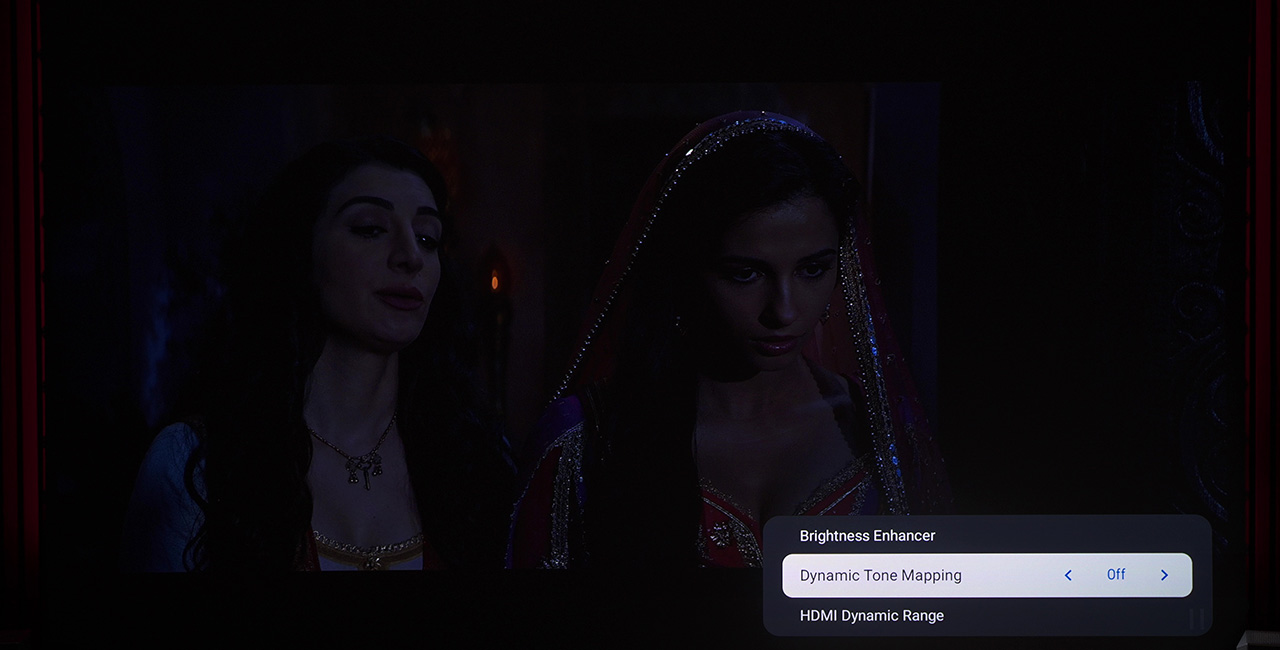
If we enable AI Contrast as well, the image really pops off the screen. I personally loved this feature, not just for the improvement it brings, but because it actually behaves like a true AI feature, working differently from scene to scene.

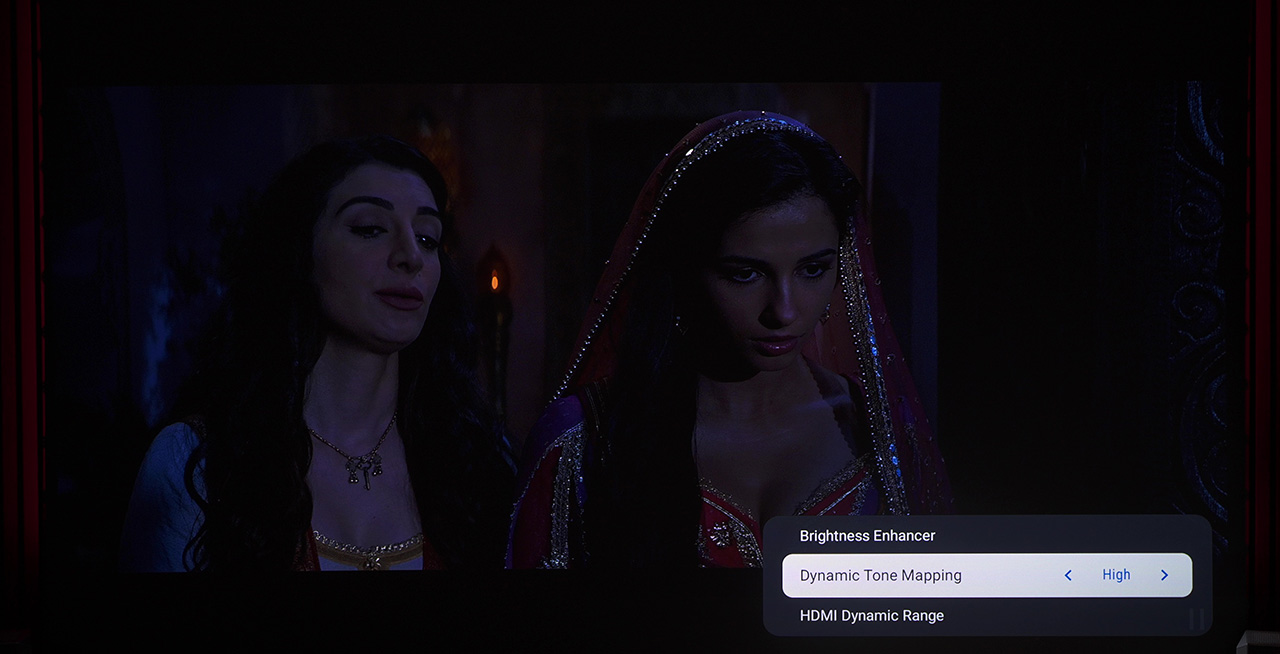
Of course, like any dynamic feature, any algorithm that works on the fly and adjusts the image frame by frame, the Aetherion’s Dynamic Tone Mapping also has moments where it shows its limits. This usually happens in difficult low-light scenes, where the algorithm starts to push things a bit too far.
Skin tones can start to look slightly plastic, with less texture and a clear loss of natural depth, even on Low, and more noticeable on High Dynamic Tone Mapping.
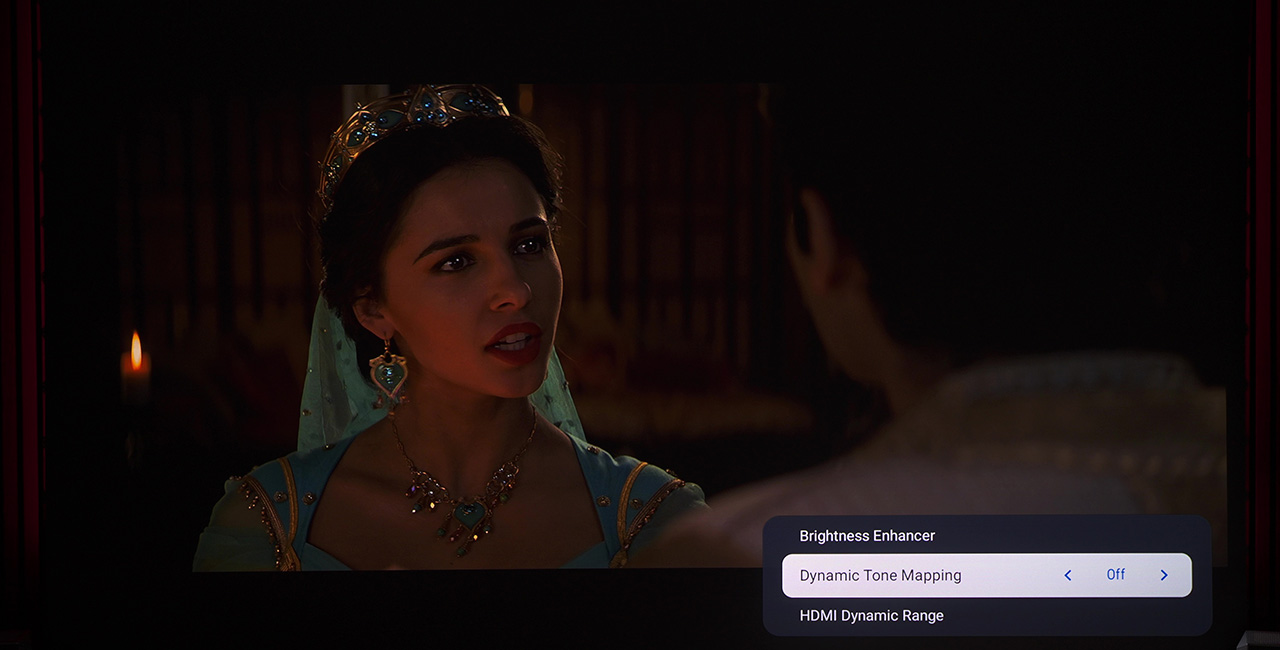
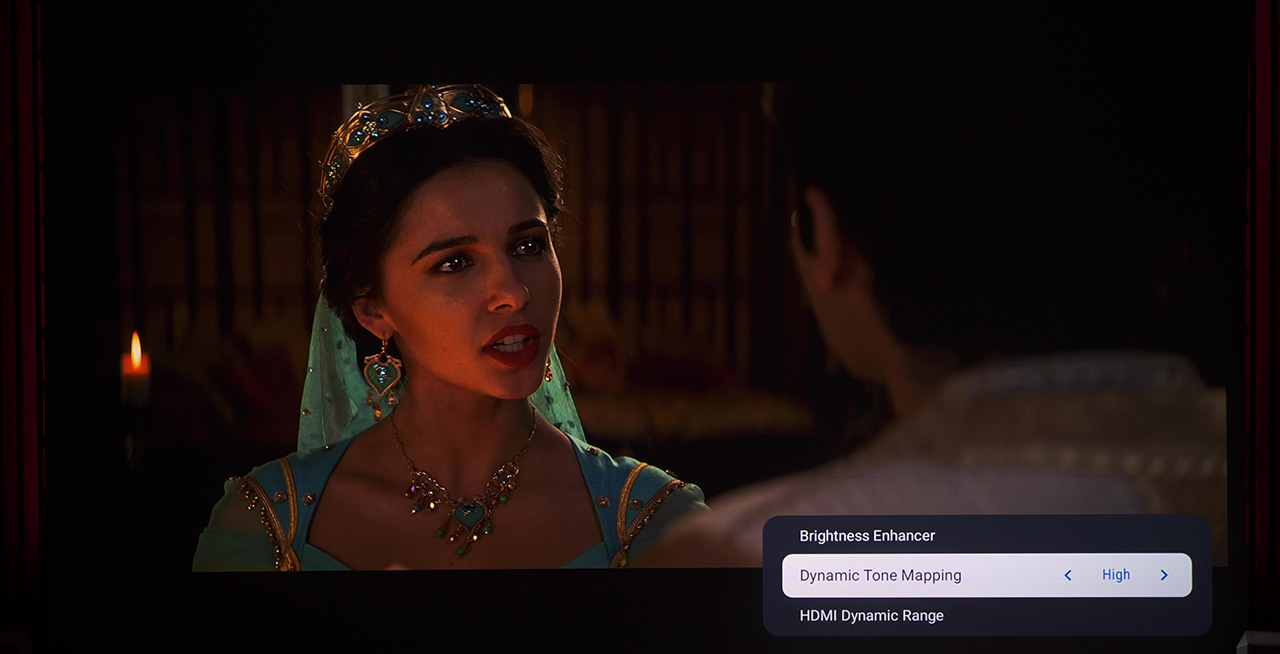
While the result may look impressive at first, a closer look at the finer details of the image reveals the issues I mentioned, especially in skin tones. Take a look at the cheek and the nose, the way this effect shows up there makes it easy to see exactly what I mean.

Where the Aetherion truly becomes extremely enjoyable is with Dolby Vision content. Here, there is no dynamic tone mapping that reacts to HDR metadata and adjusts the EOTF curve frame by frame or scene by scene. Instead, we get a pre-configured and fixed tone mapping, developed, tested, and certified by Dolby Laboratories, which activates automatically whenever the Aetherion detects Dolby Vision content.
The only adjustments available to the user are screen size and screen gain.
The Aetherion’s performance in Dolby Vision goes even further than its HDR performance and, to my personal taste, comes very close to perfection. None of the projectors I have tested so far can stand next to the Aetherion when it comes to Dolby Vision performance, not even close.
Its ability to turn every scene into a high-contrast visual experience, with deep blacks, bright highlights, and all of that combined with excellent natural skin tones and smooth color gradations, is truly exceptional.

This is a Dolby Vision A/B comparison with another RGB laser projector, which I won’t name. It’s just to show what I mean when I say “best overall Dolby Vision performance”
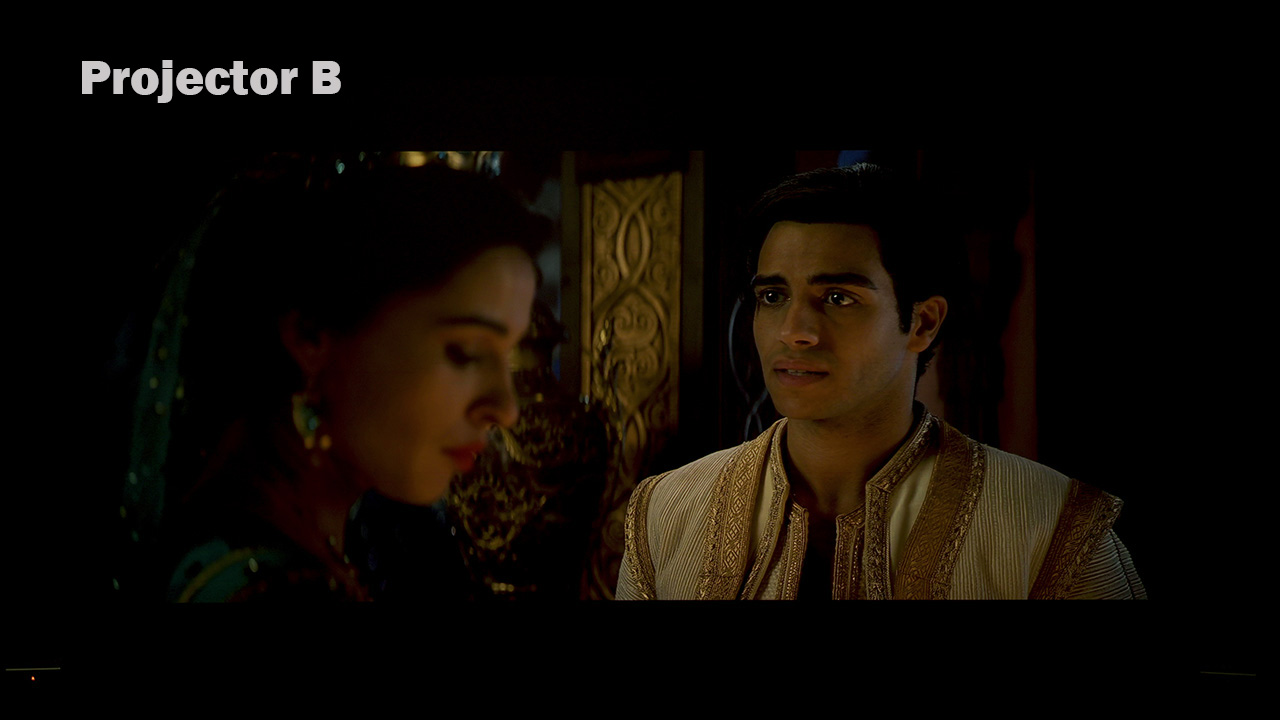
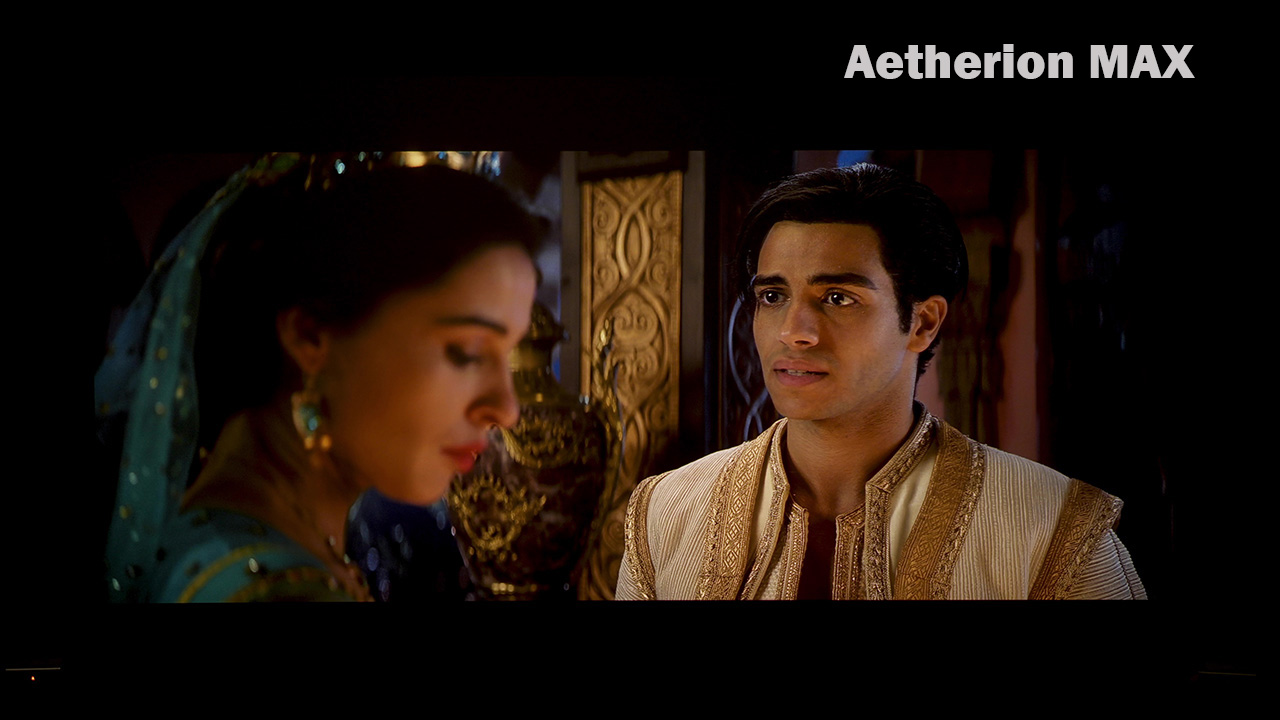
If I had to rate the Aetherion’s performance, I would give it 9/10 in SDR, 8/10 in HDR, and 10/10 in Dolby Vision content.
Here is a video shootout that will give you a better idea of the Aetherion’s performance in HDR and Dolby Vision content.
Contrast & Black Levels
And now we get to what is probably the most important part of the image for me, contrast and black levels. Until recently, I thought the Valerion MAX was pretty much the ceiling for DLP in this area… but I was wrong.
The AWOL Vision Aetherion MAX comes in and just pushes those limits much further.
First, EBL is the key factor here, as expected. With the latest beta firmware, it works much more smoothly, and you can use it without hesitation in almost any content. Then there’s the iris, which is honestly impressive. It boosts contrast a lot without killing brightness, which is what you would normally expect, or at least what I’ve seen from other models.
That’s quite unusual, but also a real achievement from the AWOL Vision engineers. The combination of the two gives the Aetherion performance I couldn’t really imagine before seeing it.
Now, if we add this EBL and iris combination together with the Aetherion’s Dynamic Tone Mapping and the AI Contrast feature, you can imagine the result.
Overall, I would say the Aetherion is not just one of the best, but the best DLP projector right now when it comes to contrast and black levels, and it fully deserves that title.
Take a look at how much EBL, combined with the iris, transforms dark scenes.
In general, the Aetherion has such strong native contrast that whether you use it with just the iris enabled, only EBL, a combination of both, or even with no contrast features at all, the result is excellent in every case.
This is probably the biggest advantage this DLP projector brings to the market. The freedom for the user to choose how much contrast they want, without being forced to rely exclusively on contrast features like the Valerion MAX or Pro 2, for example.
My personal opinion about the EBL improvement with the latest firmware, and I want to stress that this is purely based on my own taste, is that in their effort to fix an issue that looked like clipping on bright objects in difficult dark scenes, the engineers at AWOL Vision made the EBL work not only less aggressively, but overall less often.
Personally, I preferred the older, more aggressive EBL, which was active even in medium brightness scenes and pushed the black level much further, even if it introduced some artifacts from time to time.
The new, smoother EBL… well, it doesn’t impress me as much. Just my personal opinion, nothing more.
Motion
The Aetherion offers not one or two, but five different motion enhancement levels to smooth motion, depending on the fps of the content. There is even a custom mode, where you can set the amount of judder reduction exactly how you like it.

The Film setting is the one that allows proper playback of 24 and 48p without any processing, and the Aetherion handles this perfectly. Take a look at the result in the 24p judder test.
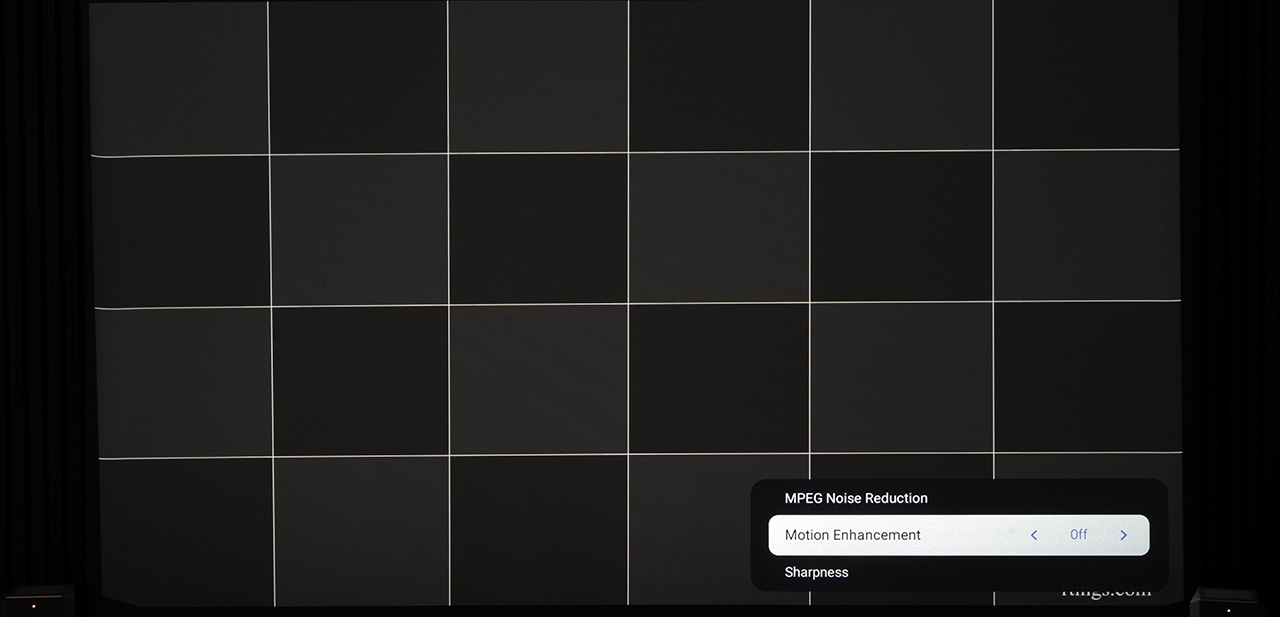
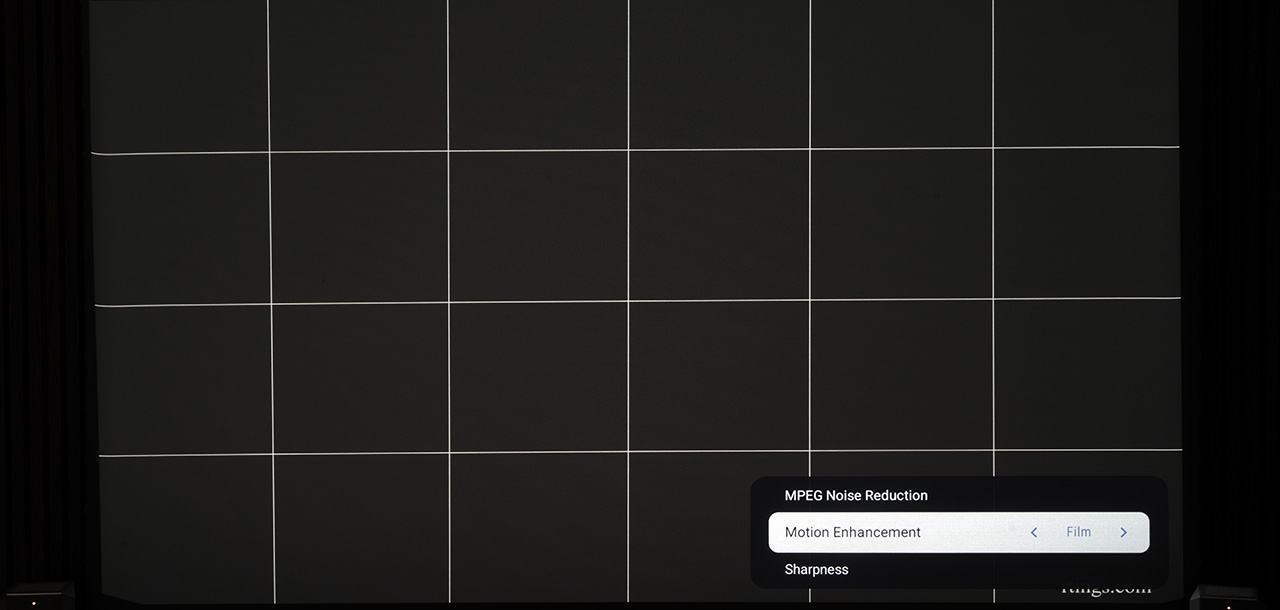
Now, the powerful hardware of the Aetherion allows proper frame interpolation, and motion is excellent, with no visible artifacts like we used to see in similar implementations in the past. However, there is a bug that hurts the overall experience. I reported this to AWOL Vision from day one, but so far it hasn’t been fixed.
I’m talking about a strange issue that only appears when using an external source through HDMI, not with any internal player like Plex. There is a brief blur, almost like the XPR module that creates the 4K image momentarily loses sync during scene changes.
It’s a difficult bug to capture in photos and show clearly, but I will try to demonstrate it in the video review that will follow.
Speckle
The Aetherion, as a pure RGB laser projector, suffers from laser speckle. To give you an idea, the speckle on the Aetherion is noticeably lower than its predecessor, the AWOL Vision LTV-3500 Pro, higher than the NexiGo Aurora Pro MKII, and roughly at the same level as the Valerion.
The good thing is that when used with a CLR screen, the effect almost disappears.
On the right is the Wupro CLR, and on the left an ALR screen.

And here, on the left is a white Lambertian screen, and on the right the Wupro CLR again.

As you can see, both on the CLR and on the white screen, the speckle almost disappears. So, as you understand, choosing the right screen depending on how sensitive you are to laser speckle is extremely important.
A review of two excellent anti-speckle screens for UST projectors from WUPRO is coming soon, so stay tuned.
3D
3D has made a comeback thanks to the new generation of RGB laser projectors, and it’s becoming a form of entertainment for more and more people. All modern projectors support it properly, and I’m personally a big fan.
The combination of high brightness and the very large image that modern laser projectors can deliver has significantly improved the overall 3D experience.
The Aetherion fully supports all 3D formats and can automatically detect and switch to the correct one. It also includes an option to reverse the left and right eye, which is very important, as most 3D glasses do not offer this feature.

Unfortunately for 3D enthusiasts, I don’t have good news. At least with the latest beta firmware of the Aetherion that I used for this review, 3D performance is seriously problematic. In fact, it’s broken to the point where watching a 3D movie becomes practically impossible. Let me explain.
The projector uses a rolling buffer architecture, which means the image is displayed progressively from top to bottom. This takes a few milliseconds, depending on the refresh rate. The glasses, however, are global shutter, meaning they open and close for the entire frame at once.
What’s happening here is a clear synchronization issue. Each eye opens at the wrong time, before the full frame has actually been displayed. As a result, you end up seeing part of the previous frame, which belongs to the other eye.
After a lot of effort and experimentation, I managed to capture a photo through the shutter of the 3D glasses, clearly showing the issue. Any green tint you see in the screenshot below should not be visible to the left eye, as it is actually part of the previous frame intended for the right eye.
In practice, while a new frame for the left eye is being drawn from top to bottom, the glasses switch and open the shutter for the left eye too early. So the top part of the image looks correct, but further down, where the new frame hasn’t fully appeared yet, you’re still seeing part of the previous right-eye frame.

This applies to both eyes, not just the left one used in my example. In other words, each eye ends up seeing part of the image intended for the other. Take a look at the image below.

This phenomenon changes behavior depending on the white balance setting you choose. The example above refers to the Warm 1 WB setting. Below, you can see that with Warm 2, ghosting from the wrong eye appears in different areas of the frame.

According to a super slow-motion recording I captured with my camera, 3D playback on the Aetherion operates at 120Hz.
By filming through the shutter of the glasses, I recorded two frames where the shutter is open and visible to the eye, along with two additional frames where the shutter is closed for that eye (black frames), allowing the other eye to receive its corresponding frames. You can see these four frames below.
I then removed the two black frames corresponding to the other eye, so you can focus only on the two frames that actually contain image information, where the glasses’ shutter is open.
As you can clearly see, in one of these two frames there is a strong ghost image in the lower part of the picture, which belongs to a frame intended for the other eye, not the one for which the shutter is currently open.
If synchronization with the glasses were perfect, the two frames for each eye would appear identical, essentially like the first one, without the green ghosting. This indicates that synchronization between the projector and the glasses is effectively correct for only 1.5 frames instead of the full two.
This issue was not present in the previous beta firmware (Basically, on the previous firmware, the Aetherion gave me one of the best 3D experiences I’ve ever had on any projector so far). In my opinion, it is related to incorrect timing of the DLP-Link synchronization signal, combined with the challenging rolling buffer architecture of the DMD controller.
To me, this is clearly a simple bug, likely connected to the major changes introduced in the latest beta firmware regarding the laser PWM duty cycles, and I believe it will be soon resolved in the final firmware release.
Another bug is that when the iris is enabled and you start 3D playback, the Aetherion switches to 3D mode, but it does not send a DLP-Link signal to the glasses. You have to turn the iris off, start the 3D playback, and then, if you want, you can turn the iris back on.
I will keep this review updated..
Update: Another Aetherion tester reported that changing the 3D format on the fly and then returning to the correct one, resolves the synchronization issue. Unfortunately, I cannot confirm this on my unit, but it might work as a solution on yours.
Gaming
And here we get to the part of the review that is aimed at a specific group of readers. If you’re not a gamer, just skip this part. If you are, I have something important to say… this is it, guys, this is it.
The Aetherion is the first projector I’ve tested, and probably the only one on the market right now, that can properly handle PS5 gaming in HDR. And I don’t mean just basic HDR support like most projectors or monitors have had for years. I mean that it actually delivers HDR gaming properly. Let me explain.
The issue I’ve always had with HDR gaming on the PlayStation 5 is not new. Whether on an HDR monitor or a projector, the result has always been problematic. Blown-out whites, strange colors, poor dark scenes, overall not a good experience.
Until the Aetherion, I had convinced myself that the problem was probably the games themselves or just the PS5 as a platform.

After around 20 hours of gaming on the Aetherion, about 14 of those finishing Resident Evil Requiem and another 4–5 hours testing different games, switching between HDR and SDR, my whole gaming world turned upside down. Not the Upside Down from Stranger Things, but another one, miles more enjoyable.
I’m talking to the gamers. Guys, for the first time, I saw how strong daylight from a window can feel in a dark room, it was blinding. I saw for the first time the real effect of holding a flashlight while moving through a dark space. I saw for the first time how blinding the sunny outdoor world is in an open world game. I saw for the first time such detail in dark areas, such atmosphere! I’m telling you this and I’m jumping like a kid from joy. No, it’s not about brightness. No, it’s not about contrast. And of course it has nothing to do with lag or how many ms it is, I DON’T CARE.
I’m talking about the gaming dynamic tone mapping of the Aetherion and how it translates that damn HDR data on the screen. If I told you that tone mapping does an excellent job in HDR movies, in gaming it is simply on another level!
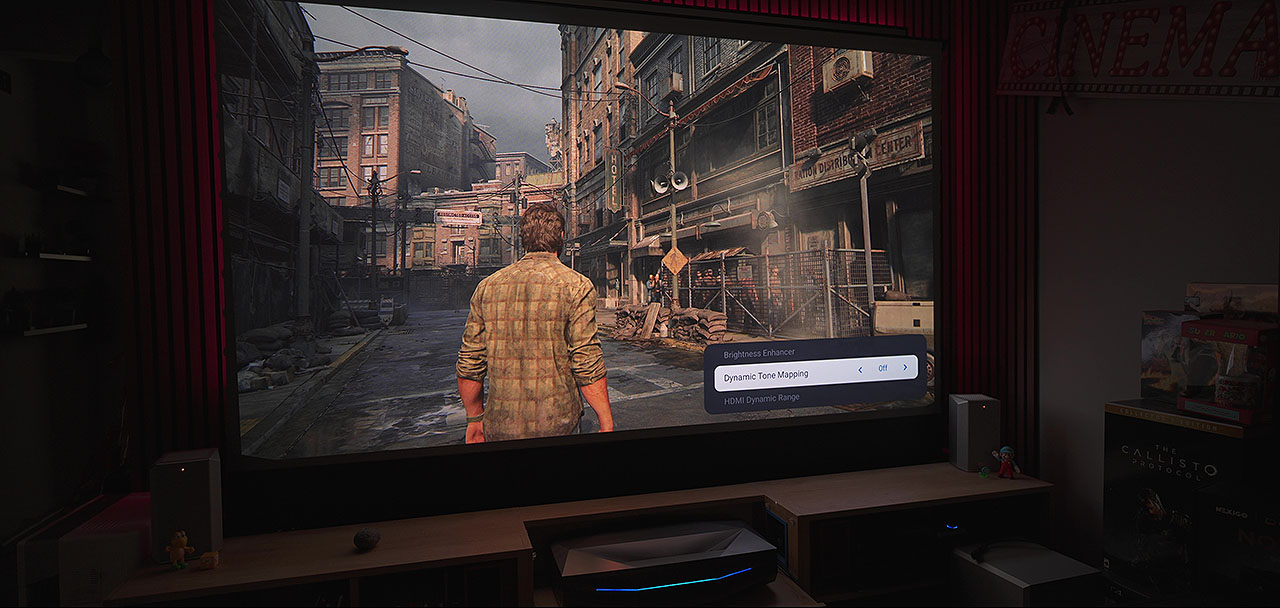
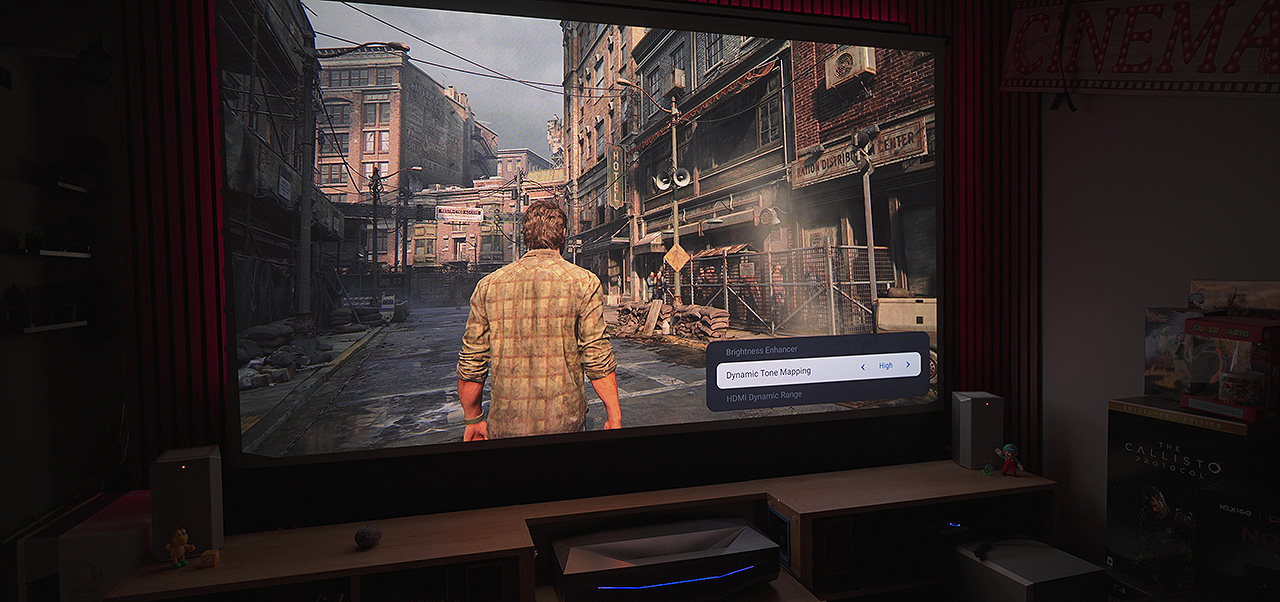
It is impossible for me to show this to you with screenshots, but in the video review that is coming, which will be very detailed as always, half of it is dedicated to gaming. Sorry for my excitement, but this is the first time I have experienced real, impressive, and completely correct HDR gaming in my space, I hope those of you who are gamers understand me.
Blinding highlights, incredibly deep blacks with EBL and the iris enabled if you want, an EOTF curve that’s spot on, and color handling worthy of a masterclass. Here, the dynamic tone mapping does not have to deal with difficult real skin tones, but digital gradations, and believe me, it never fails, anywhere. Marvelous, just marvelous!
I don’t know the secret behind this incredible HDR gaming, but I suggest all other manufacturers, including the Valerion, reverse engineer it and copy it. This is the HDR gaming we’ve been waiting for, for years.
There isn’t much point in talking about other gaming aspects of the Aetherion. OK, input lag is basically non-existent, even in 4K gaming, and sharpness in 4K is incredible, but honestly, I just don’t feel like spending time analyzing anything else.
The high refresh rate mode drops the lag to 1ms, but also the resolution to 1080p. If you’re OK with that, use it. I’m not. If I’m not playing in 4K at this screen size, then there’s no point, I’d rather play on my 4K gaming monitor.

I couldn’t get VRR to work on the PlayStation 5 no matter what I tried, but honestly, who cares. I could play all day in HDR on the Aetherion even at 10fps.

One last thing, the PlayStation 5 was not even recognized by the Aetherion with an HDMI 2.0 cable, it had to be connected with an HDMI 2.1 cable. And second, the PS5 recognized the Aetherion as 120fps compatible. Now, where you would actually need those 120Hz in PS5 gaming, I honestly don’t know.
As a gamer, thank you AWOL Vision, thank you. You truly gave me a new interest in gaming, something that doesn’t happen easily to veteran gamers like me.
AWOL Vision Aetherion MAX
Projectorjunkies Review
Pros
- Excellent contrast and black levels for DLP
- Very high real brightness
- Outstanding dynamic tone mapping HDR and Dolby Vision
- Exceptional HDR gaming performance
- Top-tier 3D performance
- Excellent factory color calibration
- Premium build quality and design
Cons
- Softer EBL behavior in latest firmware
- Cooling system noise
- RBE reduction system trade-offs
- 3D issues in latest firmware
Conclusion
The new Aetherion MAX is a true gem, inside and out. It has one of the best designs I’ve seen in a home cinema projector, a real centerpiece for any living room.

The technology inside is top-notch, and in my opinion, this is one of the most future-proof projectors you can buy today. Even though it’s still running beta firmware, and I haven’t had the chance to test the final version yet, it’s already a very impressive UST model that clearly takes the viewing experience a step further. Its sharpness goes beyond what we usually expect from UST projectors and now sits much closer to good long throw models.
Its native contrast and black levels are among the best in the DLP category, and the combination of EBL with the step iris delivers a really impressive image in dark scenes. At the same time, brightness remains very high even with the iris engaged, and its performance in HDR and Dolby Vision content is excellent, honestly among the best I’ve tested so far from any projector, regardless of category or technology.
And then there’s the gaming performance, this is something I guarantee you have never experienced before on any other projector.
I also have to mention the very fast hardware, with plenty of memory and processing power, which makes the Google TV 14 interface feel smooth and responsive, something you don’t always see even on expensive media players.
That early beta firmware definitely has some bugs that need to be addressed in the final release, but they are not enough to ruin the viewing experience the Aetherion delivers in any way.
I believe the Aetherion will, quite deservedly, become the new benchmark in the UST category, and knowing how AWOL Vision approaches its products, I’m sure we’ll see even further software improvements and surprises through future updates.
Until our next review, take care everyone!
Nikos Tsolas
Thank you so much Nikos great in depth review and I shall save this to use when my projector arrives! Crossing my fingers that it’s an easy fix for 3-D. Looking forward to hear what you think of the Wupro screens!
merci pour ce test complet
Wow, now that’s a review! Holy moly, thanks… just superb! Concerned about the 3D issue as 3D is super important to me; hope it gets resolved soon.
Any comments on sounds? Thank you this review is as impressive as the projector
The 3D better work on my unit.
This is the only reason I am buying this projector and am placing a lot of FAITH in AWOL for not messing that up :/
Hello Nikos,
Excellent review, thank you Nikos, and thank you also for the white balance settings, very useful.
I hope the 3D will be improved, as it’s one of the reasons I pre-ordered an Atherion Max.
I’m very eager to read your review of Wupro anti-speckle monitors, as I need to decide on a CLR monitor and I must say that speckle really worries me.
This will be my first UST projector and my first three-laser projector (I’ve only ever used long focal lengths).
When will your review be published, please?
Many thanks.
Awesome review, I can tell you really know your stuff, thanks for specifically testing the 3d and gaming, most reviewers just brush that off. Did you by any chance notice if the built in Google os has the DTS/TrueHD pass through or will i need something like Nvidia Shield to handle this?
For those who care the DTS/True HD pass through fully works over eARC with built in OS. So. yey!